Some comedy routines begin with a clever joke.
Others begin with a complicated misunderstanding.
Abbott and Costello’s famous “Niagara Falls” routine needs almost nothing.
One nervous man.
One very strange stranger.
And two completely ordinary words:
“Niagara Falls.”
The moment Lou Costello says them, everything changes.
The stranger freezes.
His expression becomes distant.
He begins remembering something terrible.
Then comes the unforgettable rhythm:
Slowly he turns.
Step by step.
Inch by inch.
And poor Lou suddenly realizes that he has become the substitute target for a grudge that has absolutely nothing to do with him.
That simple idea became one of the great inherited routines of American vaudeville and burlesque comedy, performed in different forms by multiple comedians before becoming closely associated with performers including Abbott and Costello and the Three Stooges. PBS has noted that Abbott and Costello helped carry routines like this from the vaudeville tradition into movies and television, where they reached much larger audiences.
And decades later, it is still incredibly funny.
Lou Just Wants to Survive the Conversation
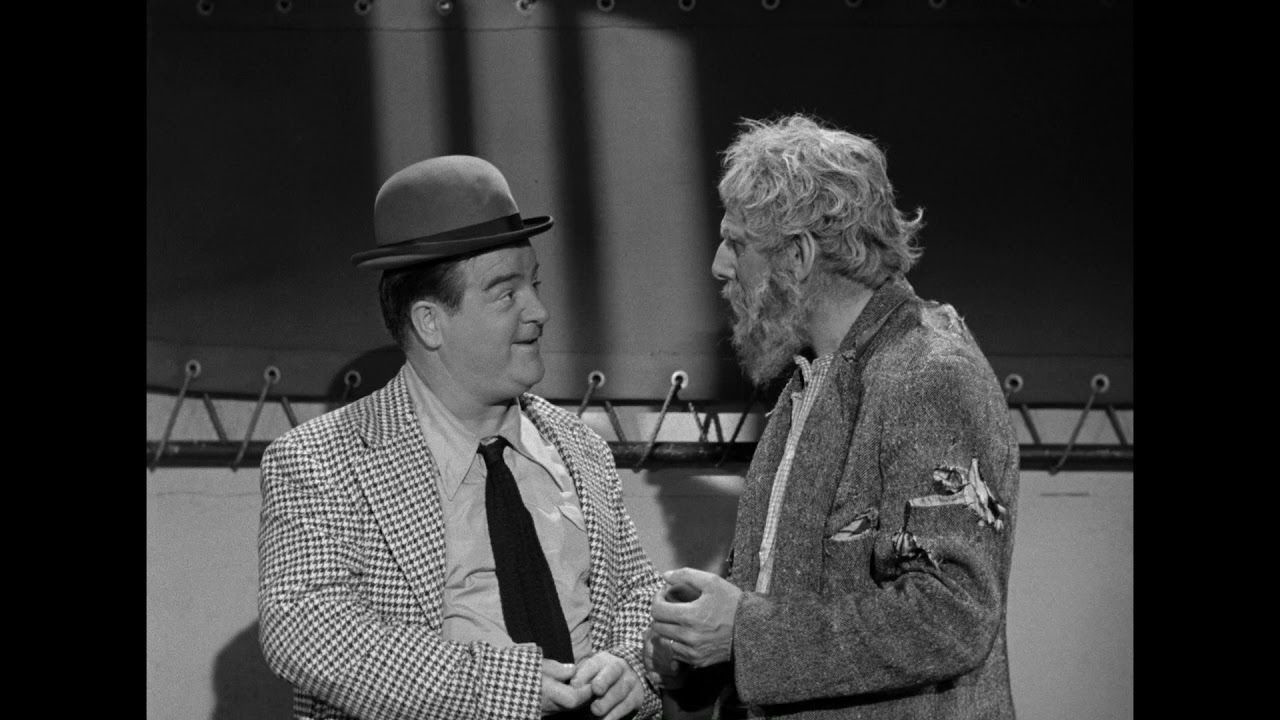
The setup is wonderfully simple.
Lou finds himself trapped with a man who seems strange but initially manageable.
The stranger begins telling him a personal story.
At first, Lou does what Lou Costello characters usually do when someone launches into a complicated explanation.
He listens.
He asks questions.
He tries to understand.
That is his first mistake.
The stranger begins describing the man who ruined his life.
He talks about betrayal.
He talks about searching.
He talks about following this enemy from place to place.
Lou becomes curious.
Where did he finally catch him?
The answer involves one location.
Niagara Falls.
That should be harmless.
It is one of the most famous tourist destinations in North America.
But to this man, it is not a destination.
It is a trigger.
The moment the words are spoken, his personality seems to change.
He begins reliving the confrontation in his mind.
And unfortunately for Lou, the only person standing nearby is Lou.
“Slowly I Turned…”
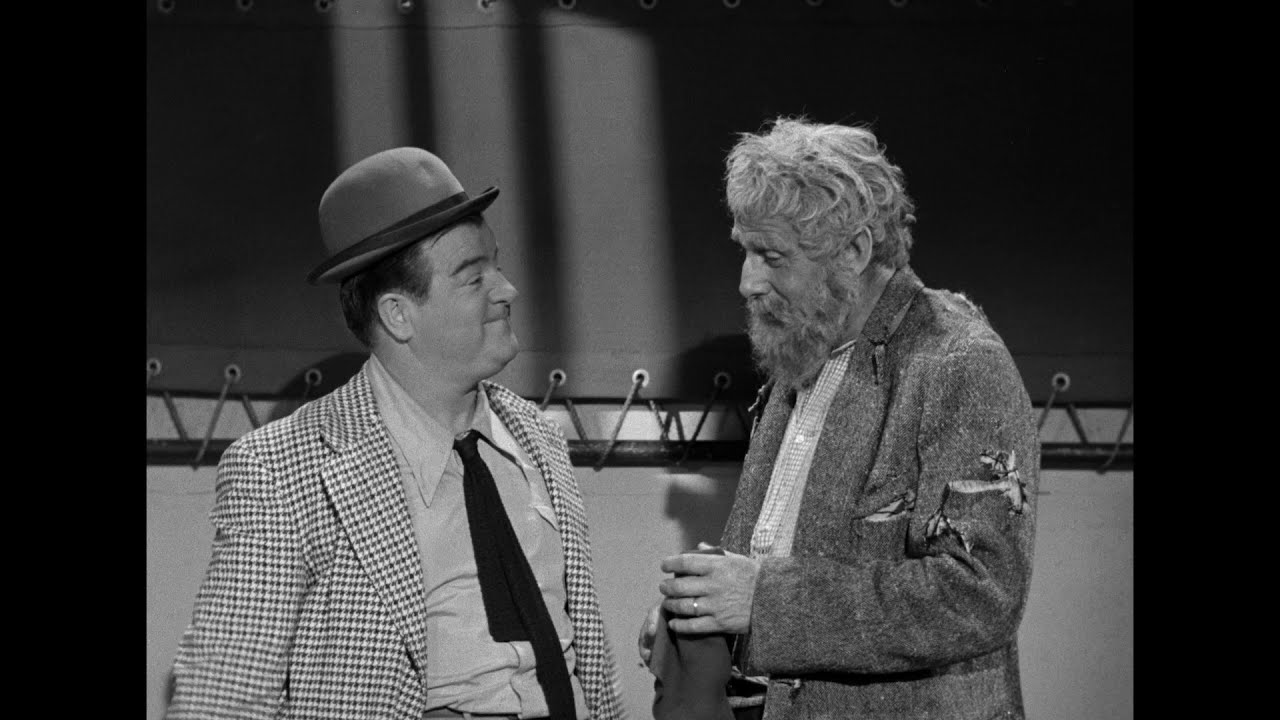
One of the smartest things about the routine is its rhythm.
The stranger does not immediately explode.
He builds toward it.
Slowly.
That delay is everything.
He begins turning toward Lou while describing the moment he confronted his enemy.
Step by step.
Inch by inch.
You know what is coming.
Lou knows something bad is coming.
But he cannot stop it.
That suspense makes the payoff much funnier.
If the stranger simply became angry immediately, the joke would be over almost as soon as it started.
Instead, the audience is given time to anticipate the disaster.
Lou watches.
The stranger approaches.
The phrase repeats.
And every second makes Lou more nervous.
Then the reenactment reaches its climax, and Lou becomes the completely innocent stand-in for the man from the stranger’s story.
It is classic physical comedy.
The violence is exaggerated, theatrical, and built around timing rather than realism.
The audience is not worried that Lou is genuinely in danger.
They are laughing because he has somehow wandered into someone else’s memory and cannot figure out how to escape.
Lou Makes the Worst Possible Discovery
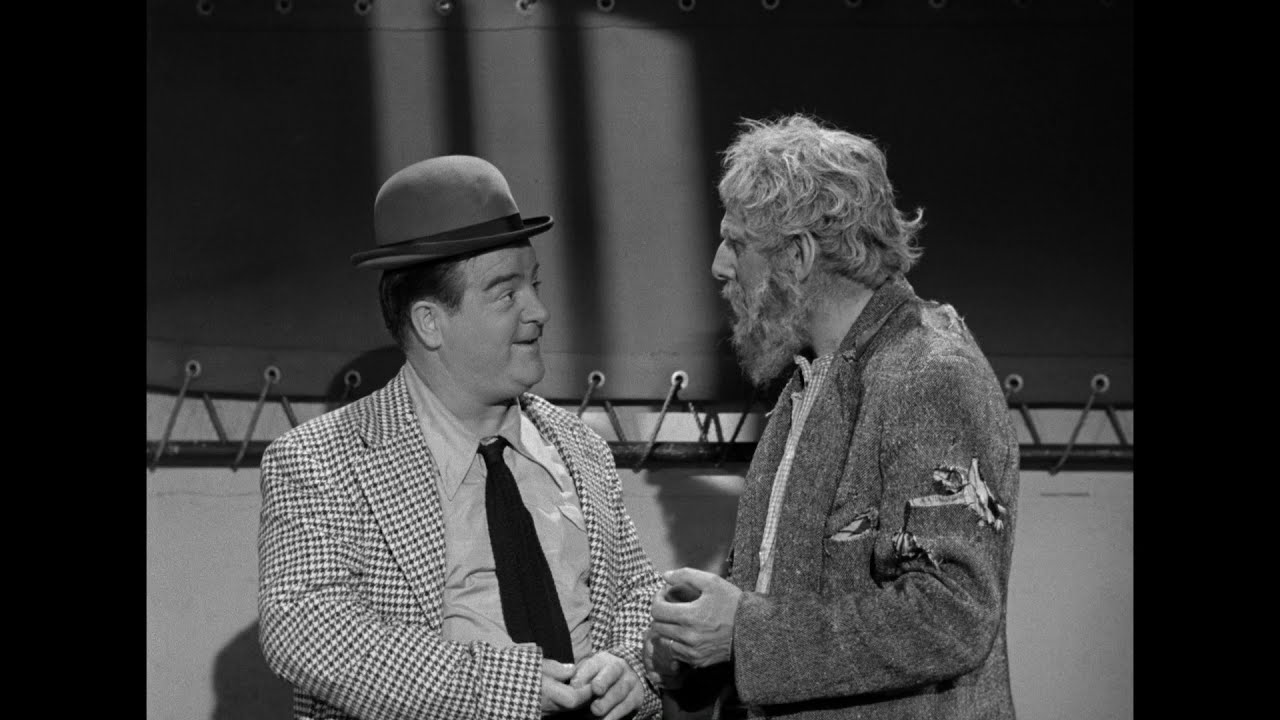
Eventually, the stranger snaps out of it.
He becomes calm again.
That should be the end.
Lou has survived.
All he has to do now is avoid saying those two words again.
That sounds easy.
But this is Lou Costello.
Avoiding the one thing he absolutely must not say is practically impossible.
Lou does what any confused person would do.
He tries to understand what just happened.
He asks questions.
He repeats details.
And sooner or later, the dangerous phrase comes back.
Niagara Falls.
The stranger freezes again.
The audience immediately knows what is coming.
Lou realizes it approximately one second too late.
And the entire sequence begins again.
Slowly he turns.
Step by step.
Inch by inch.
That repetition is the engine of the routine.
The first time is surprising.
The second time is anticipation.
The third time becomes inevitability.
By then, the audience is practically waiting for Lou to accidentally say the words again.
Repetition Becomes the Punchline
Modern comedy sometimes avoids repeating the same gag because writers worry audiences will become bored.
Classic vaudeville understood something different.
If the audience loves a joke, repetition can make it funnier—provided each repetition adds something.
“Niagara Falls” is a perfect example.
The basic action remains the same.
Lou says the phrase.
The stranger becomes enraged.
Lou suffers the consequences.
But Lou’s behavior changes.
At first, he is confused.
Then he becomes cautious.
Then desperate.
Eventually, he understands the rules perfectly and still cannot prevent the disaster.
That progression matters.
The audience is no longer laughing only at the stranger’s reaction.
We are laughing at Lou’s growing terror of the words themselves.
“Niagara Falls” becomes dangerous.
The phrase takes on a completely different meaning.
By the end, Lou reacts to those words the way someone else might react to hearing an alarm.
That is how a simple repeated gag becomes a full comedy routine.
Sidney Fields Makes the Madness Work
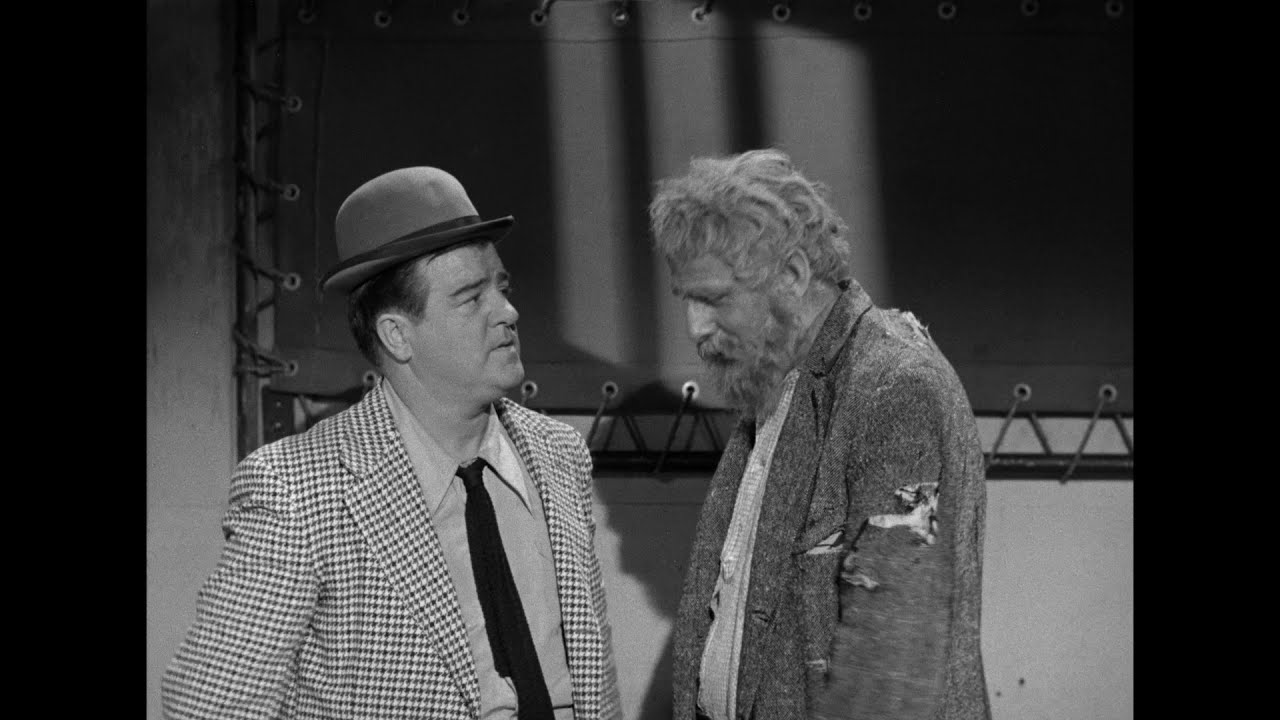
In the television version associated with The Abbott and Costello Show, Sidney Fields plays the unstable storyteller who turns Lou into the target of his remembered rage. Fields was a recurring presence in Abbott and Costello’s television world and could shift between ordinary frustration and complete absurdity beautifully. The “Niagara Falls” version placed Lou and Fields together in a jail-cell setting, making Lou’s inability to simply walk away even funnier.
Fields has an important job.
He has to make the transformation believable within the ridiculous rules of the sketch.
When calm, he seems capable of normal conversation.
Then the trigger phrase appears.
Everything changes.
The eyes.
The posture.
The voice.
The slow turn.
That contrast is essential.
If he acted insane every second, there would be no surprise.
Instead, the audience watches him switch between two modes.
Calm storyteller.
Then suddenly:
Niagara Falls.
That switch becomes the joke.
Lou Costello Was the Perfect Victim
Lou Costello had one of the greatest “victim of confusion” personas in American comedy.
He could be loud.
He could be stubborn.
He could be completely convinced that he was right.
But he was also brilliant at looking helpless when the world stopped making sense.
That is exactly what this routine requires.
Lou is not trying to provoke anyone.
He is not playing a prank.
He is not looking for trouble.
He simply keeps walking into it.
His face does much of the work.
The wide eyes.
The nervous pause.
The moment of realization when he understands that he has said the forbidden words again.
You can almost see his brain screaming:
“Why did I say that?”
But it is too late.
The stranger is already turning.
That helplessness makes Lou sympathetic.
You are laughing at him, but you are also rooting for him.
Please, Lou.
Just do not say Niagara Falls again.
Of course he will.
The Routine Was Older Than Television
One of the most interesting things about “Slowly I Turned” is that Abbott and Costello did not invent the basic routine.
It came from the older world of vaudeville and burlesque, where comedy bits could be passed among performers, altered, refined, and adapted over many years.
The University of Chicago’s archive of Samuel Goldman’s papers credits Goldman with writing hundreds of pieces, including a version of “Slowly I Turned,” showing how deeply the routine was rooted in early 20th-century stage comedy. Other histories also associate the routine with performers such as Harry Steppe and Joey Faye.
This was common in vaudeville.
A routine might exist in multiple versions.
Different performers changed names, locations, dialogue, or pacing.
What mattered was what each comedian did with the structure.
Abbott and Costello were especially good at taking this material and fitting it to Lou’s comic personality.
That is why routines they did not necessarily originate became so strongly associated with them.
They knew how to make old material feel like Abbott and Costello material.
Before Niagara Falls, There Was Pokomoko
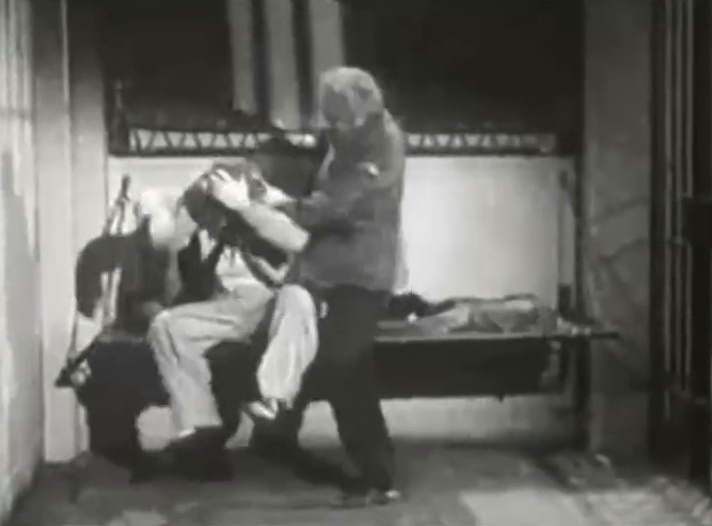
Abbott and Costello had already performed a related version of the routine in the 1944 movie Lost in a Harem.
In that version, the trigger was not “Niagara Falls.”
It was “Pokomoko.”
The film places Abbott and Costello in jail, where a fellow prisoner begins telling a story and reacts violently whenever the forbidden word appears.
The mechanics are almost identical.
A harmless word becomes dangerous.
Lou discovers the danger.
Lou tries to avoid it.
Somehow, the word keeps returning.
The television “Niagara Falls” version later gave the routine the phrase many viewers remember most strongly.
And that phrase became so closely tied to the bit that generations of viewers began automatically responding to the words “Niagara Falls” with the routine’s famous cadence.
Even today, people who grew up watching classic comedy still recognize the pattern immediately:
“Niagara Falls…”
And somewhere in their memory comes:
“Slowly I turned…”
The Three Stooges Did It Too
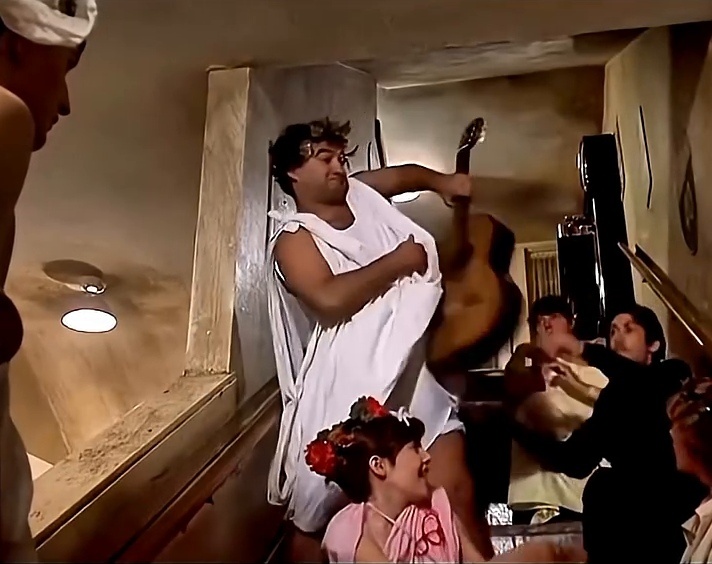
Another reason people sometimes argue about this routine is that the Three Stooges also performed a famous “Niagara Falls” version.
Their version appeared in Gents Without Cents.
This has sometimes led viewers to assume one comedy team copied the other.
The history is more complicated.
The routine existed before either team’s famous filmed versions and belonged to the shared tradition of burlesque comedy. Abbott and Costello histories note that Bud and Lou had performed versions onstage before the Stooges’ familiar film presentation, while the Stooges also created one of the routine’s best-known screen versions.
That is part of the fascinating history of classic comedy.
These routines behaved almost like folk songs.
They traveled.
Performers changed them.
Audiences recognized them.
Each comedy team added its own personality.
With the Stooges, the routine becomes unmistakably Stooge-like.
With Abbott and Costello, it becomes a perfect showcase for Lou’s confusion and mounting panic.
The Ending Makes It Even Better
One of the best parts of Abbott and Costello’s television version is the escalation near the end.
Lou has suffered enough.
He needs help.
Someone else enters.
Finally, Lou may have found a person who can rescue him from this madness.
But comedy has one more trap waiting.
The newcomer asks about the strange man.
Who is he?
Where does he come from?
Lou has to explain.
And there it is again.
The phrase nobody should say.
Niagara Falls.
The cycle restarts.
The joke spreads from one character to another.
That is a perfect ending because it proves there is no escape.
The problem is bigger than Lou now.
Anyone can become the next victim simply by saying two innocent words.
Why It Still Makes People Laugh
Comedy has changed enormously since the vaudeville era.
Television changed it.
Movies changed it.
The internet changed it.
Short-form video changed it again.
But the mechanics behind “Niagara Falls” remain recognizable.
Set up a rule.
Teach the audience the rule.
Let the character break the rule accidentally.
Then make the consequences bigger every time.
That structure still appears in comedy today.
The technology changes.
The pacing changes.
The language changes.
But anticipation and repetition still work.
Audiences still enjoy knowing that a disaster is coming while the character remains powerless to prevent it.
And few performers could sell that feeling better than Lou Costello.
Two Words That Became Comedy History
That may be the most remarkable thing about the entire routine.
Niagara Falls is simply a place.
Two ordinary words.
Nothing inherently funny about them.
But after watching Abbott and Costello, they are transformed.
Say the phrase and longtime comedy fans may immediately hear the rhythm.
Slowly I turned.
Step by step.
Inch by inch.
That is what great comedy can do.
It takes ordinary language and gives it a second life.
Lou Costello helped turn a simple trigger phrase into a joke that survived stage comedy, movies, early television, reruns, VHS tapes, DVDs, YouTube, and now social media clips.
New viewers still discover it.
Older viewers still remember exactly what is coming.
And somehow the moment the stranger begins that slow turn toward Lou is still funny.
Because Lou knows.
We know.
And there is absolutely nothing he can do to stop it.
All because he said:
Niagara Falls