A Slapstick Blueprint in High-Society Demolition
Released on April 1, 1938, by Columbia Pictures, Tassels in the Air stands as the 30th official short subject featuring the iconic trio of Moe Howard, Larry Fine, and Curly Howard. Directed by comedy specialist Charley Chase, the 17-minute feature highlights one of the most effective storytelling engines in the Stooges canon: thrusting three utterly unqualified, blue-collar vagabonds directly into the pristine salons of the wealthy elite. With its bizarre running gags, inventive paint disasters, and biting satire of contemporary art, Tassels in the Air remains an absolute gold standard of depression-era physical comedy.
The High-Stakes Farce of Mistaken Identity
The plot kicks off with typical Stooge desperation before escalating through a classic comedy of errors:
- The Janitorial Prelude: Moe, Larry, and Curly work as menial street-level office cleaners. While trying to scrub outside an upscale commercial high-rise, they encounter a nervous, wealthy patron named Mrs. Smirch (played by Bess Flowers), who is frantically searching for a renowned interior decorator named “Omay.”
- The Linguistic Confusion: Due to a comical misunderstanding of Moe’s broken phrasing—and their presence holding paint brushes and cleaning buckets—Mrs. Smirch assumes Moe is none other than Omay, the visionary European decorator of the avant-garde.
- The Heist of Necessity: Seeing an opportunity for high wages and gourmet meals, the boys eagerly accept her invitation to completely redecorate her lavish penthouse estate before her snobbish husband arrives for an evening reception.
The Unique Comedy Engine: Curly’s Tassel Phobia
What sets Tassels in the Air apart from standard Stooge renovation shorts is its surreal psychological quirk: Curly Howard suffers from an inexplicable, violent mania triggered by the sight of decorative tassels.
- The Tassel Tic: Whenever Curly catches a glimpse of dangling fringe or tassels—on curtains, lampshades, or upholstery—his eyes bulge, his jaw stiffens, and he flies into an aggressive frenzy.
- The Unorthodox Remedy: The only antidote to pacify his episodes is to immediately brush a soft tassel across his chin, which sends him into a purring, tranquil trance.
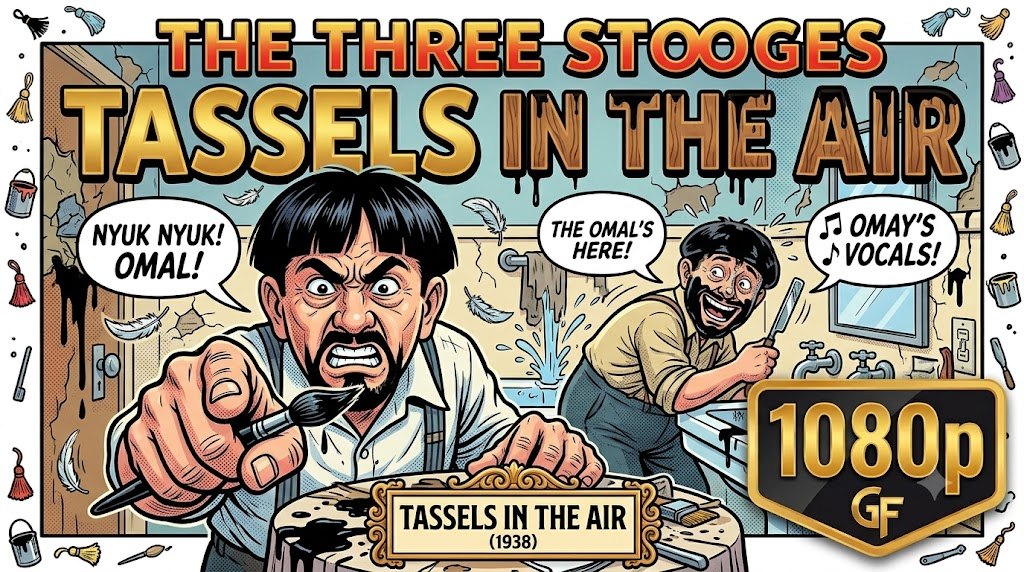
- The Paint Brush Disaster: In the iconic bathroom sequence, Moe discovers Curly in full psychotic meltdown mode. Lacking an actual decorative tassel, Moe improvises by grabbing the nearest available item: a wide horsehair brush dripping with viscous black enamel. Slapping the brush directly across Curly’s lower jaw calms the seizure, but leaves Curly coated in a comical, pitch-black false beard. When Curly glances in the mirror, mistaking the paint for sudden overnight stubble, he attempts to “shave” the enamel with a straight razor—only to trigger further structural destruction.
Moe’s Unintentional Makeover and the Bathroom Collapse

The chaos escalates as Moe attempts to restore order inside the confined tiled bathroom. Slapstick choreography thrives in enclosed spaces, and director Charley Chase maximizes every fixture:
- The Ricochet Impact: While wrestling with runaway plumbing lines and loose ladders, Moe takes the brunt of the black paint bucket directly to the face. The thick lacquer creates a bizarre mustache and goatee, parting his iconic bowl-cut hair into slicked-down fringes.
- The Plumbing Meltdown: Pipes shear off walls, spraying pressurized water across the floorboards. Curly gets wedged into the tub, Larry scrambles with loose fittings, and Moe conducts the calamity with frantic eye-pokes, ear-twists, and flying tools.
Modern Art Parody: The Climax in the Salon
Once the paint spills out into the main living quarters, the trio shifts from simple destruction to accidental modern art:
- The “Futuristic” Paint Job: Armed with rollers, mops, and mismatched buckets, the boys splatter black, white, and red paint indiscriminately across antique tables, pristine plaster molding, and antique tapestries. Every misstep is defended by Moe as revolutionary modernist aesthetic theory.
- The Card Table Fiasco: When the pompous Mr. Smirch arrives alongside high-society critics, the Stooges serve them at a table they have literally painted while the guests were seated. In one of the short’s most quoted gags, the guests’ hands, elbows, and playing cards fuse completely to the wet black lacquer.
- The Inevitable Unmasking: The masquerade dissolves into all-out warfare when Curly spots decorative tassels on the host’s smoking jacket, sending him into one final berserk rampage that levels the chandelier and drives the guests screaming into the street.
Critical Legacy and Historical Significance
Tassels in the Air endures as a hallmark entry in the Stooges library for several key reasons:
- Charley Chase’s Direction: Chase brought a sophisticated sense of domestic situational farce from the silent era, balancing raw slapstick violence with tight narrative logic.
- Social Satire: The short ruthlessly mocks high-art pretensions, showing that the wealthy elite cannot distinguish genuine artistic brilliance from the reckless vandalism of three bumbling handymen.
- Peak Chemistry: Featuring the classic lineup of Moe, Larry, and Curly at the height of their physical prime, Tassels in the Air remains a timeless, unhinged masterclass in vintage Hollywood humor.