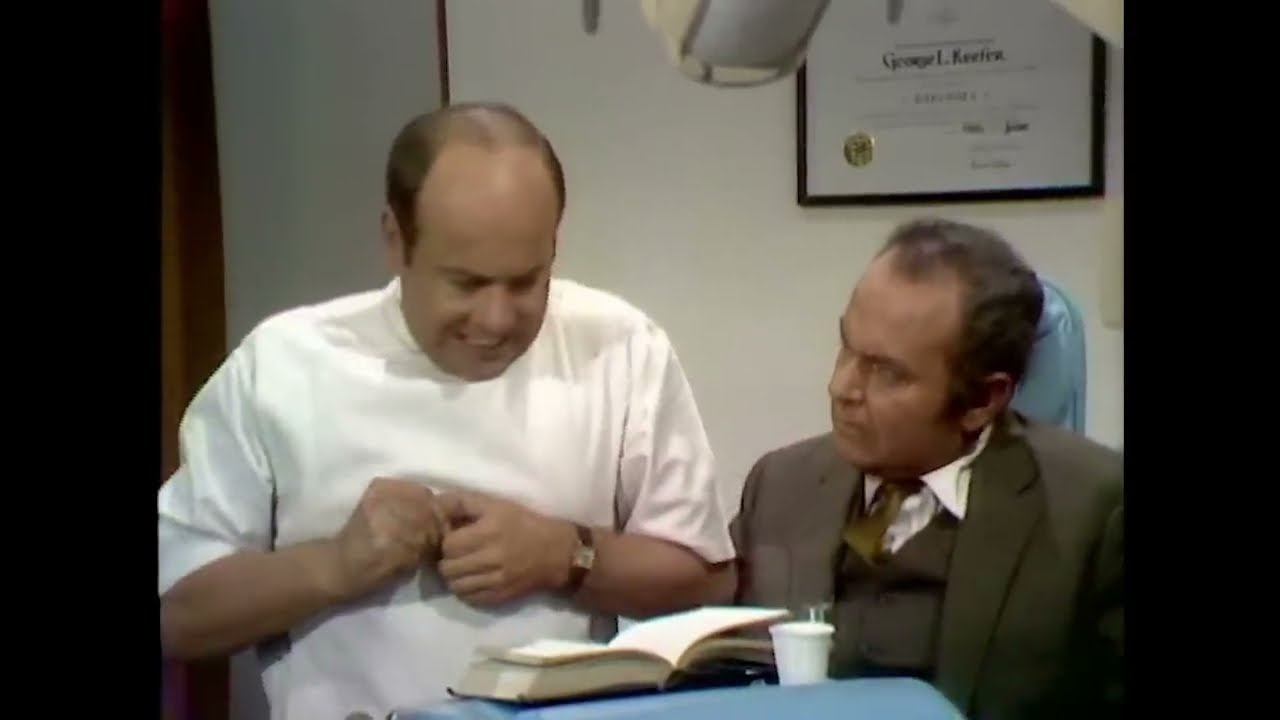
Tim Conway turned one simple dental procedure into unforgettable comedy, while Harvey Korman’s helpless laughter made the moment even more legendary.
Some comedy sketches are remembered because of a clever line.
Others survive because of a great character, a ridiculous costume, or a perfectly constructed situation.
And then there is Tim Conway’s legendary dentist routine—a scene where the physical comedy is already brilliant, but Harvey Korman’s inability to keep a straight face makes everything even better.
The setup is wonderfully simple.
Harvey Korman sits in the dentist’s chair, playing a nervous patient. Tim Conway appears as the dentist, preparing to perform what should be a routine procedure.
At first, everything seems under control.
Then the Novocain comes out.
Instead of numbing Harvey, Tim accidentally injects himself.
That one mistake changes the entire sketch.
At first, the effect appears small. Tim notices that one hand is becoming difficult to control. He tries to continue working as though nothing serious has happened.
Then the numbness spreads.
His arm begins to droop.
His shoulder refuses to cooperate.
His leg starts behaving as though it belongs to someone else.
Within moments, Tim Conway’s entire body seems to be shutting down piece by piece.
The brilliance is in how slowly he lets it happen.
He does not immediately collapse.
He does not announce the problem.
He simply tries to keep working.

That decision turns a funny situation into comedy gold.
Tim lifts an instrument.
His hand fails.
He attempts to stand normally.
One side of his body sags.
He tries to move toward Harvey’s mouth, but his limbs seem determined to travel in completely different directions.
And through every failure, Tim keeps the same wonderfully serious expression.
That straight face is what destroys Harvey.
Harvey Korman is supposed to remain a frightened dental patient.
Instead, he is sitting only inches away from one of the funniest physical performances imaginable.
He sees every tiny movement.
He knows where Tim is supposed to go.
He also knows that Tim Conway may decide to make the routine even more ridiculous at any moment.
Harvey tries to stay professional.
He looks away.
He presses his lips together.
He covers part of his face.
His shoulders begin shaking.
The audience can see exactly what is happening.
Harvey is losing the battle.
That struggle becomes another comedy routine layered on top of Tim’s performance.
The audience is laughing at the dentist.
But they are also laughing at Harvey trying desperately not to laugh at the dentist.
That is what makes the sketch feel so alive.
Tim Conway’s physical comedy is remarkably controlled.
His body may look completely helpless, but the performance requires precision.
He has to make one arm look numb without losing control of the rest of the movement. Then another part of his body has to fail at exactly the right moment.
Each new stage must be slightly worse than the last.
The joke grows gradually.
First the hand.
Then the arm.
Then the leg.
Then almost everything.
That escalation gives the audience time to understand each new problem before the next one arrives.
Tim Conway knew how to wait.
That was one of his greatest strengths.
Modern comedy often moves quickly. Jokes are delivered one after another, and scenes are edited tightly to maintain constant energy.
Tim could create enormous laughter by slowing everything down.
He allowed a hand to fall.
Then he paused.
He studied it.
He tried to fix it.
The audience laughed harder because Tim seemed genuinely confused by his own body.
That innocence made his comedy warm.
He never appeared to be showing off.
The character believed he could still complete the dental procedure.
Everyone else knew he had absolutely no chance.
Harvey Korman knew it better than anyone.
You can watch his composure disappear in stages.
At first, he is still acting.
Then comes the first smile.
He looks away.
He tries to recover.
Tim makes another movement.
Harvey bends forward.
The laughter becomes impossible to hide.
What makes Harvey’s reaction so enjoyable is that he clearly wants to finish the sketch.
He is not simply laughing and giving up.
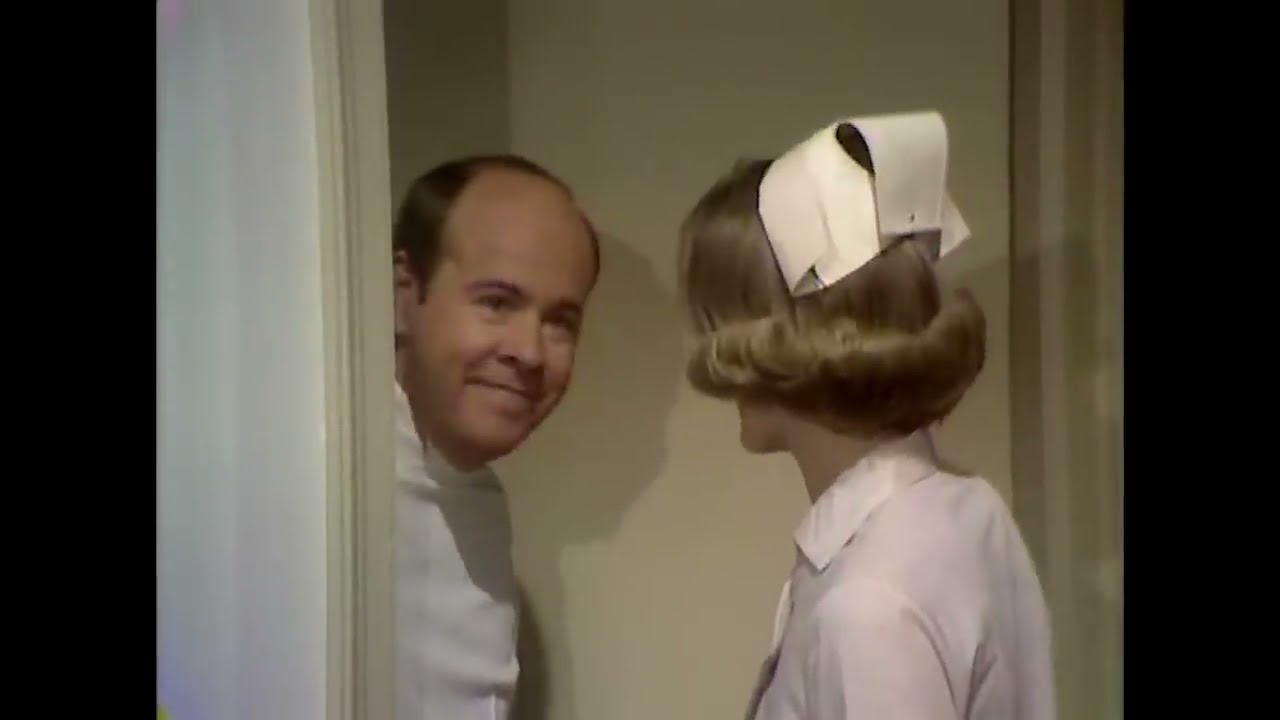
He fights.
That fight is hilarious.
He takes another breath.
He tries to return to the nervous patient character.
He looks back at Tim.
That is usually the worst possible decision.
Tim remains completely serious.
Harvey breaks again.
Their chemistry transforms the scene.
If Tim were performing the routine alone, it would still be funny.
If Harvey only sat quietly and never reacted, the physical comedy would still work.
But together, they create something much more memorable.
Tim gives Harvey something impossible to resist.
Harvey’s genuine laughter tells the audience just how funny Tim is.
The audience then laughs harder because Harvey is laughing.
It becomes a perfect circle.
That relationship was one of the great strengths of The Carol Burnett Show.
The performers trusted one another.
They knew their roles.
Harvey was often the man trying to maintain order.
Tim was often the person quietly destroying it.
Harvey brought seriousness to the scene.
Tim used that seriousness as something to push against.
The more professional Harvey tried to be, the funnier Tim became.
And the more ridiculous Tim became, the harder Harvey fought to remain serious.
That tension made their scenes feel unpredictable.
Viewers never knew exactly when Harvey would finally lose control.
They watched his face closely.
The tightened mouth.
The eyes shifting away.
The shoulders beginning to shake.
Longtime fans knew the warning signs.
Harvey was almost finished.
Then Tim would add one more tiny movement.
That was enough.
The dentist routine also demonstrates why simple comedy can become timeless.
The set is uncomplicated.
The premise is easy to understand.
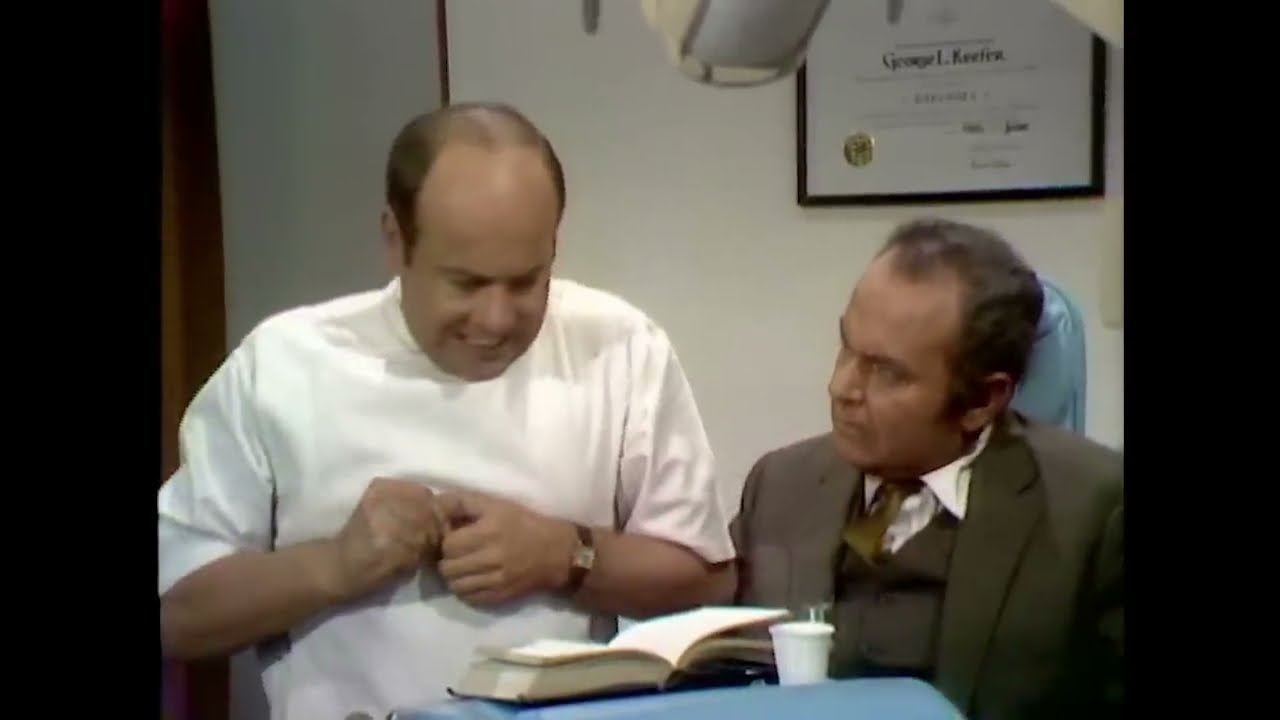
There are no elaborate visual effects.
The humor depends on performance.
Everyone knows what should happen at a dentist’s office.
The dentist should be steady.
The patient should be nervous.
The procedure should be controlled.
Tim reverses the situation.
The patient may be nervous, but the dentist is the one who becomes physically incapable of doing his job.
Every professional expectation disappears.
That contrast is instantly funny.
The sketch is also family-friendly in the best sense.
Children can laugh at Tim’s floppy arm and awkward movements.
Adults can appreciate the precision behind the physical comedy.
Comedy fans can study the timing.
Longtime viewers can enjoy Harvey Korman’s reactions again and again.
Different generations can laugh at the same moment for different reasons.
That broad appeal is part of why clips from The Carol Burnett Show remain so beloved.
They do not rely entirely on references from a particular era.
Great physical comedy is easy to understand.
A man wants his body to cooperate.
It does not.
Another man is trying not to laugh.
He cannot.
That is enough.
There is also something deeply nostalgic about watching Harvey and Tim together.
For many viewers, their scenes bring back memories of a time when families gathered around one television set.
People watched the same show.
They recognized the same performers.
They waited for Tim Conway to do something unexpected.
And when Harvey Korman began to crack, the entire room laughed with him.
Those shared experiences became part of the show’s legacy.
Watching the dentist sketch today can feel like opening a little window into that era.
The clothes may look different.
The production style may feel simpler.
But the laughter still feels immediate.
Tim’s movements are still funny.
Harvey’s reaction is still contagious.
The chemistry still works.
That is the mark of great comedy.
The joke does not need to be explained.
You can watch Tim’s arm slowly stop cooperating and understand everything.
You can watch Harvey turn away and know exactly what he is trying to do.
You can see Tim’s completely innocent face and understand why Harvey has no chance.
The performers communicate through movement and reaction.
That is craftsmanship.
Tim Conway could make a hand falling limp feel like an entire punchline.
He could make a slow step across the room funnier than a complicated stunt.
He understood that physical comedy worked best when the character remained sincere.
The dentist did not believe he was funny.
He believed he still had a job to do.
That belief makes every movement stronger.
Harvey’s laughter then adds something no script can fully manufacture.
Joy.
You can see that he is genuinely enjoying Tim’s performance.
The professionalism is still there.
The skill is still there.
But beneath it is one friend making another friend laugh.
That is what viewers connect with.
The sketch stops feeling like actors simply delivering a routine.
For a moment, it feels like we are watching two people having the time of their lives.
That warmth is why the scene never becomes mean or embarrassing.
Harvey’s laughter feels affectionate.
Tim’s performance feels playful.
The audience becomes part of the friendship.
Decades later, that connection remains.
Many comedy sketches are funny once.
A few become funnier when you already know what is coming.
Tim Conway’s dentist scene belongs to that second group.
You know the injection is coming.
You know his arm will fail.
You know Harvey is going to lose control.
But anticipation makes the experience even better.
You watch Harvey carefully.
You wait for that first smile.
You see Tim begin the physical routine.
Then the entire scene unfolds exactly as beautifully as you remembered.
That is why fans can watch it again and again.
The surprise may be gone.
The joy is not.
Tim Conway turned one accidental injection into a masterclass in physical comedy.
Harvey Korman turned trying not to laugh into a second unforgettable performance.
Together, they created one of those rare television moments where the written joke, the physical routine, and the genuine reaction all became equally important.
The dentist may have lost control of his body.
Harvey may have lost control of his laughter.
But television comedy gained something timeless.
And decades later, it is still almost impossible to watch Tim Conway’s numb dentist without laughing right along with Harvey.