There are comedy performances that make you laugh once, and then there are performances that somehow become funnier every time you watch them. Tim Conway’s first appearance as “The Oldest Man” on The Carol Burnett Show belongs firmly in the second category.
The character’s debut in the classic “As the Stomach Turns” sketch is a perfect example of how brilliant physical comedy can turn something incredibly ordinary into something unforgettable. Conway didn’t need explosions, elaborate costumes, or complicated jokes. His greatest weapon was simply moving very, very slowly.
And somehow, it was hilarious.
The sketch begins like an exaggerated daytime soap opera, complete with dramatic narration, emotional music, and the fictional town of Canoga Falls facing yet another ridiculous crisis. Carol Burnett plays Marion, the long-suffering heroine surrounded by family problems and increasingly absurd situations.
Then comes Tim Conway.
As Marion’s elderly grandfather, Conway makes his entrance at a pace that can only be described as geological. He shuffles across the room with tiny, trembling movements, turning what should be a few-second walk into an epic journey.
The genius is in the commitment.
Conway never rushes. Not even slightly.
Every step is deliberate. Every pause lasts just a little longer than expected. Every tiny movement becomes part of the joke. The audience quickly realizes that watching this man simply cross a room is going to take a very long time — and that realization makes the entire thing even funnier.
Then the story gets completely ridiculous.
Gramps learns that Marion wants to send him to a retirement community in Sun City. Naturally, he refuses and announces that he will run away.
Except there is one small problem.
He is “running” at approximately the speed of a sleeping turtle.
His voice suggests urgency. His body suggests that he may arrive sometime next week.
That contrast is classic Tim Conway.
And then Cindy arrives.
Suddenly, the supposedly exhausted old man discovers a surprising amount of motivation. His determination to pursue Cindy creates another hilarious chain reaction, with other characters becoming equally distracted and confused.

The sketch keeps escalating until practically everyone is caught up in the madness.
But the true masterpiece comes when Gramps has to descend the staircase.
What should be a completely ordinary action becomes an entire comedic event.
Conway approaches each step with unbelievable caution, trembling and hesitating as though he is attempting to climb Mount Everest. The longer it takes, the funnier it becomes. The audience waits. The other characters wait. And Conway continues moving at exactly the same painfully slow pace.
This is where his understanding of timing becomes obvious.
Physical comedy is not always about moving quickly. Sometimes, the funniest thing you can do is refuse to move at all.
Conway understood that perfectly.
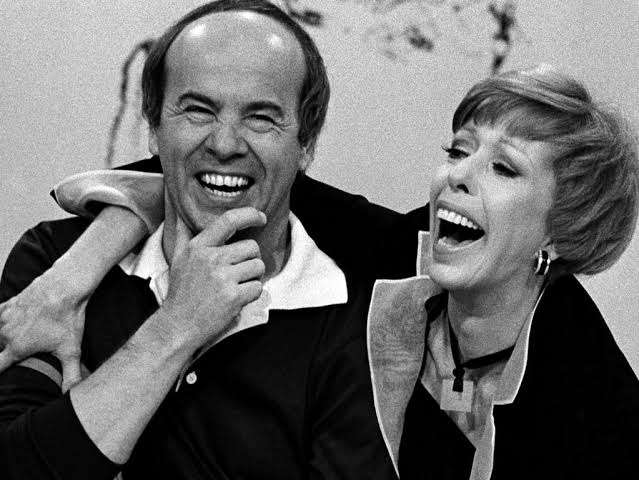
His performance also benefited enormously from his chemistry with Carol Burnett. Burnett often serves as the perfect straight character, reacting to Conway’s absurd behavior with increasing disbelief and frustration. Her reactions give the audience another reason to laugh because you can almost see her trying to maintain control while everything around her falls apart.
That chemistry became one of the defining strengths of The Carol Burnett Show.
What makes “The Oldest Man” particularly memorable is that Conway never appears to be trying too hard. He plays the character with complete seriousness. Gramps doesn’t seem to know that he is funny. As far as he is concerned, everything happening around him is perfectly normal.
That deadpan attitude makes the ridiculousness even stronger.
Decades later, the sketch still works because the humor is fundamentally human. Everyone understands what it feels like to wait for someone who takes forever to do something simple. Conway simply takes that everyday frustration and stretches it to an absurd extreme.
A walk becomes a marathon.
A staircase becomes an expedition.
A simple conversation becomes a comedy disaster.
And Tim Conway turns all of it into television gold.
The first appearance of “The Oldest Man” was more than just the introduction of a memorable character. It demonstrated why Conway was such a master of physical comedy. His ability to control timing, body language, facial expressions, and silence made even the smallest movement hilarious.
There is also something wonderfully nostalgic about watching this kind of classic television comedy. The performance doesn’t depend on modern editing tricks or rapid cuts. The camera simply stays with the actors and allows the joke to develop naturally.
The audience has time to watch the comedy happen.
And that patience is exactly what makes the performance so rewarding.
Tim Conway would bring “The Oldest Man” back in numerous sketches, but this early appearance remains special because it shows the character in his original form. You can see the comedic idea taking shape: the ancient, painfully slow man who somehow becomes the center of complete chaos.
It is a simple concept.
But in the hands of Tim Conway, it became unforgettable.
So if you have never seen the original debut, prepare yourself for one important lesson:
Never underestimate how funny a man walking extremely slowly can be.
Because Tim Conway didn’t need to sprint to steal the show.
He just needed one tiny step at a time. 😂