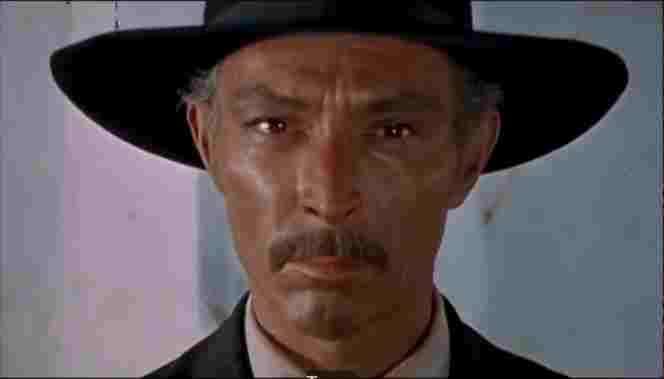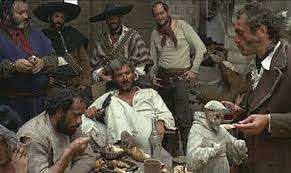
For decades, the cinematic landscape of the American Old West has lived vividly in the collective imagination, defined by dusty main streets, weathered wooden saloons, and unforgiving sun-baked deserts. Yet, one of the most enduring paradoxes of film history is that the quintessential American Westerns directed by Sergio Leone were not filmed in Arizona or Texas at all. Instead, they were brought to life in the rugged, arid terrain of Almería, Spain. A striking documentary-style video titled A Fistful of Dollars | Location Comparisons: Almería, Spain 1964–2004, published by Clint Eastwood’s Malpaso, offers an evocative and bittersweet look at this cinematic geography, charting the dramatic transformation—and in many cases, the decay—of these legendary sets over forty years.
The Birth of a Legend in the Spanish Desert
Released in 1964, A Fistful of Dollars (Per un pugno di dollari) fundamentally reshaped the Western genre. Starring a then-little-known Clint Eastwood as the iconic “Man with No Name,” the film introduced a gritty, morally ambiguous aesthetic that stood in stark contrast to the clean-cut Hollywood westerns of the 1950s. Leone needed a landscape that felt harsh, isolated, and visually arresting, perfectly mirroring the cynical tone of his anti-hero.
The Tabernas Desert in Almería proved to be the ideal canvas. With its striking badlands, dry riverbeds, and dramatic mountain backdrops, it convincingly doubled for the Mexican-American border region. To construct the fictional border town where the feuding Baxter and Rojo clans wage their deadly turf war, production crews built elaborate sets—most notably at Cortijo El Fraile and the makeshift town of San José in the Cabo de Gata-Níjar natural park, alongside the permanent western villages later established in Tabernas.
Bridging Decades: The 1964 vs. 2004 Comparison
The core strength of the Malpaso short video lies in its precise, frame-by-frame visual comparisons. By juxtaposing original film stills from 1964 against contemporary footage shot in 2004, the video constructs a compelling visual dialogue between celluloid myth and material reality.
In the 1964 segments, the locations pulse with a raw, kinetic energy. Even in their cinematic depiction as dusty, desolate backwaters, the streets were engineered spaces—alive with background actors, livestock, wooden facades, and the unmistakable atmosphere of a frontier settlement on the edge of lawlessness. The framing captures sweeping vistas where Eastwood’s poncho-clad stranger cuts a lonely, mythic figure against the horizon.
Fast forward to 2004, and the landscape tells a very different story—one of haunting abandonment, architectural erosion, and the relentless reclamation of nature. Many of the specific architectural landmarks utilized in A Fistful of Dollars are shown in advanced states of decay. Wooden structures have weathered and collapsed, unpainted adobe walls have eroded under decades of wind and occasional flash floods, and debris litters what were once bustling cinematic thoroughfares.
Yet, beneath the physical decay, the bones of the landscape remain remarkably unaltered. The geological formations—the jagged ridges, the sweeping contours of the hills, and the expansive skies—defy time. The video highlights how ephemeral human artifice is when pitted against deep time and geography, while simultaneously celebrating the permanence of the natural landmarks that anchored Leone’s cinematic vision.
The Cultural Legacy of Almería’s Western Heritage
The comparison spanning 1964 to 2004 also serves as a broader commentary on the preservation of film history. During the golden age of the Spaghetti Western in the 1960s and 1970s, Almería experienced a massive economic and cultural boom. Dozens of international productions—including Leone’s subsequent masterpieces For a Few Dollars More (1965) and The Good, the Bad and the Ugly (1966)—transformed the province into “Europe’s Hollywood.“
However, as the popularity of the Western genre waned in the late 20th century, many of these iconic sets were left to the elements. While a few commercialized theme parks in Tabernas managed to preserve or reconstruct elements of the old sets for tourism, the wilder, more remote locations used in A Fistful of Dollars were largely left unprotected. The 2004 footage captures a poignant transition era: a time when these sites were forgotten ruins rather than curated heritage landmarks, visited primarily by hardcore cinephiles and wandering travelers.
Conclusion
Ultimately, A Fistful of Dollars | Location Comparisons: Almería, Spain 1964–2004 is much more than a technical comparison of camera angles and geographic coordinates. It is an exploration of memory, myth, and mortality. It reminds viewers that the cinematic worlds we fall in love with are fragile illusions built on transient physical foundations. As the Spanish sun beats down equally on the bustling film sets of 1964 and the silent, crumbling ruins of 2004, the video leaves us with a lingering appreciation for the artists who captured lightning in a bottle—and the desolate, beautiful desert that let them do it.