In the harsh gold-mining country of California, a small community of independent miners is fighting to survive against a powerful businessman determined to take control of their land. The miners have little money, few weapons, and almost no protection. Their future seems almost impossible.
Then, one day, a mysterious preacher rides out of the wilderness.
Nobody knows where he came from. Nobody knows his real name. He speaks very little, asks for nothing, and offers no explanation for his sudden appearance. Yet there is something about him that immediately sets him apart.
When violence threatens the miners, the preacher reveals that he is far more dangerous than he first appears.
His violence is not reckless or motivated by pleasure. It is precise, controlled, and directed toward those who prey on the weak. This makes him fundamentally different from the men he confronts. While the villains use violence to gain wealth and power, the preacher uses it to protect people who have no other defense.
The miners are being pressured by Coy LaHood, a wealthy businessman who wants their claims for himself. LaHood believes that money and intimidation will eventually force them to surrender. He tries to buy them out, threaten them, and use armed men to drive them from the valley.
But the miners refuse to give up.
For them, the struggle is no longer simply about gold. It is about freedom—the right to live on their own land, work for themselves, and decide their own future.
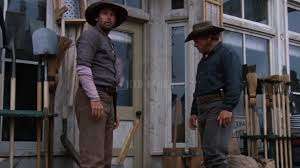
Among the miners, Hull Barret becomes one of the strongest voices of resistance. He refuses to surrender even when the odds appear hopeless. As the conflict grows more dangerous, the mysterious preacher becomes increasingly important to the community.
Yet his presence raises a deeper question.
Why is he there?
What brought him to the valley?
And why does Marshal Stockburn, the ruthless lawman working for LaHood, seem to have a connection to him?
The preacher clearly carries wounds of his own. He rarely speaks about his past, but there is a darkness behind his calm expression. Hull and the others gradually realize that this stranger is not simply a wandering man of God who happened to arrive at the right moment.
He has unfinished business.
As the confrontation between the miners and LaHood escalates, the preacher’s past begins to catch up with him. Marshal Stockburn recognizes him as an old enemy, revealing that their conflict goes back much further than the events taking place in the mining camp.
The preacher’s mysterious identity is finally connected to Stockburn and his deputies.
When LaHood’s forces prepare for their final assault, the preacher understands that the only way to protect the miners is to confront their enemies directly.
He rides into town alone.
There is no army behind him. No group of gunfighters. No promise of escape.
Just one man riding toward the men who have come to destroy the community.
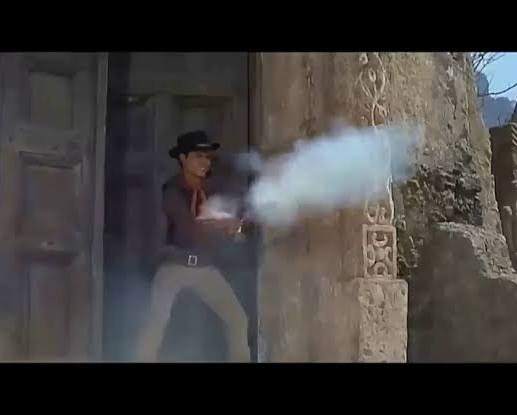
One by one, he confronts Stockburn’s deputies. The gunfights are sudden, brutal, and decisive. The men who once believed they controlled the valley quickly discover that they have underestimated the stranger.
The preacher is not simply a man of faith.
He is an extraordinarily skilled gunfighter.
After defeating Stockburn’s deputies, he finally faces Marshal Stockburn himself.
Their confrontation carries the weight of an old and unresolved conflict. Stockburn recognizes the man standing before him, but the preacher does not offer a long explanation or attempt to justify his past.
He does not need to.
The final confrontation is settled with a gun.
Stockburn falls, and with him, much of LaHood’s power collapses.
For the miners, the nightmare is finally coming to an end. They have won more than the right to keep their gold claims. They have gained something far more important: the freedom to build their own future without living under the constant threat of a powerful man.
But the preacher does not stay to enjoy the victory.
This is one of the most haunting elements of the story.
He does not ask for money. He does not demand recognition. He does not remain with the community or claim a reward for what he has done.
Instead, he simply rides away.
Megan watches as the mysterious stranger disappears into the wilderness.
The film never provides a definitive explanation of who the preacher truly is. Was he a former gunfighter seeking redemption? Was he a man returning from the past to settle an old score? Or does he represent something larger—a mysterious force of justice appearing when ordinary people have lost all hope?
The story deliberately leaves these questions unanswered.
That mystery is at the heart of Pale Rider.
The film is not simply a story about gold, guns, and a battle between miners and a wealthy businessman. Beneath the Western action is a deeper story about greed, oppression, revenge, faith, and redemption.
The preacher arrives when the miners are at their weakest. He gives them courage when they have almost none left. He reminds them that power does not always belong to the richest man or the one with the most weapons.
But he also carries his own darkness.
His mission is not about fame or fortune. It is about completing one final act of justice.
And once that purpose has been fulfilled, he disappears.
As the mist closes around the departing rider, the community is left behind to begin a new life.
The preacher is gone.
The valley becomes quiet again.
And what remains is not a name, a monument, or a reward—but a legend.
The legend of the Pale Rider, the mysterious preacher who came out of the mist, confronted evil, and disappeared into the vast American frontier.