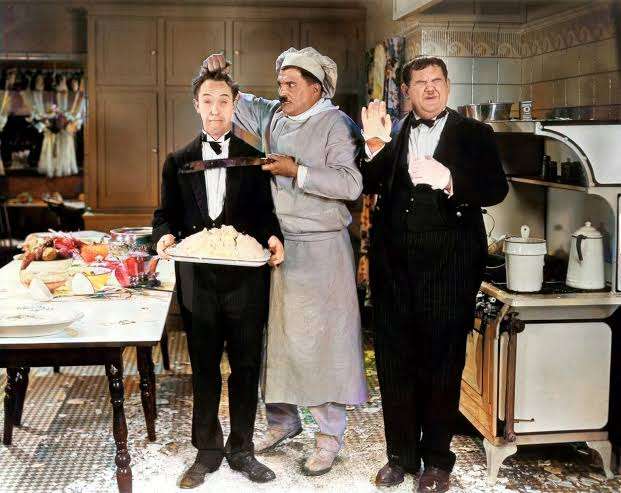
Few comedy teams have left a legacy as enduring as Stan Laurel and Oliver Hardy. Their unique combination of innocence, frustration, impeccable timing, and physical humor helped shape the future of cinematic comedy. Among their many silent films, From Soup to Nuts (1928) stands out as an unforgettable showcase of everything that made the duo legendary. While the story revolves around something as ordinary as serving dinner at a wealthy family’s banquet, the film transforms this everyday event into an extraordinary display of comic brilliance.
The beauty of From Soup to Nuts lies in its simplicity. There are no elaborate special effects, dramatic plot twists, or complicated storylines. Instead, the film proves that comedy often works best when it begins with a familiar situation. Almost everyone understands the pressure of serving guests at an important dinner. Every plate must be presented perfectly, every guest should feel welcome, and every detail must appear flawless. Laurel and Hardy take these ordinary expectations and slowly turn them upside down.
Stan Laurel portrays his trademark innocent character with remarkable charm. He approaches every task with complete sincerity, yet somehow every simple assignment becomes unexpectedly complicated. Laurel never behaves like someone trying to be funny. Instead, he genuinely believes he is doing his best, which makes every mistake feel authentic. His childlike optimism encourages the audience to root for him, even as disaster unfolds around him.
Oliver Hardy provides the perfect balance. Calm, confident, and convinced he can control every situation, Hardy repeatedly finds himself cleaning up the chaos left behind by his partner. Yet his confidence gradually fades as each solution creates an even bigger problem. His growing frustration becomes one of the film’s greatest sources of humor. The famous expressions of disbelief that Hardy directs toward the audience almost create an invisible conversation, inviting viewers to share his amazement at the unfolding madness.
One of the film’s greatest achievements is its remarkable pacing. Instead of rushing from one gag to another, every joke is carefully developed. Small mistakes quietly build into larger disasters. A dropped utensil leads to confusion. Confusion leads to panic. Panic leads to complete disorder. By allowing each problem to grow naturally, the filmmakers create a rhythm that keeps audiences laughing while remaining fully invested in the story.
The dinner itself becomes more than simply a meal. It represents social expectations, elegance, and order. Every carefully arranged table setting symbolizes sophistication, while Laurel and Hardy represent unpredictability and human imperfection. The contrast between these two worlds creates endless comic opportunities. As order slowly collapses, viewers cannot help but wonder what could possibly go wrong next.
One reason the film continues to entertain modern audiences is its complete reliance on visual storytelling. Silent cinema demanded extraordinary discipline from performers because emotions could not be explained through dialogue. Every thought had to be expressed through movement, facial expressions, posture, and carefully choreographed actions. Stan Laurel possessed perhaps one of the most expressive faces in movie history. His eyes alone communicate confusion, hope, curiosity, embarrassment, and surprise with astonishing clarity.
Equally impressive is Oliver Hardy’s remarkable sense of comic timing. Hardy understood that a pause could be just as funny as a physical gag. Before reacting to another disaster, he often freezes for a brief moment, allowing anticipation to build. These silent pauses invite the audience to realize exactly what has happened before Hardy himself reacts. The result is comedy that feels perfectly measured rather than rushed.
Although the film was produced nearly one hundred years ago, its humor feels surprisingly modern. Many contemporary sitcoms continue to rely on misunderstandings, awkward social situations, and escalating complications—the very techniques perfected by Laurel and Hardy during the silent era. Their influence can be seen in countless comedians who followed, from Rowan Atkinson’s Mr. Bean to countless performers specializing in visual comedy.
Another fascinating aspect of From Soup to Nuts is its historical value. The elegant costumes, luxurious dining room, polished silverware, and formal etiquette provide a glimpse into upper-class society during the late 1920s. Modern audiences are not simply watching a comedy—they are also observing a beautifully preserved piece of social history. The film captures the atmosphere of an era when formal dinners were symbols of status and refinement.
The supporting characters also contribute significantly to the film’s success. The distinguished dinner guests desperately attempt to maintain their composure despite witnessing one embarrassing incident after another. Their polite reactions make the comedy even stronger because they refuse to acknowledge the obvious chaos surrounding them. This contrast between dignity and disorder remains one of the film’s most effective comic devices.
What truly separates Laurel and Hardy from many other comedians is their humanity. Neither character is cruel, arrogant, or intentionally destructive. They simply find themselves overwhelmed by circumstances beyond their control. Their mistakes feel accidental rather than malicious. As a result, audiences never lose sympathy for them, even when everything goes spectacularly wrong.
Director Edgar Kennedy deserves recognition for creating an environment where every visual joke unfolds naturally. Rather than relying on rapid editing, he allows scenes to breathe, giving viewers enough time to observe every detail before the next surprise arrives. This patient style perfectly complements Laurel and Hardy’s performances and highlights the precision behind every comic movement.
The film also demonstrates the extraordinary craftsmanship required for physical comedy. Every stumble, misplaced object, spilled dish, and unexpected collision had to be rehearsed repeatedly until it appeared completely effortless. While audiences experience spontaneous laughter, the performers execute carefully planned choreography with remarkable accuracy.
For modern viewers accustomed to dialogue-heavy entertainment, From Soup to Nuts serves as a reminder that great storytelling depends far more on emotion than words. The film speaks a universal language understood by audiences everywhere. Whether viewed in America, Europe, Asia, or anywhere else, the humor remains instantly recognizable because it reflects common human experiences—nervousness, embarrassment, determination, and the hope that everything will somehow work out.
The partnership between Stan Laurel and Oliver Hardy reached extraordinary heights because each actor enhanced the other’s strengths. Laurel’s innocence made Hardy’s frustration funnier, while Hardy’s confidence highlighted Laurel’s uncertainty. Their chemistry never felt forced. Instead, it resembled two lifelong friends constantly finding themselves in impossible situations. That authenticity remains one of the reasons their films continue to attract new generations of fans.
Nearly a century after its release, From Soup to Nuts remains a shining example of silent cinema at its finest. It demonstrates that timeless comedy does not depend on technology, expensive production, or elaborate dialogue. Instead, it relies on creativity, precise timing, relatable characters, and genuine heart. Laurel and Hardy understood these principles better than almost anyone in film history.
Watching From Soup to Nuts today is more than simply revisiting a classic movie. It is an opportunity to appreciate the origins of cinematic comedy and to witness two masters of their craft at work. Every smile, every confused glance, and every carefully timed mishap reminds us that laughter is one of the few things that never grows old. That is why this charming 1928 comedy continues to earn its place among the greatest silent films ever made.