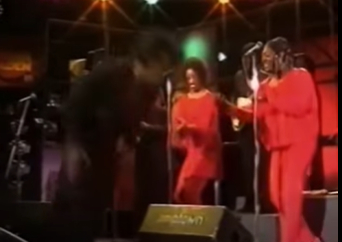
Often imitated, never replicated — James Brown didn’t just perform, he took over the entire stage.
Few artists in music history developed a performance style as instantly recognizable as James Brown. With explosive energy, sharp choreography, powerful vocals, and an unmistakable stage presence, Brown transformed live performance into something that had to be seen as much as heard.
For fans of classic soul, funk, R&B, and vintage television performances, James Brown remains one of the most fascinating entertainers of his generation.
The Godfather of Soul
James Brown earned the nickname “The Godfather of Soul” through decades of influential music and unforgettable performances. His career helped shape the development of soul and funk, while his approach to rhythm and stage performance influenced countless musicians who followed.
Brown’s music was built around rhythm. Tight grooves, powerful horn sections, driving bass lines, and his commanding vocals created a sound that encouraged audiences to move.
But the music was only part of the experience.
When James Brown walked onto a stage, his physical performance became an essential part of the show.
James Brown Didn’t Just Sing
One of the defining characteristics of James Brown was his extraordinary commitment to performance.
He danced, moved, spun, slid, jumped, and worked every part of the stage. His movements were often perfectly connected to the rhythm of the music, making the performance feel almost like another instrument within the band.
His famous footwork and rapid movements became part of his visual identity. Brown’s performances could turn a simple musical number into a dramatic spectacle.
Rather than standing in one place and simply singing into a microphone, he treated the entire stage as part of the performance.
The Famous Cape Routine
One of James Brown’s most recognizable performance moments involved his dramatic cape routine.
After delivering an intense performance, Brown would sometimes appear exhausted and be helped toward the back of the stage. A cape would be placed around him as if the performance had finally drained his energy.
Then the music would pull him back.
Brown would suddenly return to the spotlight, remove the cape, and launch back into the performance with renewed energy.
The routine became one of his signature stage moments and demonstrated just how theatrical his performances could be.
The Birth of Funk
James Brown’s influence was not limited to his stage presence. His approach to rhythm played a major role in the development of funk music.
Instead of emphasizing traditional melodic structures, Brown and his musicians placed extraordinary importance on rhythm, groove, and the relationship between individual instruments.
The result was music built around the beat.
His work influenced generations of artists across funk, soul, R&B, hip-hop, and popular music. Samples of Brown’s recordings have also become an important part of hip-hop history.
A Performer Who Influenced Generations
Many performers who came after James Brown adopted elements of his style.
His sharp movements, energetic footwork, microphone technique, and commanding stage presence became reference points for generations of entertainers.
Artists such as Michael Jackson, Prince, and other major performers have been associated with the influence of Brown’s approach to stage performance.
Yet imitation could only go so far.
James Brown’s combination of musical intensity, physical movement, timing, personality, and sheer stamina created a performance style that was uniquely his own.
James Brown on Television
Television also played an important role in preserving James Brown’s performances for future generations.
Appearances on variety shows and televised concerts allowed audiences who had never attended one of his live shows to experience his energy.
For viewers watching at home, the contrast between Brown’s explosive movement and the controlled presentation of television made his performances particularly memorable.
Today, vintage television clips continue to introduce new audiences to the intensity of James Brown’s performances.
Why James Brown Still Matters
Decades after his most famous performances, James Brown remains an important figure in music history.
His influence can be heard in funk, soul, R&B, hip-hop, and modern popular music. His approach to live performance also helped redefine what audiences expected from a musical entertainer.
He showed that a performer could use movement, rhythm, personality, and theatrical presentation to create something much bigger than a song.
That legacy continues whenever audiences watch his classic performances online.
Often Imitated, Never Replicated
James Brown didn’t just perform — he took over the stage.
His music changed the rhythm of popular music, while his performances changed the expectations of live entertainment. From his explosive dance moves to his legendary cape routine, every element of his show was designed to command attention.
For fans of James Brown, classic soul, funk, R&B, vintage music, and legendary live performances, his work remains essential viewing.
Many have tried to capture the energy of James Brown. But the original remains unmistakable: often imitated, never replicated.