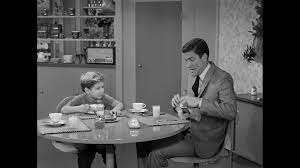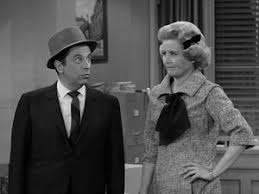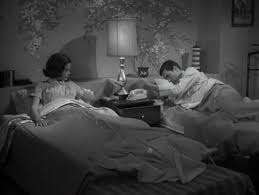
“The Dick Van Dyke Show” has always been celebrated for turning ordinary situations into memorable comedy, and Season 2, Episode 12, “Gesundheit, Darling,” is a perfect example of that talent. Originally broadcast on December 12, 1962, the episode centers on Rob Petrie, a successful television comedy writer who suddenly finds himself dealing with an embarrassing and confusing problem: uncontrollable sneezing. What begins as an ordinary physical annoyance gradually becomes a hilarious psychological mystery involving his wife Laura, his son Richie, and his neighbor and friend Jerry Helper. (Apple TV)
At the heart of the episode is a simple but clever idea. Rob begins sneezing at seemingly strange moments, particularly when he is around members of his own family. Instead of immediately accepting that he might have a common allergy, Rob becomes increasingly concerned about what could be causing the problem. The situation becomes even more complicated when Jerry suggests that Rob’s sneezing may have a psychological explanation. According to the theory raised in the episode, Rob may be experiencing a psychosomatic reaction connected to feelings he has buried or failed to recognize. (Tubi)
This premise gives the writers an excellent opportunity to explore one of the show’s favorite subjects: marriage. Rob and Laura Petrie have a loving relationship, but like any married couple, they sometimes misunderstand each other. Their relationship is usually presented with warmth and affection, while also allowing room for arguments, insecurities, and moments of exaggerated worry. “Gesundheit, Darling” takes one of those everyday marital tensions and turns it into an absurdly funny situation.
Rob’s first reaction to his sneezing is understandable. He wants to know what is wrong with him. However, his natural tendency to overthink situations quickly makes the problem much bigger than it needs to be. Instead of simply accepting that he might have an allergy, Rob begins examining his surroundings and his relationships. If he sneezes around Laura or Richie, perhaps they are somehow responsible. The possibility is ridiculous, but Rob’s growing anxiety makes the idea increasingly believable to him.
That is one of the strongest comedic elements of the episode. The audience can recognize that Rob is allowing a minor problem to dominate his thoughts. The more he thinks about the sneezing, the more complicated the situation becomes. Rather than solving the problem through common sense, he becomes trapped in a cycle of suspicion and self-analysis.
Jerry Helper plays an important role in pushing Rob further into this confusion. As Rob’s neighbor and friend, Jerry is close enough to make observations about Rob’s behavior. His suggestion that the sneezing could be psychosomatic gives Rob an entirely new explanation to worry about. Instead of making Rob feel better, the theory makes him examine his emotions and relationships.
This is classic sitcom storytelling. A character receives information that should help him solve a problem, but instead of calming him down, the information creates an even bigger problem. Rob’s imagination does the rest. The possibility that his body is reacting to hidden emotional feelings becomes much funnier because Rob takes the theory seriously.
The episode also demonstrates Dick Van Dyke’s remarkable ability to combine physical comedy with character-based humor. Rob’s sneezing is not simply a repeated gag. His reactions to the sneezing are just as important. His facial expressions, nervous behavior, confusion, and attempts to understand what is happening allow the audience to see how quickly his mind can turn a simple situation into a personal crisis.
Mary Tyler Moore’s Laura provides an important contrast to Rob. Laura is often more practical and grounded than her husband. Her presence helps highlight just how far Rob’s imagination has taken him. Their interactions also reinforce the affectionate chemistry between the two characters. Even when Rob becomes suspicious or worried, the episode never loses sight of the fact that Rob and Laura care deeply about each other.
The idea that someone could be “allergic” to their own family is especially effective as a comedic premise because it takes a familiar medical concept and applies it to an impossible social situation. An allergy normally involves a reaction to something in the environment. Here, however, the joke becomes much more personal. Could Rob’s body really be reacting to the people he loves most?
That question creates a humorous contradiction. Rob spends much of his life surrounded by people who are important to him. Laura is his wife, Richie is his son, and his home is supposed to be the place where he feels most comfortable. If his own family were somehow causing his symptoms, it would create an absurd problem with no easy solution.
The episode’s title, “Gesundheit, Darling,” captures this mixture of affection and comedy. “Gesundheit” is a familiar expression traditionally said after someone sneezes, while “Darling” adds an affectionate touch. Together, the words sound like something Laura might naturally say to Rob, but they also summarize the central joke of the story.
Another interesting aspect of the episode is how it reflects the television comedy style of the early 1960s. The story does not need an enormous disaster, dramatic villain, or complicated mystery. Instead, it takes a small domestic problem and allows the characters’ personalities to create the comedy. A sneeze becomes a source of anxiety. A friend’s suggestion becomes a psychological investigation. A family evening becomes a situation Rob cannot stop analyzing.
This approach is one of the reasons “The Dick Van Dyke Show” remains so enjoyable decades later. The characters are placed in situations that feel ordinary, but their reactions are exaggerated just enough to create comedy. Viewers can recognize pieces of their own lives in Rob and Laura’s relationship: worrying too much, misunderstanding a situation, taking someone’s comment too seriously, or turning a small inconvenience into a major concern.
The episode also benefits from its supporting cast. Rose Marie, Morey Amsterdam, Jerry Paris, Ann Morgan Guilbert, and young Larry Mathews contribute to the familiar world surrounding the Petries. The show succeeds because Rob’s problems never exist in isolation. His friends, coworkers, neighbors, wife, and son all contribute to the rhythm of his everyday life.
Ultimately, “Gesundheit, Darling” is more than a comedy about sneezing. It is a story about anxiety, imagination, relationships, and the tendency people sometimes have to search for complicated explanations when the simplest answer may be right in front of them. Rob’s fear that he could be allergic to his own family is absurd, but his emotional reaction to the possibility is completely believable.
The episode demonstrates why “The Dick Van Dyke Show” became such an influential sitcom. Its humor comes not only from jokes but from character behavior. Rob Petrie is funny because he is intelligent, creative, affectionate, and occasionally hopelessly neurotic. Laura is funny because she can respond to Rob’s unusual ideas with a mixture of patience, confusion, and wit. Together, they create a believable married couple whose everyday problems can become wonderfully entertaining.
“Gesundheit, Darling” remains a charming example of classic television comedy. Its premise is simple, its characters are familiar, and its humor comes from a situation that almost anyone can understand: something small goes wrong, and suddenly you cannot stop thinking about it. Through Rob’s sneezing adventure, the episode turns an ordinary household problem into an entertaining story about marriage, friendship, and the power of the imagination.
More than sixty years after its original broadcast, the episode still demonstrates the timeless appeal of “The Dick Van Dyke Show.” Its comedy does not depend on modern technology or contemporary references. Instead, it relies on human behavior—the worries,
misunderstandings, relationships, and ridiculous conclusions that make everyday life funny. That is exactly why Rob Petrie’s latest problem remains so entertaining: sometimes, even a simple sneeze can become the beginning of a very complicated story.