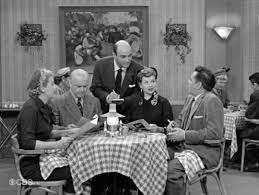
Few classic television comedies captured the chaos of marriage as brilliantly as I Love Lucy, and the Season 3 episode “Equal Rights” is a perfect example of why the series remains so memorable. Originally broadcast on October 26, 1953, the episode brings Lucy Ricardo and Ethel Mertz into a hilarious argument about marriage, independence, and what it really means for husbands and wives to have “equal rights.”

At the center of the story are four beloved characters: Lucy Ricardo, played by Lucille Ball; Ricky Ricardo, played by Desi Arnaz; Ethel Mertz, played by Vivian Vance; and Fred Mertz, played by William Frawley. Their friendship and constant disagreements provide the foundation for one of the episode’s most entertaining comic situations.
The trouble begins when Lucy and Ethel become frustrated with the way Ricky and Fred treat them. Like many women of the era, they feel that their husbands expect them to follow traditional household roles while the men enjoy greater freedom. Lucy, naturally, is not willing to accept that situation quietly. Together with Ethel, she begins arguing that husbands and wives should have the same rights and responsibilities.
What starts as a serious conversation quickly becomes a classic I Love Lucy battle. Lucy is energetic, outspoken, and determined to prove that she deserves the same freedom and authority as Ricky. Ethel supports her friend, although she often reacts with a mixture of confidence, frustration, and comic exaggeration. Their complaints about their husbands become increasingly dramatic, creating the kind of escalating misunderstanding that made I Love Lucy so successful.
Lucy’s determination is particularly entertaining because she does not simply want to make a point—she wants to win. Lucille Ball’s performance turns an ordinary marital disagreement into physical comedy filled with expressive facial reactions, exaggerated gestures, and perfectly timed pauses. Vivian Vance provides an excellent contrast as Ethel, whose calmer personality makes Lucy’s wild determination even funnier.

Ricky and Fred, meanwhile, are not prepared to surrender. Rather than simply accepting Lucy and Ethel’s demands, they decide to challenge the women on their own terms. This sets up the episode’s most memorable comic idea: the men attempt to turn the tables and show the women what “equal rights” might really look like.
The conflict eventually moves into a social setting involving a dinner out, where the husbands and wives compete to prove their point. Instead of creating a peaceful solution, the idea of equality becomes another excuse for rivalry. Ricky and Fred try to demonstrate that they can be just as stubborn and independent as Lucy and Ethel, while the women refuse to back down.
This is where I Love Lucy demonstrates its trademark style. The humor does not depend entirely on clever dialogue. Much of the comedy comes from the characters’ reactions to one another. Lucy’s determination, Ethel’s expressions, Ricky’s growing frustration, and Fred’s dry attitude create a constant rhythm of conflict and laughter.
The episode is also interesting because it reflects changing attitudes toward marriage and gender roles in the early 1950s. While “Equal Rights” is primarily a comedy, its central argument is surprisingly relatable. Lucy and Ethel want recognition, independence, and respect within their marriages. The episode takes those ideas and places them inside an exaggerated comic situation, allowing the audience to laugh while also recognizing something familiar in the characters’ frustrations.
At the same time, the episode never becomes too serious. That balance is one of the greatest strengths of I Love Lucy. The writers could introduce a real issue—such as equality between husbands and wives—and then transform it into a series of misunderstandings, arguments, and ridiculous attempts to prove who is right.
Lucille Ball and Vivian Vance are especially effective together. Their chemistry makes Lucy and Ethel’s friendship feel authentic, even when they are caught in the middle of an argument. Whether they are supporting each other or accidentally making a situation worse, the pair became one of the most iconic female partnerships in television history.
Ultimately, “Equal Rights” is not really about deciding whether husbands or wives are more powerful. Instead, it is about the competitive nature of relationships. Lucy, Ricky, Ethel, and Fred all want to feel respected, but their determination to prove themselves only creates more chaos. The result is a classic I Love Lucy story in which a simple disagreement becomes an unforgettable comedy of marriage, friendship, and stubborn pride.
More than seven decades later, the episode remains entertaining because its central idea is universal: in a relationship, everyone wants to be heard—and sometimes trying to prove you are right only makes everything much funnier.