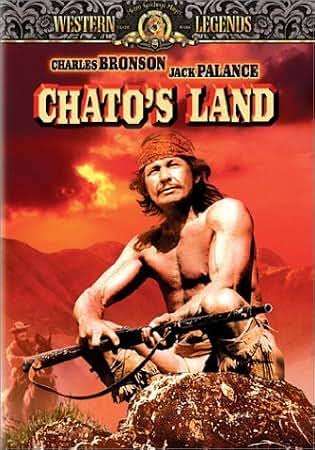
CHATO’S LAND (1972): A SURVIVAL EPIC AND CHARLES BRONSON’S RELENTLESS REVENGE
In the legendary career of iconic actor Charles Bronson—alongside masterpieces like Once Upon a Time in the West and Death Wish—the 1972 Western Chato’s Land holds a truly unique place. Directed by Michael Winner, Bronson’s most frequent and successful collaborator, the film deliberately breaks away from traditional Western tropes that romanticized white expansion into the frontier. Instead, it flips the perspective to expose the brutality of racial prejudice and the fierce human survival instinct against harsh, unforgiving nature.
1. THE SALOON SCENE AND THE INCITING INCIDENT
The scene captured in the image marks the explosive breaking point for the entire tragedy of the film:
-
Provocation Rooted in Prejudice: Pardon Chato (Charles Bronson)—a man of mixed Apache and white heritage—quietly steps into a local saloon in a New Mexico town to have a drink. There, the local law enforcement and townsmen repeatedly hurl racial slurs at him, hurling insults and drawing weapons on him.
-
Fateful Self-Defense: In a split second of life-or-death survival, armed with the instincts of a seasoned warrior, Chato is forced to shoot and kill the aggressor in self-defense.
-
An Unjust Manhunt: Rather than evaluating the situation fairly, a 13-man posse of white vigilantes led by former Confederate officer Quincey Whitmore (played by Jack Palance) immediately assembles. They push deep into the rugged, dangerous wilderness with the sole objective of hunting down and lynching Chato at all costs.
2. “CHATO’S LAND”: WHEN THE PREY BECOMES THE HUNTER
The title of the film—Chato’s Land—serves as the master key unlocking the entire dramatic and psychological evolution of the story:
-
Absolute Terrain Mastery:As Quincey Whitmore’s pursuit team leaves civilized towns behind to plunge deep into the arid, red-rock canyons of New Mexico, they step directly into Chato’s territory. Chato grew up in this landscape; he knows every hidden water source, every natural rocky alcove, and how to blend into the dust like a ghost.
-
Symbolic Silence:Throughout the feature film lasting over 100 minutes, Charles Bronson’s character Pardon Chato speaks fewer than a dozen lines of dialogue (mostly in Apache). All of his emotions, underlying rage, and tactical intelligence are conveyed entirely through piercing eyes, calm body language, and terrifying patience.
-
A Devastating Counter-Attack:The conflict escalates to a breaking point when the vicious pursuers track down Chato’s home, assault his wife, and murder his kin to use as bait. Shifting from a fugitive merely trying to protect his life, Chato transforms into an absolute instrument of retribution. He utilizes traps, venomous snakes, bows, and rifles to eliminate every single member of the posse one by one with cold, calculated ruthlessness.
3. PSYCHOLOGICAL CONTRAST BETWEEN CHARLES BRONSON AND THE POSSE
The artistic brilliance of Chato’s Land lies in how it portrays the internal collapse of the 13-man hunting party:
-
Charles Bronson’s Invincible Persona: Bronson projects weathered ruggedness, chiseled muscle, and the aura of a warrior deeply tethered to his ancestral land. He avoids flashy gunplay, relying instead on guerrilla warfare tactics that push his enemies into utter mental panic.
-
The Rot Within the Vigilante Posse: Quincey Whitmore’s group initially rides out under the banner of “upholding justice,” yet beneath the surface they are driven by cowardice, greed, and cruelty. As the desert heat bakes them down and men drop one by one to Chato’s traps, their artificial solidarity shatters, devolving into mutual suspicion and infighting.
4. ARTISTIC VALUE AND CHARLES BRONSON’S ENDURING LEGACY
Though released back in 1972, Chato’s Land remains highly praised by Western film aficionados for its gritty, realistic, and uncompromised perspective:
-
A Brilliant Revisionist Western: The film emerged during an era when American cinema began re-examining Western history with objective clarity—condemning the mistreatment of indigenous peoples and exposing the dark side of self-proclaimed lawmen.
-
Launching the Bronson–Winner Collaboration: The success of Chato’s Land paved the way for subsequent action blockbusters pairing Charles Bronson with director Michael Winner, including The Mechanic (1972) and Death Wish (1974).
-
Timeless Fan Appreciation: Much like the respectful user comments featured alongside the video clip in the image—where older generations still enthusiastically rewatch Charles Bronson’s films and praise his humble, heroic life—Bronson’s legendary screen presence continues to endure across generations.
Chato’s Land (1972) is far more than a high-stakes Western action thriller; it is a dark, brooding epic on dignity, the devastating nature of prejudice, and raw survival instinct. Through Charles Bronson’s sparse yet powerful performance, the figure of warrior Pardon Chato against the wild frontier remains an unforgettable landmark in world cinema history.