
Some movie scenes become unforgettable because of spectacular action. Others remain iconic because of a single line of dialogue delivered at exactly the right moment. In A Fistful of Dollars, Clint Eastwood gives audiences both, creating one of the coolest and most memorable confrontations in Western cinema.
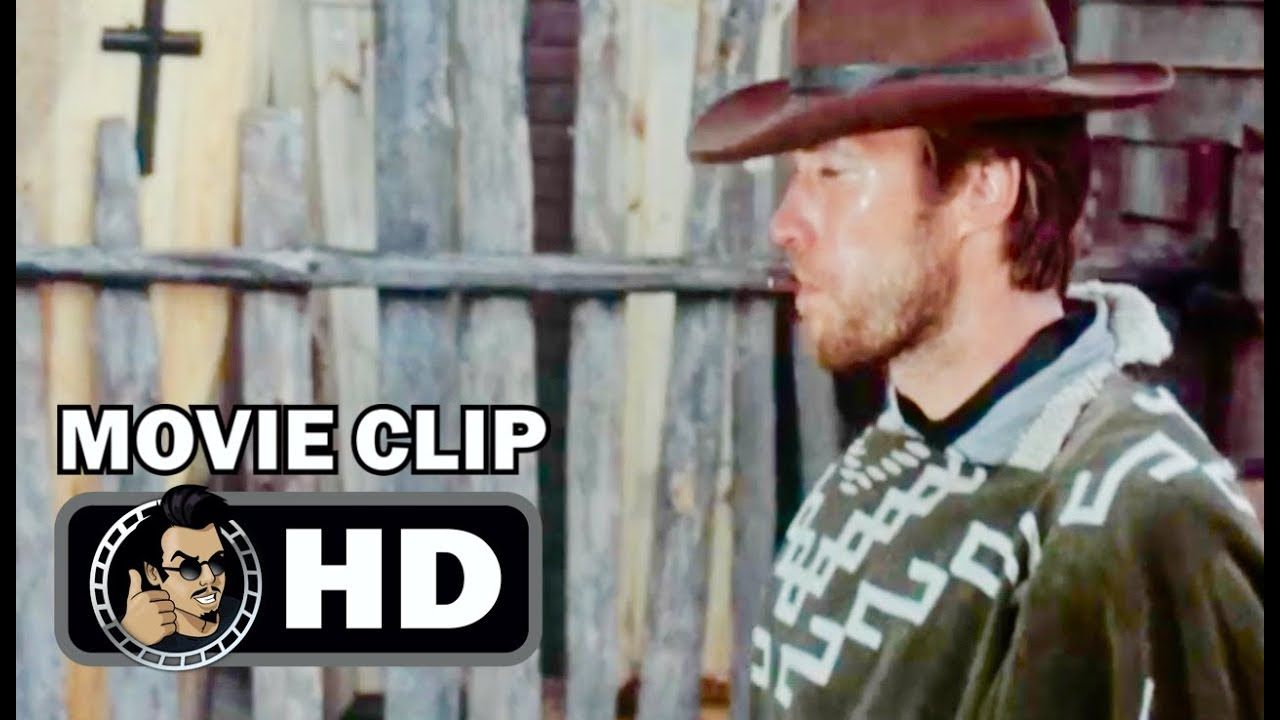
Known as the “My Mule” scene, this sequence captures everything that made Eastwood’s Man with No Name such a fascinating character. He is quiet, observant, unpredictable, and seemingly unimpressed by anyone trying to intimidate him. While a group of local gunmen believe they have found an easy target, they are about to discover just how badly they have misjudged the stranger.
The scene is more than a simple showdown. It is a perfect combination of dry humor, psychological tension, and sudden violence that helped establish a new kind of Western hero.
A Stranger Walks Into Trouble
Released in 1964, Sergio Leone’s A Fistful of Dollars introduced audiences to a different kind of cowboy. Eastwood plays a mysterious gunslinger who arrives in a troubled border town where rival groups compete for power.
Unlike the traditional Western heroes who often represent justice and moral certainty, this stranger follows his own rules. He rarely explains himself, avoids unnecessary conversation, and never appears particularly concerned about earning anyone’s approval.
That attitude becomes clear when a group of local gunmen decide to make fun of him.
Rather than confronting the stranger directly, the men shoot near his mule, frightening the animal and making its rider look foolish. To them, the incident is harmless entertainment. They laugh among themselves, convinced that their numbers and reputation make them untouchable.
But their amusement does not last.
The stranger does not immediately explode with anger. He does not shout or threaten revenge. Instead, he quietly leaves, allowing the men to believe they have won the encounter.
What they fail to understand is that his silence is not a sign of weakness.
The Perfect Comeback: “My Mule Doesn’t Like Laughing”
The brilliance of the sequence comes when Eastwood returns to confront the men.
His character approaches with the same relaxed expression and unhurried movements that define the Man with No Name. There is no dramatic speech about respect, courage, or justice. Instead, he offers an almost ridiculous explanation for his return.
His mule, he tells them, has developed the idea that people are laughing at him.
The line is funny precisely because of how seriously Eastwood delivers it. The men are being challenged, but the stranger refuses to treat them as worthy opponents. By pretending that the confrontation is really about his mule’s feelings, he turns their earlier mockery into a joke at their expense.
It is a remarkable example of understated Western humor.
Eastwood does not need to raise his voice to dominate the scene. His expression, timing, and deliberate delivery communicate more than a long speech ever could. The audience understands that the stranger is completely comfortable facing several armed men at once.
The bullies, meanwhile, are beginning to realize that they may have chosen the wrong person to embarrass.
Three Coffins: A Warning Before the Gunfire
Just when the scene seems to have reached its peak, Eastwood adds another unforgettable moment.
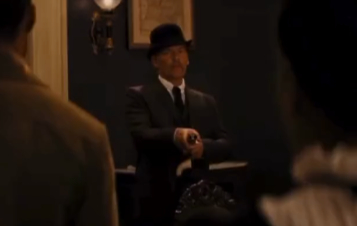
Before the confrontation turns violent, the stranger speaks with the local undertaker and tells him to prepare three coffins.
It is an extraordinary piece of dialogue because it reveals his confidence without requiring him to demonstrate it. He has already calculated how the encounter will end, while the men he intends to face have not yet realized the danger they are in.
The undertaker’s involvement also adds a darkly comic dimension to the scene. Death is treated almost like an ordinary business arrangement, and the stranger discusses it with the same casual attitude he might use when ordering a drink.
This is not the language of a conventional hero. It belongs to someone who understands the violence of the frontier and has learned to approach it without hesitation.
For viewers, the line creates anticipation. Everyone knows that something is about to happen, but the real pleasure comes from watching Eastwood maintain his composure until the final moment.
A Gunfight That Delivers the Punchline

When the confrontation finally erupts, the action is fast and decisive.
The stranger draws his revolver and shoots with extraordinary speed, turning the gunmen’s confidence into panic. The violence arrives suddenly, without the prolonged speeches or elaborate moral arguments often associated with older Hollywood Westerns.
The scene’s impact comes from its contrast. Before the shooting, everything is controlled and almost playful. Once the guns come out, the encounter is over in moments.
Then comes the final joke.
After the smoke clears, Eastwood passes the undertaker and casually corrects his earlier instruction. Three coffins will not be enough.
He needs four.
That brief correction is the perfect ending. It transforms the entire confrontation into a carefully constructed joke, with the gunfight serving as its punchline.
The line works because Eastwood never overplays it. A slight change in expression and a relaxed delivery are enough to make the moment unforgettable.
It is the kind of cinematic finish that audiences remember long after the scene has ended.
Clint Eastwood’s Performance: The Power of Saying Less
One reason the “My Mule” sequence continues to attract attention is Eastwood’s remarkably restrained performance.
Many action heroes rely on dramatic expressions, loud declarations, or exaggerated displays of confidence. Eastwood takes the opposite approach. His character communicates through pauses, glances, small movements, and carefully chosen words.
Even the way he walks contributes to the scene’s atmosphere. He never seems rushed, even when facing men who are clearly looking for trouble.
This minimalist approach makes the character difficult to read. The audience cannot always tell exactly what he is thinking, which adds to his mysterious presence.
His humor is equally important. The stranger is dangerous, but he is not humorless. In fact, his ability to make jokes in the middle of a threatening situation makes him even more unpredictable.
The result is a character who can be intimidating and entertaining at the same time.
Sergio Leone’s Vision Changed the Western
The scene also demonstrates the filmmaking style that made Sergio Leone’s Westerns so influential.
Rather than rushing directly into action, Leone allows tension to develop through silence and visual detail. Faces become central to the storytelling. A stare can feel like a challenge, while a small movement toward a holster can create enormous suspense.
The contrast between the dusty town, the armed gunmen, and the stranger’s calm behavior gives the sequence its distinctive atmosphere.
The music of Ennio Morricone also became an essential part of the larger film’s identity. His unconventional compositions helped create a sound that audiences would immediately associate with the Spaghetti Western genre.
Together, Leone, Morricone, and Eastwood helped establish a style that was different from the polished, romantic image of the American frontier often seen in earlier Westerns.
Their films presented a harsher world filled with greed, rivalry, uncertainty, and morally complicated characters.
The Man with No Name became one of the defining figures of that new cinematic landscape.
Why the “My Mule” Scene Still Works Today

More than six decades after A Fistful of Dollars introduced the character, the sequence remains entertaining because its structure is almost perfect.
First, there is an act of disrespect. Then comes the stranger’s quiet return. His strange explanation makes the confrontation funny, while the reference to the coffins builds anticipation. Finally, the gunfight delivers the action, and the correction from three coffins to four provides the closing punchline.
Every moment has a purpose.
That is also why the scene works so well in short online clips. Viewers do not need to know every detail of the film to understand the basic story. A group of bullies makes a mistake, a quiet stranger refuses to be intimidated, and the consequences arrive almost immediately.
The scene also offers a refreshing alternative to modern action sequences that rely heavily on rapid editing and constant spectacle. Here, the tension comes from waiting. The silence matters as much as the gunfire, and the character’s personality is established long before the action begins.
Its influence can be felt in countless later stories featuring quiet, highly capable protagonists who rarely explain themselves. The appeal of such characters is simple: they do not need to prove their strength through endless boasting.
They simply act when the moment comes.
A Western Moment That Never Gets Old
The “My Mule” scene remains one of Clint Eastwood’s most entertaining Western moments because it brings together everything that made the Man with No Name iconic.
There is the mysterious personality, the dry sense of humor, the effortless confidence, and the sudden display of deadly skill. Most importantly, there is that perfectly timed final line that turns a violent confrontation into a moment of cinematic comedy.
The gunmen thought they were laughing at a stranger and his mule. Instead, they became part of a story that movie fans would still be discussing generations later.
Sometimes, the most memorable Western heroes do not need a long speech or a dramatic entrance. They only need a calm expression, a loaded revolver, and one final correction for the undertaker.
What makes this scene so unforgettable: Clint Eastwood’s icy confidence, the hilarious “My Mule” line, or the legendary four-coffin punchline?
#ClintEastwood #AFistfulOfDollars #SergioLeone #WesternMovies #SpaghettiWestern #ClassicCinema #MovieScenes #ManWithNoName