There are movie heroes who become legends because of the battles they win. And then there are those whose greatest victory comes from refusing to surrender, even when everything has been taken away from them.
Few films capture that spirit as powerfully as Braveheart (1995).
Directed by and starring Mel Gibson, this unforgettable historical epic tells the story of William Wallace, a Scottish warrior whose personal tragedy becomes the spark for a nationwide rebellion against English oppression. What begins as the struggle of one grieving man gradually transforms into a battle for the future of an entire country.
With sweeping landscapes, enormous battlefield sequences, emotional performances, and one of the most unforgettable final speeches in movie history, Braveheart delivers a story that continues to move audiences decades after its release.
But beneath the spectacular violence and heroic imagery are three powerful moments that define Wallace’s journey: the transformation of ordinary villagers into fearless warriors, the devastating betrayal that threatens everything he has built, and the final declaration that turns his execution into an enduring symbol of resistance.
A Man Who Wanted Love, Not War
Before becoming the face of Scotland’s rebellion, William Wallace was simply a man who wanted to live peacefully.
As a child, Wallace experiences the brutality of war when English forces destroy lives and tear families apart. After losing his father and brother, he grows up under the care of his uncle, eventually returning to Scotland as an adult.
He does not come home dreaming of military glory.
He wants something far more ordinary: a home, a family, and a future with Murron MacClannough, the woman he has loved since childhood.
Their secret marriage represents the possibility of happiness in a country overshadowed by violence and political oppression.
Unfortunately, that happiness does not last.
When Murron refuses the advances of an English soldier, she is captured and publicly executed by the local authorities. Wallace arrives too late to save the woman he loves.
The tragedy destroys the peaceful future he imagined.
Overwhelmed by grief, Wallace retaliates against those responsible for Murron’s death. His personal act of revenge quickly inspires others who have suffered under English rule.
Soon, men from surrounding villages begin joining him.
The rebellion has begun.
And the quiet man who once dreamed of raising a family becomes the warrior England will struggle to defeat.
The Battle Cry That Turns Ordinary Men Into Warriors
One of the most emotionally powerful elements of Braveheart is the way it portrays Wallace’s relationship with his followers.
His army is not made up of highly trained professional soldiers. Many are farmers, laborers, and ordinary Scots who have little experience fighting against a powerful military force.
They have limited weapons, little protection, and almost no resources compared with the English army.
Yet Wallace gives them something their enemies cannot easily take away.
Hope.
As his victories spread, his reputation becomes a source of inspiration throughout Scotland. People who once believed resistance was impossible begin to see that their oppressors can be challenged.
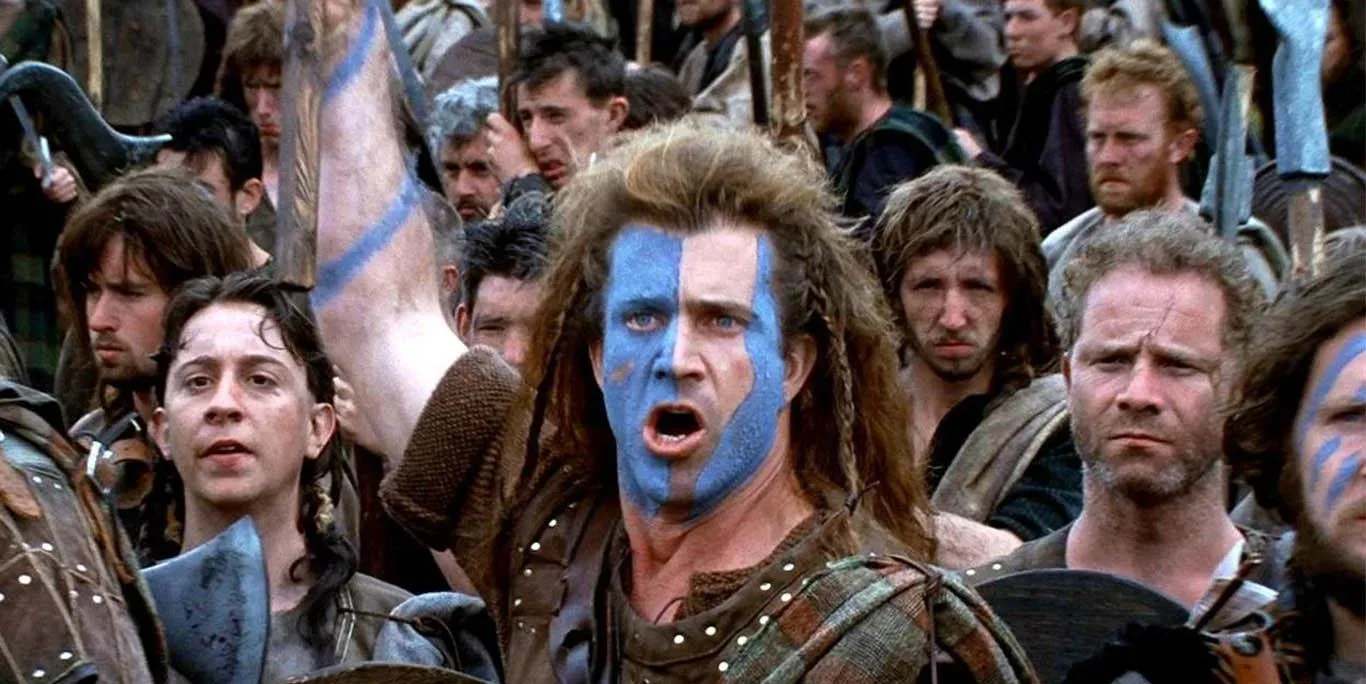
On the battlefield, the soldiers begin shouting his name.
“Wallace! Wallace!”
The chant grows louder as more warriors join in.
It is more than a celebration of their commander. It is an expression of everything they have been waiting to say after years of living under foreign domination.
Wallace has become a symbol of their refusal to accept submission.
What makes the moment so memorable is that he does not lead through royal privilege or promises of personal wealth. His authority comes from his willingness to stand beside ordinary people and face the same dangers they face.
For the soldiers surrounding him, fighting for Wallace means fighting for the possibility of a different future.
Stirling: The Battle That Changes Everything
The Battle of Stirling provides one of the film’s most spectacular demonstrations of Wallace’s intelligence and determination.
The English arrive with a powerful military force, including heavily armed cavalry. Their soldiers appear better equipped, better organized, and far more experienced than the Scottish rebels.
On paper, the outcome seems obvious.
The Scots should lose.
But Wallace understands that courage alone will not defeat an army with superior weapons and resources.
He needs a strategy.
As the English cavalry advances, the Scottish soldiers prepare for what appears to be an inevitable collision. The horses grow closer, the ground shakes, and fear spreads through the inexperienced ranks.
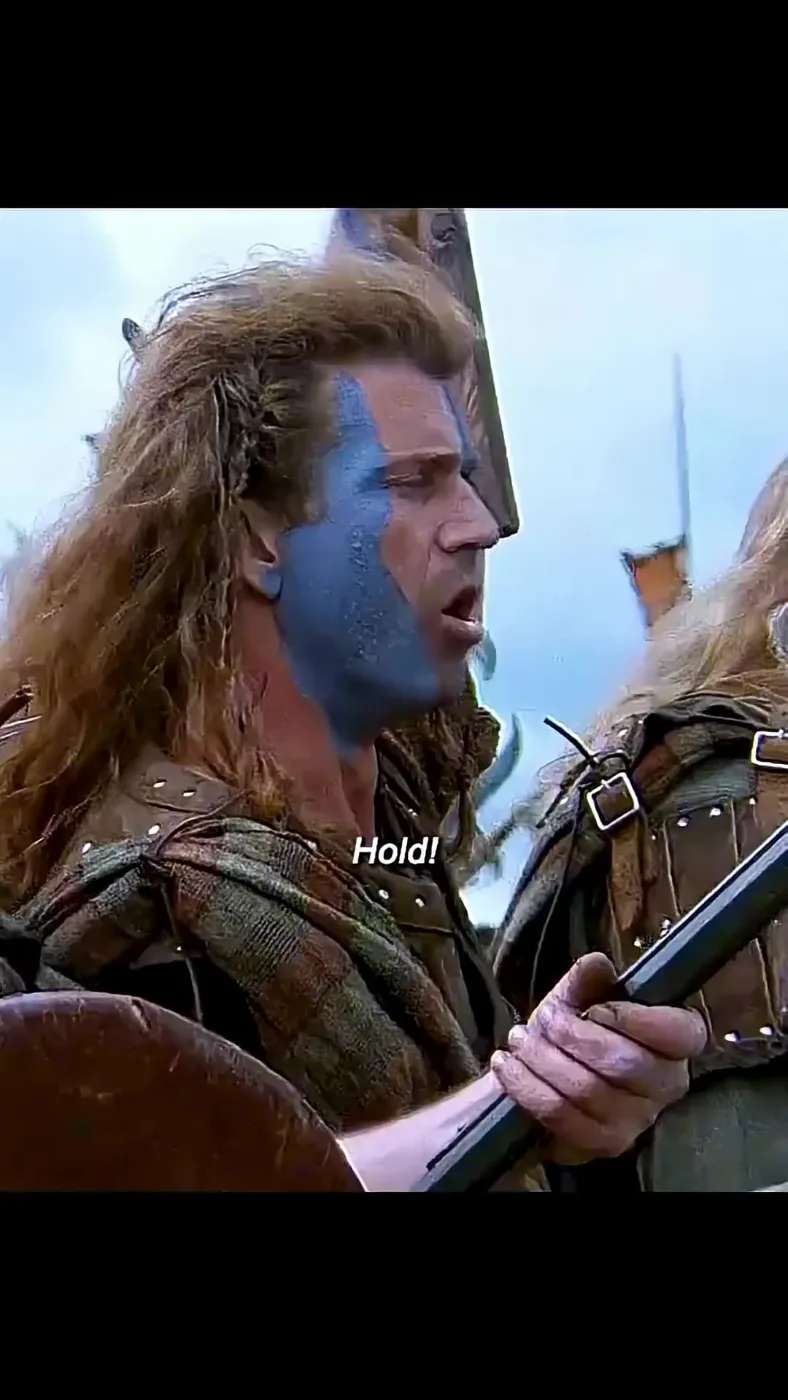
Wallace orders his men to hold their positions.
He refuses to let them panic or retreat.
At the last possible moment, the Scottish warriors raise their long wooden spears toward the charging horses.
The English formation crashes into the defensive line.
The carefully planned cavalry attack descends into confusion. Horses fall, riders lose control, and the Scottish forces seize their opportunity to counterattack.
Suddenly, the army that appeared hopelessly outmatched has the advantage.
It is one of the film’s most exhilarating sequences because the victory is not presented as the result of superior numbers or equipment.
It comes from preparation, discipline, timing, and the ability of a leader to make frightened men believe they can stand their ground.
Historically, the real Scottish victory at Stirling Bridge in 1297 relied heavily on the narrow crossing, a detail the film changes for dramatic effect.
Nevertheless, the sequence captures the central idea of the story: a determined people can challenge an opponent who appears far more powerful.
=
When Political Ambition Becomes More Dangerous Than the Enemy
Winning battles does not necessarily mean winning a war.
As Wallace becomes increasingly popular, he also becomes a threat to the political interests of Scotland’s powerful nobles.
Some genuinely support independence. Others are more concerned about protecting their estates, wealth, and influence.
Their loyalty is often conditional.
Wallace, however, believes that freedom requires unity. He cannot understand why Scottish leaders would negotiate with the very forces attempting to control their country.
Robert the Bruce becomes one of the most complicated figures in this political struggle.
He admires Wallace’s courage and recognizes the importance of the rebellion, but his family ambitions and political obligations place him under enormous pressure.
The conflict between personal conviction and political calculation becomes increasingly difficult to ignore.
At the Battle of Falkirk, Wallace discovers just how devastating divided loyalties can be.
The Scottish army faces relentless attacks. Arrows fill the sky, soldiers struggle to maintain their formations, and the battlefield becomes a scene of terrible destruction.
But the greatest blow comes from the absence of support Wallace expected from powerful Scottish nobles.
In the film, his discovery of Robert the Bruce’s connection to the English side of the conflict makes the defeat even more painful.
Wallace can fight an enemy who openly wants to destroy him.
Betrayal from someone who claims to share his dream is something entirely different.
The battle becomes more than a military defeat. It marks the beginning of the collapse of the unity Wallace desperately tried to build.
The film dramatizes Bruce’s role in these events; the specific betrayal depicted at Falkirk should not be treated as established historical fact.
Captured, Tortured, But Never Defeated
After the disaster at Falkirk, Wallace’s position becomes increasingly dangerous.
His enemies continue hunting him, while Scotland’s political leadership becomes more divided.
Eventually, Wallace is captured after being lured into a meeting.
He is transported to London, where English authorities accuse him of treason.
For the English king, Edward I, Wallace’s execution represents an opportunity to eliminate the most recognizable symbol of Scottish resistance.
The authorities offer him a final chance.
All he needs to do is recognize the king’s authority and ask for mercy.
It seems like a simple demand.
But Wallace understands what accepting that offer would mean.
He would have to abandon the cause for which countless men have fought and died. He would have to deny the principles that have defined his entire journey.
His enemies believe that physical suffering will eventually destroy his determination.
They are wrong.
As Wallace is brought before a hostile crowd, he is exhausted, wounded, and surrounded by people who have come to witness his punishment.
The executioners expect him to beg.
Instead, he continues to resist.
“FREEDOM!” — The Final Word That Made Him Immortal
The execution scene is undoubtedly the emotional heart of Braveheart.
Everything that has happened throughout the film leads to this moment.
Wallace has lost his family, his love, his army, his political allies, and ultimately his freedom.
His body is broken, and there is no realistic possibility of escape.
Yet the authorities still cannot obtain the one thing they want most: his surrender.
As the torture continues, the crowd begins to react differently. What initially appeared to be public entertainment becomes an increasingly disturbing display of cruelty.
Some spectators call for mercy.
Wallace’s remaining friends can only watch helplessly.
The executioner gives him one final opportunity to submit.
For a moment, the silence becomes unbearable.
Then Wallace gathers his remaining strength.
Instead of asking for mercy, he delivers one final cry:
“FREEDOM!”
The word cuts through the noise of the crowd.
It is not simply a final expression of anger. It is the declaration of everything Wallace has believed in throughout his journey.
His enemies can destroy his body, but they cannot force him to reject his convictions.
Mel Gibson’s performance makes the sequence especially powerful because it combines physical vulnerability with extraordinary emotional determination.
The man standing on the execution platform is no longer capable of leading an army.
But in that moment, he becomes more powerful as a symbol than he ever was as a battlefield commander.
The historical record does not establish that the real William Wallace shouted this particular word before his execution in 1305. It remains one of the film’s most famous dramatic inventions.
His Death Was Not the End of Scotland’s Fight
The final moments of Braveheart make an important distinction between defeating a man and destroying an idea.
Wallace dies, but the struggle for Scottish independence continues.
In the film’s closing sequence, Robert the Bruce finally embraces the cause Wallace fought for and prepares to lead the Scottish army against the English at Bannockburn.
The warriors remember the man who refused to surrender.
As they advance into battle, Wallace’s sacrifice becomes part of their determination.
The historical Robert the Bruce did achieve a decisive victory at Bannockburn in 1314, nine years after Wallace’s execution.
The connection between these events gives the ending its emotional weight.
Wallace never lives to see the future he imagined.
He never witnesses the victory that his sacrifice helped inspire in the film’s narrative.
But his determination survives him.
Why Braveheart Still Moves Audiences Decades Later
Released in 1995, Braveheart became one of the defining historical epics of its generation. The film won five Academy Awards, including Best Picture and Best Director.
Its enduring appeal comes from more than its enormous battle sequences, memorable costumes, or dramatic performances.
At its center is a deeply human story about love, loss, loyalty, betrayal, and the price of standing up for something greater than oneself.
William Wallace begins as an ordinary man who wants nothing more than a peaceful life with the woman he loves.
Circumstances turn him into a rebel.
His courage inspires ordinary people to challenge a powerful kingdom. His victories make him a national symbol, while political betrayal gradually strips away the support he needs.
And when his enemies finally capture him, they discover that his determination cannot be destroyed through physical punishment.
That is what makes the final cry of “FREEDOM!” so unforgettable.
It represents a victory that cannot be measured by territory, military strength, or political power.
Wallace loses his life, but his beliefs survive.
And perhaps that is the greatest message Braveheart leaves behind: a person may be defeated, a rebellion may suffer terrible losses, and a dream may seem impossible to achieve.
But as long as someone is willing to stand up for that dream, the fight is never truly over.