Some television comedies need an elaborate situation to make audiences laugh.
All in the Family often needed nothing more than Archie and Edith Bunker sitting in the same room.
A table, a meal, a newspaper or an ordinary conversation could become the foundation for an unforgettable comedy scene. That simplicity was one of the great strengths of the series.
And at the center of it were Archie and Edith.
Played by Carroll O’Connor and Jean Stapleton, the two characters were almost complete opposites. Archie was loud, impatient, stubborn and convinced that his way was usually the correct way.
Edith was gentler.
She could be absent-minded and wonderfully innocent, but she also possessed something Archie often lacked: patience.
Put those two personalities together and even the smallest domestic situation could become comedy.
Archie Never Needed a Big Situation
One reason Archie Bunker became such a memorable television character was that he could turn almost anything into an event.
Breakfast could become an argument.
Dinner could become a debate.
Getting ready for work could become a complaint about society.
Someone sitting in his chair could practically become a national emergency.
That was Archie.
He had opinions about everything.
But Carroll O’Connor understood that simply making Archie angry wasn’t enough. His performance added gestures, facial expressions, pauses and physical reactions that frequently made the character funny before the next punchline even arrived.
Watch Archie closely in an ordinary scene.
His hands are often doing something.
His eyes react to the people around him.
His entire body seems to participate in whatever argument is happening.
That physicality helped transform dialogue into performance.
Then There Was Edith
Edith Bunker operated on an entirely different wavelength.
Archie could be in the middle of an angry speech and Edith might respond with a completely innocent observation that destroyed his momentum.
Sometimes she understood exactly what was happening.
Sometimes she didn’t.
Either way, Jean Stapleton’s timing was extraordinary.
Edith didn’t usually compete with Archie for control of the room.
She didn’t need to.
Her comedy often came from the contrast between Archie’s enormous reaction and her relatively simple response.
Archie explodes.
Edith looks at him.
The audience laughs.
It’s an incredibly effective formula.
Their Kitchen Was Almost a Character
The Bunker home became one of television’s most recognizable environments.
And the kitchen and dining area were especially important.
This was where ordinary family life happened.
Meals were served.
Arguments started.
Problems were discussed.
Archie complained.
Edith listened.
Family members came and went.
Because viewers returned to these rooms week after week, the environment became familiar.
It didn’t feel like a television set anymore.
It felt like the Bunker house.
That familiarity gave the comedy an additional advantage. The writers didn’t have to spend time explaining where the characters were or why they were together.
Archie and Edith sitting at the table was enough.
Something was probably about to happen.
Comedy Built From Character
The strongest sitcoms don’t simply tell jokes.
They create characters who are inherently funny when placed together.
Archie and Edith demonstrate the difference perfectly.
Imagine giving an Archie Bunker line to Edith.
It probably wouldn’t work.
Give one of Edith’s wonderfully innocent observations to Archie and the effect disappears.
The humor belongs to the characters.
That’s why these scenes can still work decades later.
Even when the audience doesn’t know every reference or hasn’t watched every episode, the personalities are immediately understandable.
Archie is Archie.
Edith is Edith.
And when those two forces collide, comedy follows.
Carroll O’Connor’s Physical Comedy
O’Connor is rightly remembered for Archie’s voice and opinions, but his physical performance deserves just as much attention.
He could communicate irritation without speaking.
A look toward Edith could become a punchline.
The way he sat in a chair could tell viewers what mood Archie was in.
Even mundane actions could become exaggerated when Archie was frustrated.
That made him especially effective in scenes where very little was actually happening.
He didn’t require a complicated comedy prop.
Sometimes all he needed was his face.
Jean Stapleton Knew When to React
Stapleton possessed the opposite skill.
She knew when not to overwhelm a moment.
Her reactions could be small.
A smile.
A confused expression.
A glance.
A short response in Edith’s distinctive voice.
That restraint gave O’Connor room to be explosive.
It’s one of the reasons the pair complemented each other so well.
Two Archies in the same room would be exhausting.
Two Ediths might not create enough conflict.
Archie plus Edith created balance.
More Than a Comedy Marriage
There was another important element beneath the jokes.
Archie and Edith had history.
The series allowed them to argue, frustrate one another and occasionally hurt each other’s feelings. But viewers also understood that these were two people who had spent years building a life together.
That gave ordinary domestic scenes warmth.
Edith knew Archie’s habits.
Archie knew Edith’s.
They knew what annoyed each other.
They knew what the other person was likely to say.
And yet they could still surprise one another.
That’s recognizable to anyone who has spent years around the same person.
The Bunkers were exaggerated for comedy, but something underneath the exaggeration felt familiar.
Why Small Clips Work So Well Today
This is also why All in the Family translates surprisingly well to short-form social media.
A modern viewer might encounter a 20- or 30-second scene without knowing the episode.
But they can understand the dynamic almost immediately.
There’s Archie.
There’s Edith.
Archie is doing something.
Edith reacts.
And within seconds, the personalities become clear.
That’s valuable in an era when a video has very little time to capture someone’s attention.
The show was made decades before Facebook Reels or short-form video existed, but character-driven comedy naturally lends itself to clips.
Television Didn’t Need to Move So Fast
Older sitcoms also gave performers more room.
A reaction could last an extra second.
An actor could pause before answering.
The audience had time to notice a facial expression.
That rhythm feels different from many modern comedies, but it can also make the punchline stronger.
O’Connor and Stapleton knew how to use those pauses.
They didn’t simply race toward the next line.
Sometimes the funniest part was what happened between the lines.
Archie Was Difficult — But Fascinating
Archie Bunker wasn’t created to be an uncomplicated hero.
His prejudices, stubbornness and resistance to social change were central to the series.
All in the Family repeatedly put those attitudes into conflict with other characters and the rapidly changing America surrounding him.
Yet the show also presented Archie at home.
That mattered.
Viewers saw him arguing about politics one moment and dealing with some ridiculous household problem the next.
The combination made him a much richer sitcom character.
Edith Was Stronger Than Archie Realized
Likewise, Edith was never simply the person standing beside Archie.
Her gentleness could disguise considerable emotional strength.
Archie might dominate the volume of a conversation, but that didn’t always mean he controlled its outcome.
Edith could challenge him differently.
Sometimes kindness itself was the challenge.
That contrast gave their relationship depth beyond the jokes.
Why We Still Watch Them
More than half a century after All in the Family premiered, scenes of Archie and Edith continue finding new audiences.
Part of that is nostalgia.
But nostalgia alone doesn’t make something funny.
The performances still have to work.
And O’Connor and Stapleton still work.
You can remove the elaborate context.
You can take one little conversation out of a full episode.
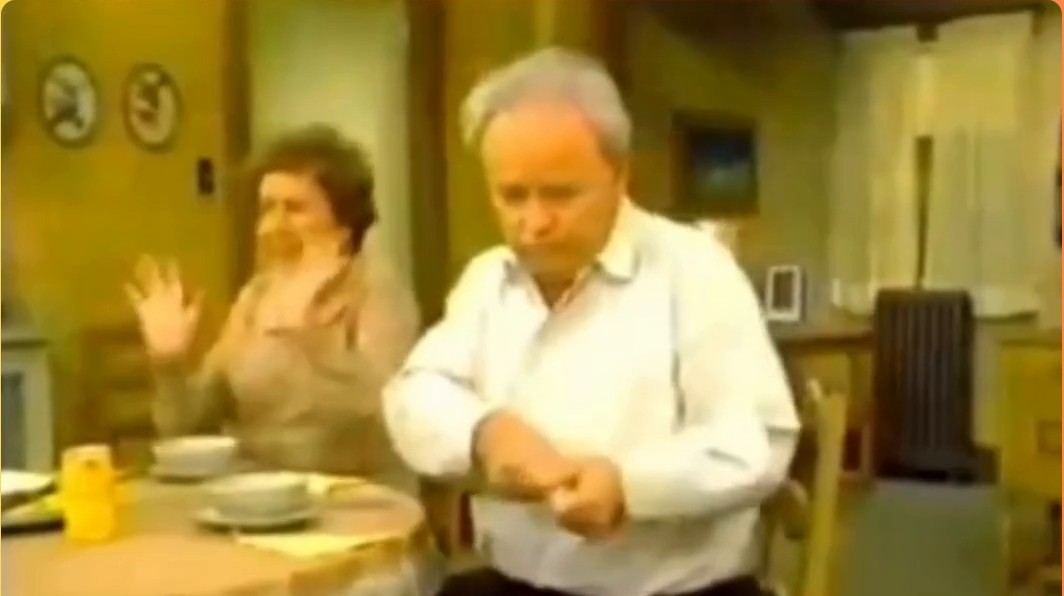
You can watch Archie sitting at a table while Edith stands nearby.
And somehow, you’re already waiting to see what happens next.
That’s the sign of memorable characters.
Archie and Edith didn’t always need a big storyline to make television history.
Sometimes they just needed to be in the same room. 😂❤️