FULL VIDEO
Some movie moments entertain for a season.
Others become permanent fixtures in popular culture.
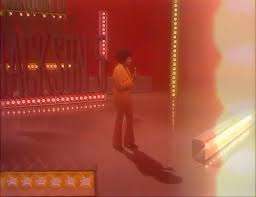
John Travolta’s solo dance to the Bee Gees’ “You Should Be Dancing” in Saturday Night Fever belongs firmly in the second category. The second he steps onto that lighted floor, the rest of the film seems to pause. What follows is pure, unfiltered star power — a performance so confident, so physical, and so completely locked into the music that it still stops people in their tracks nearly fifty years later.
This is not just a dance scene.
It is the moment a young actor became a cultural phenomenon.
The Build-Up Was Perfect
Tony Manero is a Brooklyn paint-store clerk by day and the undisputed king of the local disco by night. The film has already shown us his world — the tight pants, the perfect hair, the restless energy of a young man who feels most alive when the music starts. When “You Should Be Dancing” kicks in, everything the character has been building toward finally explodes onto the floor.
Travolta does not ease into the number. He claims the space. The camera stays with him as he moves through the crowd, finding the center of the floor like it was always meant to be his. The famous sequence of steps — the spins, the points, the sudden drops and rises — arrives with a clarity and precision that still looks astonishing on screen.
What makes the moment so powerful is how little it relies on editing tricks. The camera gives Travolta room to work. We see the full body, the control, the stamina. There is no hiding behind quick cuts. The performance has to hold up in real time, and it does.
Pure Commitment on Display
Travolta trained for months to prepare for these dance sequences. The physical transformation was obvious — he shed weight, sharpened every movement, and treated the choreography with the seriousness of a professional dancer rather than an actor simply learning steps for a role. That preparation shows in every frame.
Watch the way he stays light on his feet. Notice how the energy never drops even as the number continues. The famous moment when he points directly at the camera still carries an electric charge. It is pure swagger, delivered without apology.
The Bee Gees’ track supplies the perfect engine. “You Should Be Dancing” has a relentless, joyful drive that matches Travolta’s intensity. The song and the performance feed each other until the entire sequence feels inevitable.
Why the Scene Still Hits So Hard
Plenty of dance numbers from the 1970s feel locked in their era. This one travels. The clothes and the hairstyle place it firmly in 1977, yet the confidence on display remains timeless. Travolta is not performing nostalgia. He is performing presence — the ability to walk into a room and instantly become the center of attention through pure physical command.
That quality is rare. Many actors can learn choreography. Far fewer can make the choreography feel like an extension of their personality. Travolta does exactly that. Tony Manero’s hunger, his pride, and his need to be seen all pour through the dancing. The steps become character.
Viewers still respond to that honesty. Younger audiences discovering the film for the first time often express surprise at how well the sequence holds up. Older viewers who lived through the disco era return to it for the same reason they always did: it still delivers the rush of watching someone completely own a moment.
The Cultural Explosion That Followed
Saturday Night Fever did more than launch a soundtrack. It crystallized an entire cultural mood. Travolta’s white suit, the pointed finger, the way he moved through the lights — these images became shorthand for an era. The dance scene sat at the center of that explosion.
It also rewrote Travolta’s career overnight. The young actor from Welcome Back, Kotter became a genuine movie star capable of carrying a major film on pure charisma. The physicality of the performance proved he was more than a television personality. He could hold the screen through movement alone.
Decades later, the sequence is still referenced, parodied, and celebrated. It appears in montages of great movie moments. It gets recreated at weddings and parties. It continues to introduce new generations to both the film and the music of the Bee Gees.
The Details That Keep It Alive
Certain images from the scene have become permanent. The low camera angles that emphasize Travolta’s control. The way the colored lights play across the floor. The brief interactions with other dancers that still leave him as the clear focus. The final stretch of the number, when the energy peaks and Travolta seems almost weightless.
These details reward repeated viewing. The first time through, the overall impact hits hardest. On later watches, the precision of individual steps and the intelligence of the camera work become clearer. The scene was built to last.
A Standard That Rarely Gets Matched
Modern dance sequences often rely on elaborate staging, CGI assistance, or rapid editing to create excitement. Saturday Night Fever needed none of those tools. It relied on a performer who had put in the work and a director willing to let that work breathe on screen.
That simplicity is part of its lasting power. There is nowhere to hide. Either the dancing holds the audience or it does not. Travolta’s performance holds it completely.
The result is a sequence that still feels alive rather than preserved. The energy has not been softened by time. The confidence still reads as current. The pure pleasure of watching someone dance at the absolute peak of their ability remains intact.
The Moment That Defined a Career and an Era
When people talk about the greatest dance scenes in movie history, this one almost always enters the conversation. It is not merely nostalgic. It is foundational. It showed what happens when an actor, a song, and a cultural moment align with almost perfect timing.
John Travolta stepped onto that floor as a rising young performer. He stepped off it as a star. The Bee Gees supplied the soundtrack for a generation. And Saturday Night Fever gained the sequence that would keep the film in the public imagination long after the disco era itself had faded.
The lights still flash.The bass still thumps.
And Travolta still owns the floor.
Have you watched the full sequence recently?
Does the energy still hit the same way for you?
Drop your thoughts in the comments — and tell us how many times you have returned to this scene over the years.