When comedian Charlie Callas took to the podium to roast Frank Sinatra, the resulting performance became a legendary showcase of kinetic physical comedy, vocal acrobatics, and high-energy stagecraft.
1. The Stature of Frank Sinatra and the Roast Format
To understand the impact of Charlie Callas’s routine, one must first recognize the monumental stature of Frank Sinatra in American culture. In the 1970s, Sinatra was arguably the most powerful and revered figure in entertainment. Known for his suave public persona, legendary vocal talent, and authoritative presence, Sinatra was a figure who commanded absolute respect wherever he went.
The format of The Dean Martin Celebrity Roast relied on taking these larger-than-life figures and placing them on a “dais”—a head table filled with their peers, fellow performers, and close friends. The goal was simple: affectionally “roast” the Guest of Honor by poking fun at their career, public scandals, habits, and rumors, all under the guiding principle that you only roast the ones you love.
Because of the deep, decades-long friendship between host Dean Martin and Frank Sinatra—both central figures in the legendary “Rat Pack”—the atmosphere was relaxed and intimate. However, taking the microphone to poke fun at Sinatra in front of a room full of Hollywood royalty still required immense courage, sharp timing, and brilliant comedic instinct.
2. Charlie Callas’s Signature Comedy Style
Charlie Callas was uniquely qualified to stand before Frank Sinatra. Unlike traditional stand-up comedians of his era who relied heavily on structured, story-based jokes or written punchlines, Callas was a master of physical comedy and vocal sound effects.
Having spent his early career as a professional jazz drummer playing alongside big bands like Buddy Rich and Tommy Dorsey, Callas brought a musician’s sense of timing to the comedy stage. His performances were defined by:
- Vocal Sound Effects: Callas used his throat, lips, and vocal cords to generate a barrage of sound effects—revving motorcycle engines, machine-gun fire, screeching tires, shattering glass, and cartoon collisions.
- Elastic Expressions: Possessing an incredibly flexible face, Callas could shift from extreme confidence to sheer terror or utter confusion in a split second.
- Kinetic Body Language: He frequently executed sudden backward leaps, electric-shock twitches, and wild arm waves to physically illustrate panic or awkwardness.
When Callas stepped up to the podium, he did not simply deliver jokes; he performed a frantic, synchronized comedy routine using his entire body.
3. The Performance: Callas Takes on the “Chairman”
During his segment roasting Frank Sinatra, Charlie Callas leaned brilliantly into the media lore and public perception surrounding Sinatra’s tough-guy image. Callas adopted the persona of a nervous, bumbling henchman or low-level mobster trying desperately to stay on Sinatra’s good side.
The genius of Callas’s performance rested on several key comedic elements:
- Mock Terror and Physical Reactions:Whenever Callas delivered a line targeting Sinatra, he would immediately flinch, leap backward, or cover his face in simulated fear, as if expecting an angry reaction from Sinatra. This exaggerated display of terror turned Sinatra’s formidable presence into the ultimate comedic punchline.
- Mouth-Made Slapstick Sounds:Rather than relying solely on spoken dialogue, Callas punctuated his fictional tales of working for Sinatra with hilarious vocal effects—imitating gunshots, punch sounds, and screeching getaway cars.
- In-the-Moment Improvisation:Callas played directly off the real-time reactions of the dais. He would catch Sinatra’s eye, freeze in place with a contorted face, and make a sudden squeaking noise, sending both Sinatra and Dean Martin into uncontrollable fits of laughter.
4. The Reactions on the Dais
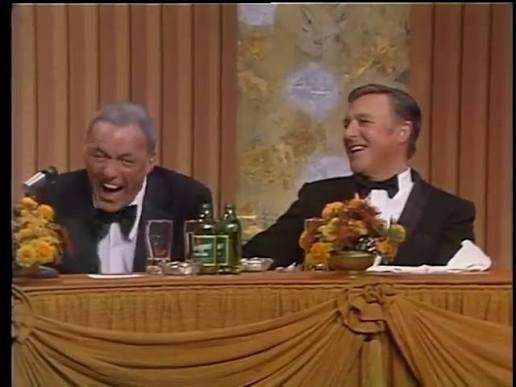
A hallmark of a classic Celebrity Roast moment was the reaction from the head table, and Callas’s routine delivered some of the most memorable reaction shots in television history:
- Frank Sinatra: Rather than taking offense, Sinatra was completely won over by Callas’s manic energy. He spent much of the routine doubled over, laughing to the point of tears.
- Dean Martin: As host, Dean Martin was famous for being a relaxed, appreciative audience member. Watching Callas contort his face and make bizarre noises, Martin repeatedly pounded his hand on the table and raised his glass in genuine praise.
- Fellow Legends: Surrounding Sinatra and Martin were icons like jazz singer Sarah Vaughan and master impressionist Rich Little, all breaking into unscripted, joyful laughter.
The spontaneity of the scene captured the true essence of 1970s television entertainment: a gathering of elite stars shedding their polished personas to share genuine, unscripted joy.
5. Artistic Value and Legacy
Charlie Callas’s roast of Frank Sinatra remains a shining example of the golden age of American broadcast television. It demonstrated that effective satire does not need to be mean-spirited or vulgar to be hilariously effective.
Callas’s ability to walk up to the most powerful man in show business, break traditional stand-up rules, and reduce a room full of icons to tears of laughter proved his extraordinary stage mastery. His unique blend of jazz rhythm, physical slapstick, and vocal sound effects left a lasting imprint on visual comedy, inspiring future generations of physical comedians like Jim Carrey and Robin Williams.
Conclusion
The moment Charlie Callas stood at the podium roasting Frank Sinatra under Dean Martin’s joyful hostmanship stands as a timeless masterpiece of comedy. It remains a vibrant testament to an era when Hollywood’s greatest legends could gather under one roof, let down their guard, and celebrate each other through the universal language of laughter.