Some Western heroes announce themselves with speeches.
Clint Eastwood’s Man With No Name barely needed to speak at all.
Across Sergio Leone’s Dollars Trilogy — A Fistful of Dollars, For a Few Dollars More, and The Good, the Bad and the Ugly — Eastwood created a screen presence built from silence, patience, danger, and absolute confidence.
The video brings together many of those defining moments.
Dusty streets.
Long stares.
Hands hovering near revolvers.
Enemies talking too much.
And Eastwood standing in the middle of everything as though he already knows how the confrontation will end.
That combination changed the Western hero forever.
A Hero Who Does Not Explain Himself
Traditional Western protagonists often came with clearly defined moral identities.
They were sheriffs.
Soldiers.
Ranchers.
Men protecting towns or families.
The Man With No Name feels different.
He arrives without much explanation.
His past remains largely mysterious.
His motives are often difficult to read.
Sometimes he helps people.
Sometimes he follows the money.
Sometimes he appears to be working for one side while secretly manipulating both.
That uncertainty makes him compelling.
The audience is always studying him.
Not because he gives us information, but because he refuses to.
Eastwood Turns Stillness Into Power
One of the strongest qualities in the footage is how little Eastwood needs to move.
Other characters shout.
They threaten.
They wave guns.
They make speeches.
Eastwood often simply stands there.
That stillness creates authority.
A nervous man moves too much.
A frightened man reacts too quickly.
The Man With No Name rarely does either.
He waits.
The waiting becomes intimidating.
You begin to feel that everyone else is operating emotionally while he is calculating.
That is one reason his eventual movements feel so powerful.
When the hand finally goes toward the revolver, the moment matters.
The Face Became Part of the Myth
Leone understood exactly how to photograph Eastwood.
The close-ups are essential.
Dust.
Sweat.
A narrowed eye.
The cigarillo held between his lips.
A barely visible change in expression.
The films repeatedly move from huge Western landscapes to extreme close-ups of faces.
That contrast creates tension.
The landscape tells us how large the world is.
The close-up tells us that the entire world has narrowed down to two men deciding who will move first.
Eastwood’s face is perfect for that style.
He does not need to exaggerate emotion.
A slight squint communicates suspicion.
A tiny smile communicates confidence.
Silence communicates threat.
A Fistful of Dollars Introduced a Different Kind of Gunslinger
In A Fistful of Dollars, Eastwood’s stranger enters a town controlled by rival factions.
Rather than joining one side out of loyalty, he recognizes an opportunity.
He begins manipulating both groups.
That setup immediately establishes his intelligence.
He is dangerous with a gun, but he is equally dangerous because he understands people.
He knows greed.
He knows fear.
He knows arrogance.
And he knows how to use those weaknesses against the men around him.
The footage captures that atmosphere beautifully.
Men stand in dusty streets with weapons drawn.
Windows become hiding places.
Every doorway feels dangerous.
The town itself seems ready to explode.
Yet the stranger often appears calmer than everyone else.
The Shootouts Work Because of the Waiting
A Leone gunfight is rarely just about gunfire.
The important part often comes before the first shot.
One character looks at another.
The camera cuts to the hand.
Back to the eyes.
Back to the revolver.
A boot shifts slightly in the dust.
Nobody moves.
Then suddenly everything happens.
That rhythm creates enormous tension.
Modern action sometimes relies on constant movement.
The Dollars Trilogy proves that waiting can be more exciting.
The audience begins participating in the confrontation.
You start wondering:
Who draws first?
Who is bluffing?
Who already knows what the other man will do?
That anticipation turns a simple gunfight into a psychological contest.
The Poncho Became an Icon
Costume plays a major role in the character’s identity.
The poncho.
The hat.
The boots.
The gun belt.
The cigarillo.
Together, these elements create one of the most recognizable silhouettes in cinema.
The clothing is practical, but it also feels mythic.
Eastwood can stand against a bright desert sky and immediately be recognizable.
That visual simplicity helped the character survive beyond the individual films.
Even people who have never watched all three movies often recognize the look.
That is the power of a strong screen image.
For a Few Dollars More Makes the Character More Experienced
By the second film, Eastwood’s bounty hunter feels more established.
He understands how dangerous men operate.
He has fewer illusions.
He also encounters another highly capable gunfighter.
That creates a different dynamic.
Instead of always being the only calm professional in the room, he now has to measure another man who may be just as skilled.
The movie becomes less about one mysterious stranger manipulating amateurs and more about professionals studying one another.
That makes the tension richer.
Nighttime Turns the Western Into Something Almost Ghostly
Some of the strongest imagery in the video comes from nighttime confrontations.
A Western town after dark feels completely different from the bright desert streets.
Buildings disappear into shadow.
A man can emerge from darkness without warning.
The empty street feels like a stage.
Eastwood’s face may only be partially visible beneath the hat.
That darkness increases the sense of danger.
You cannot see everything.
And when you cannot see everything, every sound matters more.
Footsteps.
A door.
A gun being handled.
The silence between characters becomes even heavier.
The Character Rarely Wastes Words
Eastwood’s dialogue style became one of the trilogy’s defining features.
He does not talk because he feels uncomfortable with silence.
He talks when he has something useful to say.
That makes short lines more memorable.
A character who speaks constantly needs increasingly clever dialogue to remain interesting.
The Man With No Name does not.
The audience waits for him to speak.
That waiting gives the words weight.
The same principle applies to his gun.
He does not need to constantly demonstrate skill.
The audience already believes he has it.
Leone Made Violence Feel Ritualistic
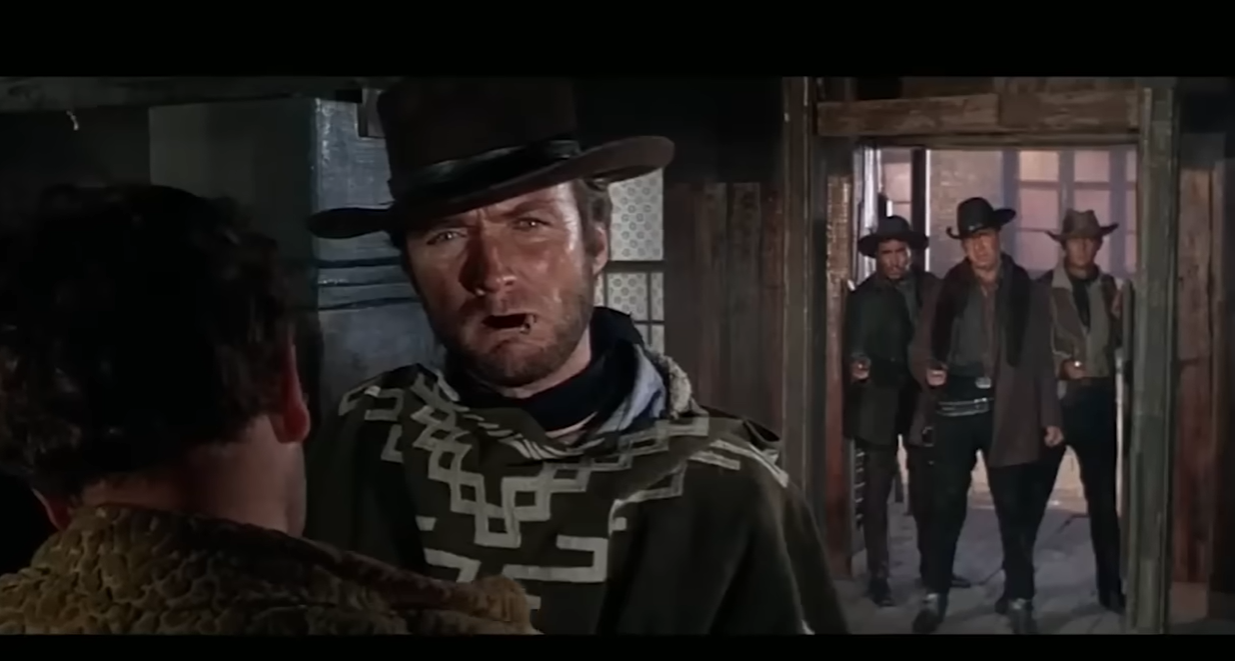
The confrontations in these movies often resemble rituals.
Men take positions.
They look at one another.
Everyone understands what is about to happen.
Then there is a final pause.
The violence explodes.
This structure is especially strong in the footage from The Good, the Bad and the Ugly.
By then, Leone has taken the visual language of the Western duel and pushed it toward almost operatic territory.
Every cut feels deliberate.
Every face matters.
Every second of waiting increases pressure.
The Good, the Bad and the Ugly Expands the World
The third film feels bigger.
The landscapes are larger.
The conflicts are larger.
The Civil War becomes part of the background.
Yet the character dynamics remain personal.
Blondie, Tuco, and Angel Eyes are constantly calculating how much they need one another and when that usefulness might end.
That creates an unstable alliance.
Nobody fully trusts anyone.
That mistrust keeps the story alive.
A partnership may exist for one scene and collapse in the next.
Tuco Gives Blondie a Perfect Opposite
Blondie is controlled.
Tuco is emotional.
Blondie speaks little.
Tuco speaks constantly.
Blondie hides what he is thinking.
Tuco often broadcasts every thought.
That contrast creates some of the trilogy’s best chemistry.
Tuco is unpredictable because he reacts emotionally.
Blondie is unpredictable because he does not.
Together, they make each other more entertaining.
Eastwood’s restraint becomes even clearer when placed beside Eli Wallach’s enormous energy.
The Graveyard Sequence Shows Leone at Full Power
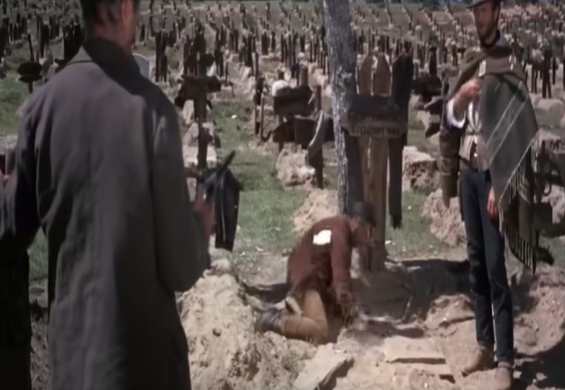
The cemetery material is some of the most visually memorable footage in the compilation.
The setting itself is unforgettable.
Rows and rows of graves stretch into the distance.
The characters appear tiny against the scale of the landscape.
Then the camera moves closer.
Faces.
Eyes.
Hands.
Weapons.
Suddenly the enormous cemetery disappears emotionally.
Only the three men matter.
That contrast creates one of cinema’s most famous Western confrontations.
The Final Standoff Is About Psychology
A three-way duel is more complicated than a normal showdown.
Each man must watch two opponents.
Nobody can focus entirely on one threat.
That uncertainty gives the sequence extraordinary tension.
Who shoots first?
Who targets whom?
Who understands the situation best?
The physical act of drawing a gun only takes a moment.
The mental battle lasts much longer.
That is why audiences remember the buildup.
Ennio Morricone Changes the Meaning of the Images
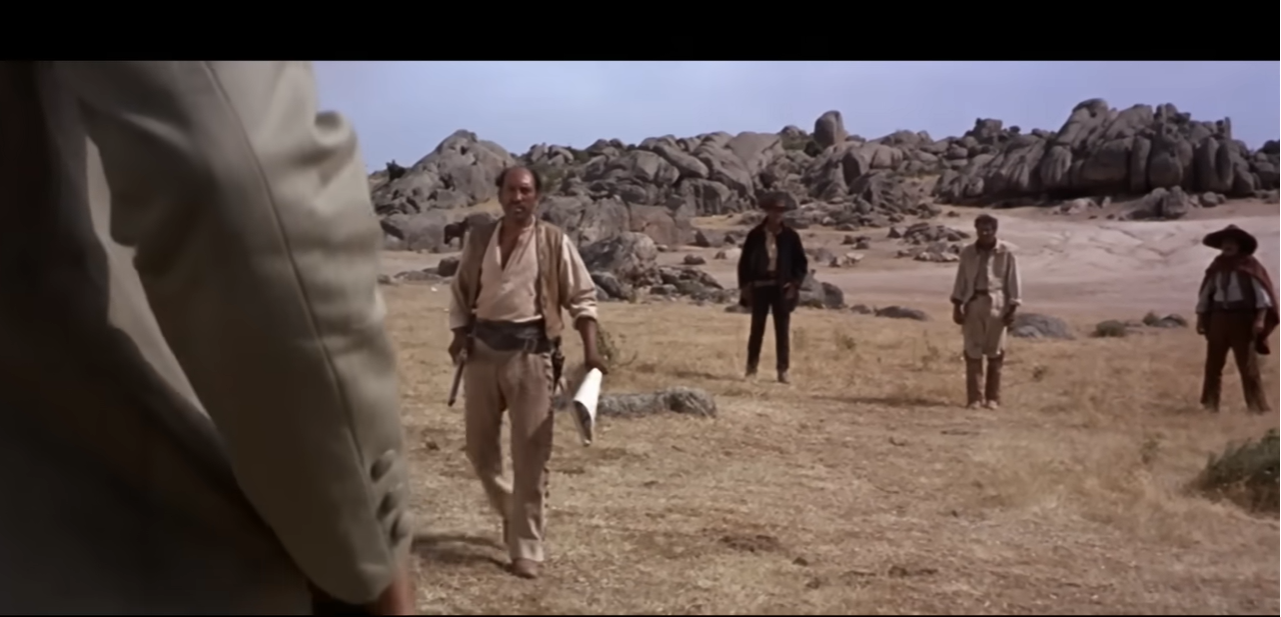
The visual style cannot be separated from the music.
Morricone’s scores do not simply sit behind the action.
They shape it.
A face becomes more intense.
A landscape becomes larger.
A pause feels longer.
A duel begins to feel inevitable.
The music turns Western imagery into myth.
That is especially important during long sections with limited dialogue.
The score becomes another character.
Eastwood’s Coolness Comes From Control
Many screen characters try to look cool.
The Man With No Name rarely seems to be trying.
That difference matters.
He does not perform confidence for other characters.
He simply behaves as though panic would be a waste of time.
That is what gives him authority.
Even when surrounded.
Even when injured.
Even when the odds appear terrible.
The emotional temperature rarely changes dramatically.
That calm becomes part of his weaponry.
He Is Not Invincible
The trilogy also works because Eastwood’s character can suffer.
He gets beaten.
He gets trapped.
He becomes exhausted.
He has to improvise.
Those moments prevent the character from becoming empty mythology.
He may look unbeatable during a showdown, but the movies repeatedly remind us that survival has a cost.
That makes his comebacks stronger.
The audience has seen him vulnerable.
So when he walks back into danger, the confidence feels earned.
The Trilogy Changed Western Masculinity
Before Leone and Eastwood, many Western heroes represented clear moral authority.
The Man With No Name introduced something colder and more ambiguous.
He does not give speeches about justice.
He may do the right thing without describing himself as righteous.
He may also make choices for money.
That moral uncertainty became enormously influential.
Later action heroes would borrow the same qualities.
Few words.
Dry humor.
Controlled aggression.
A mysterious past.
A personal code that matters more than formal authority.
You can see the DNA of the Man With No Name in decades of later movies.
Why These Clips Still Work on Social Media
The visual language is almost perfect for short-form video.
The viewer does not need complicated context.
One man stands in the street.
Another reaches toward a gun.
Eastwood looks completely calm.
That is enough.
The question is instantly understandable.
Who wins?
Close-ups are also ideal for mobile screens.
Eastwood’s face fills the frame.
The gun fills the frame.
The opponent fills the frame.
The tension survives even on a small display.
The Man With No Name Became Bigger Than the Plot
Eventually, the character became a symbol.
Not simply a person inside three movies.
A symbol of Western cool.
The silhouette alone became meaningful.
The poncho.
The hat.
The revolver.
The stare.
Once a character reaches that level, audiences no longer need a specific scene to recognize the emotion.
Eastwood walks into frame and viewers already know what kind of danger has arrived.
Why the Trilogy Still Feels Modern
The pacing can be slow.
The movies come from the 1960s.
The style is unmistakably tied to another era.
Yet the central filmmaking ideas still feel powerful.
Strong visual composition.
Minimal dialogue.
Memorable sound.
Characters with instantly recognizable silhouettes.
Tension created through editing rather than constant action.
These techniques remain effective because they are fundamental.
Technology changes.
Suspense does not.
Eastwood and Leone Created a Perfect Partnership
The director needed an actor who could hold the screen without constantly talking.
Eastwood needed a filmmaker who understood that silence could become charisma.
Together, they created something neither could have produced in quite the same way alone.
Leone made Eastwood look mythic.
Eastwood gave Leone a face that could carry enormous stretches of tension.
That partnership transformed both careers.
More importantly, it transformed the Western.
The Legend Lives in the Pause Before the Gunshot
The most unforgettable thing about the Man With No Name is not how fast he shoots.
It is how calm he looks before he shoots.
That pause contains everything.
Confidence.
Threat.
Calculation.
Mystery.
The audience knows violence is coming.
The opponent knows violence is coming.
Eastwood seems to be the only man who is not worried about it.
That is the character in one image.
And it is why these scenes still feel powerful decades later.
The Man With No Name never needed a long biography.
He never needed to explain why he was dangerous.
He simply walked into town, looked at the men standing in his way, waited for exactly the right moment—
and let the gunshot finish the introduction.