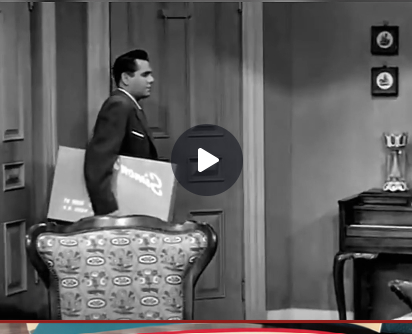
There are television characters who need an elaborate setup to make audiences laugh, and then there is Lucy Ricardo. On I Love Lucy, even the most ordinary situation could become unforgettable once Lucy stepped into it. A simple conversation, a household chore, a misunderstanding, or an innocent plan could suddenly spiral into one of the funniest moments on classic television.
That is exactly why watching Lucy turn a simple moment into comedy still feels so entertaining decades later.
Lucille Ball had an extraordinary ability to make audiences anticipate disaster before anything had actually gone wrong. One facial expression could tell viewers that Lucy had just gotten an idea. A nervous glance could reveal that her plan was already beginning to collapse. And once Lucy tried to fix the situation, things usually became even funnier.
It was a style of comedy that looked effortless, but behind every memorable scene was remarkable timing and performance.
Lucy Ricardo Could Make Anything Funny
One of the greatest strengths of I Love Lucy was its ability to find humor in everyday life.
The show didn’t always need an extraordinary premise.
Sometimes Lucy simply wanted to buy something without Ricky discovering it. Maybe she wanted to appear in one of his performances. Perhaps she was trying to impress someone, prove she could do something herself, or help Ethel with another questionable plan.
The original problem could be incredibly simple.
But Lucy never did things the easy way.
Instead, she would develop an increasingly complicated solution.
One small lie required another.
One mistake needed to be hidden with an even bigger mistake.
Before long, a perfectly ordinary afternoon had transformed into complete comedy chaos.
That escalation became one of the show’s greatest strengths.
Lucille Ball’s Facial Expressions Were Comedy by Themselves
Dialogue was only part of what made Lucy so funny.
Lucille Ball could communicate an entire story without saying anything.
Her eyes widened.
Her mouth dropped open.
She slowly looked toward the person standing beside her.
Suddenly the audience knew exactly what Lucy was thinking.
This was especially effective whenever Ricky was close to discovering one of her schemes.
Lucy might try to behave normally, but her face told the audience everything.
She knew she was in trouble.
The viewers knew she was in trouble.
Ricky was often the only person who hadn’t figured it out yet.
That created wonderful comedic tension.
Audiences weren’t simply waiting to discover what would happen. They were waiting to see how long Lucy could keep everything from collapsing.
The Comedy Was Carefully Controlled
Many classic I Love Lucy scenes appear chaotic, but the performances were remarkably precise.
Physical comedy depends heavily on timing.
A reaction that happens one second too early can ruin a joke. A pause that lasts slightly longer can make the same joke much funnier.
Lucille Ball understood that rhythm exceptionally well.
She knew when to move quickly and when to stop.
She knew when the audience needed time to recognize what had happened.
Most importantly, she understood escalation.
Lucy rarely went immediately from a normal situation to complete disaster.
Instead, the problem grew step by step.
That structure gave audiences time to enjoy every stage of the chaos.
Lucy and Ethel Made Ordinary Situations Even Better
Of course, Lucy was rarely alone when one of her plans went wrong.
Ethel Mertz, played by Vivian Vance, was the perfect comedy partner.
Their friendship became one of the defining relationships of the series.
Sometimes Ethel questioned Lucy’s latest idea.
Sometimes she reluctantly agreed to help.
And sometimes she was just as enthusiastic about the plan as Lucy.
Regardless of how things started, the two women frequently ended up facing the consequences together.
Their chemistry made even simple conversations entertaining.
A look between Lucy and Ethel could immediately tell audiences that another scheme was coming.
And once the plan began, there was usually no turning back.
Ricky Was the Perfect Counterbalance
Desi Arnaz’s Ricky Ricardo provided another essential ingredient.
Lucy needed someone grounded enough to make her behavior seem even more ridiculous.
Ricky often filled that role perfectly.
He could begin a scene completely unaware of Lucy’s latest adventure, gradually become suspicious, and eventually discover the truth.
His reactions became part of the joke.
The relationship also gave the comedy emotional warmth.
Lucy might drive Ricky crazy, but the affection between the characters remained central to the series.
That balance helped prevent the comedy from becoming mean-spirited.
Viewers could laugh at the arguments because underneath them was a relationship audiences understood and cared about.
Simple Premises Created Legendary Television
Some of the most famous moments from I Love Lucy demonstrate exactly how effective this formula could be.
Lucy and Ethel working in a chocolate factory is based on an incredibly simple idea: the conveyor belt becomes too fast.
That’s it.
Yet the escalating panic turned the scene into one of the most recognizable sequences in television history.
The famous Vitameatavegamin commercial follows a similarly straightforward premise.
Lucy has to repeatedly perform a television advertisement.
The circumstances gradually change her performance until everything becomes increasingly chaotic.
Again, the basic idea is simple.
The execution makes it legendary.
That ability to take something ordinary and push it gradually toward absurdity is one reason I Love Lucy remains so watchable.
The Audience Could Understand Lucy
Another reason these moments work is that Lucy’s motivations were often surprisingly relatable.
She wanted excitement.
She wanted recognition.
She wanted to participate.
She wanted to prove that she could do something.
Sometimes she simply didn’t want Ricky telling her she couldn’t.
Those emotions are understandable.
The comedy came from the extreme lengths Lucy was willing to go to achieve her goal.
Viewers might never sneak into a nightclub performance wearing an elaborate disguise, but they understand wanting to be included.
They might never create an enormous misunderstanding to hide a small purchase, but they understand the temptation to avoid admitting a mistake.
Lucy took familiar human impulses and pushed them into hilarious territory.
Why These Moments Still Work Today
Comedy has changed dramatically since I Love Lucy premiered in 1951.
Television has changed.
Audiences have changed.
Production styles have changed.
Yet great physical comedy requires surprisingly little explanation.
You don’t need to understand a complicated cultural reference to laugh when someone’s carefully constructed plan begins falling apart.
You simply need to understand the situation.
That gives Lucy’s comedy an unusual durability.
Even younger viewers discovering the show many decades after its original broadcast can understand the basic joke almost immediately.
Lucy wants something.
Lucy develops a plan.
The plan goes wrong.
Lucy desperately tries to save it.
Everything gets worse.
It’s simple storytelling executed brilliantly.
More Than Nostalgia
For longtime viewers, watching I Love Lucy can certainly bring nostalgia.
But nostalgia alone doesn’t explain why individual clips continue circulating among new audiences.
People still share Lucy’s funniest scenes because the performances themselves remain entertaining.
Lucille Ball’s timing is still impressive.
Vivian Vance’s reactions still work.
Desi Arnaz remains an excellent straight man to Lucy’s chaos.
William Frawley’s Fred Mertz adds another layer of personality to the group.
Together, the cast created a comedic rhythm that remains immediately recognizable.
Lucy Didn’t Need a Huge Moment
Perhaps the greatest compliment to Lucille Ball’s performance is that she didn’t need a spectacular situation.
Give Lucy Ricardo a kitchen, a telephone, a new dress, a misunderstanding, or one terrible idea.
That was enough.
Within minutes, something completely ordinary could become unforgettable.
And that is the magic viewers continue finding in I Love Lucy.
The funniest part isn’t always the final disaster.
Sometimes it’s the tiny expression Lucy makes when she realizes her plan might actually work.
Sometimes it’s Ethel’s suspicious stare.
Sometimes it’s Ricky walking into the room at exactly the wrong moment.
Those little details transformed ordinary sitcom scenes into comedy history.
Decades later, audiences already know Lucy’s plans probably won’t work.
They know trouble is coming.
They may even remember exactly how the scene ends.
But they watch anyway—because nobody could turn a simple moment into comedy quite like Lucy.