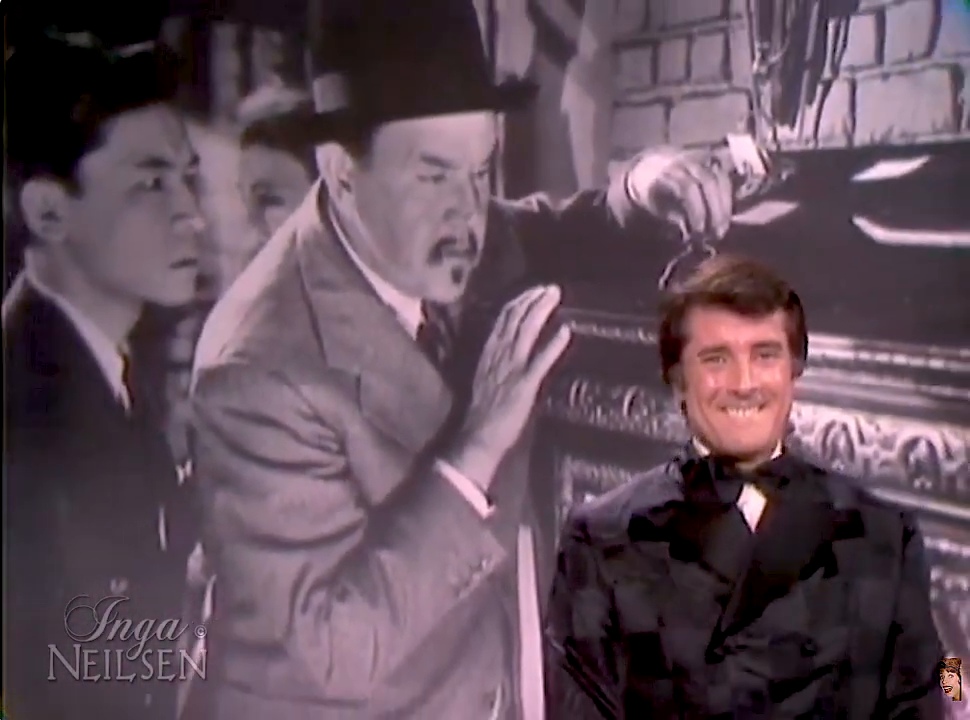
A murder has taken place.
There is a body on the floor.
A knife is sticking out of the victim’s back.
There are suspects in the room.
And a famous detective has arrived to solve the case.
It sounds like the setup for a serious mystery.
Then Tim Conway starts talking.
And suddenly, the murder is no longer the most important thing happening in the room.
That is the brilliance of this comedy sketch.
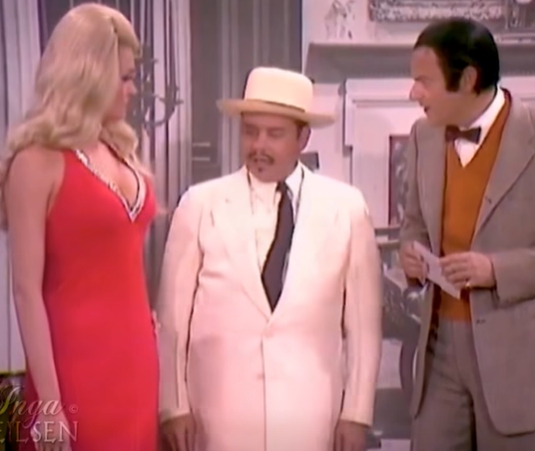
The scene borrows the structure of an old-fashioned detective movie, complete with a Charlie Chan-style investigator, suspicious characters, obvious clues and dramatic deductions.
But Tim Conway’s character refuses to let the investigation stay serious for more than a few seconds.
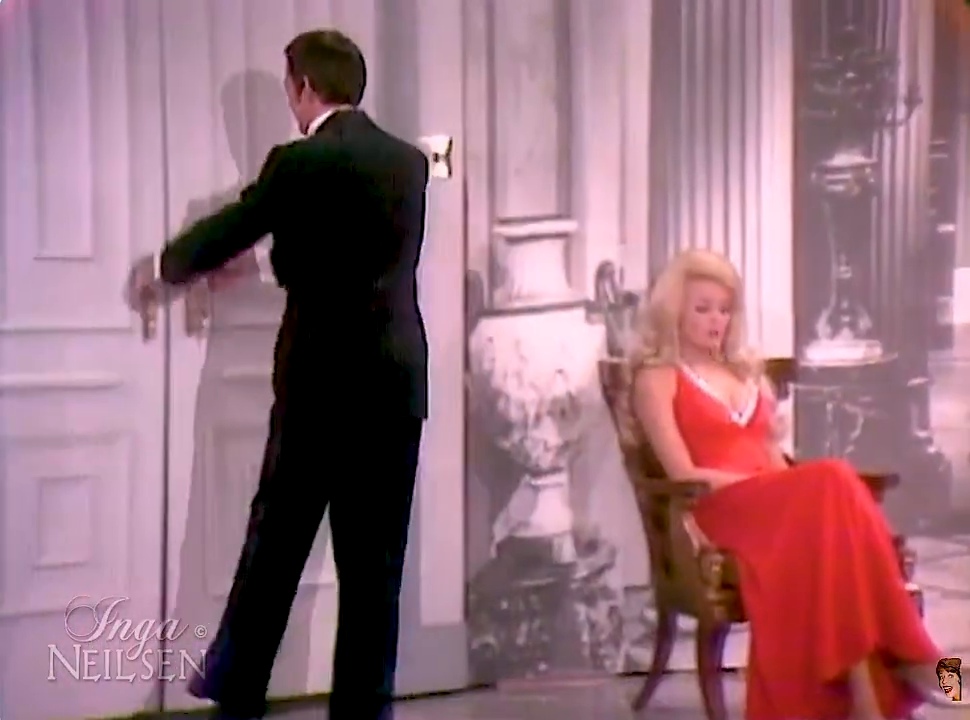
He is supposed to be the detective’s “number one son.”
Instead, he becomes the biggest distraction in the case.
From the moment he enters, Conway’s character is constantly calling out to his father.
“Pop.”
Again.
And again.
And again.
The repetition becomes part of the joke.
He is eager.
He is enthusiastic.
He wants to help.
The problem is that almost everything he says makes the investigation harder, stranger or simply more ridiculous.
The detective begins by telling everyone that they are suspects and nobody should leave the room.
It is the kind of dramatic entrance expected in a murder mystery.
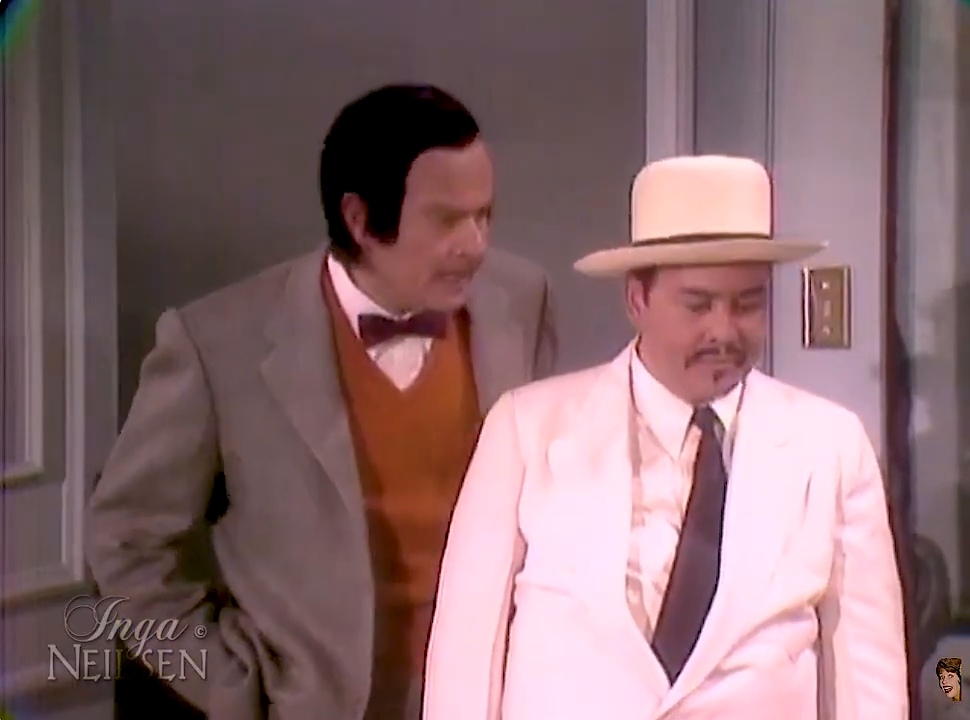
Then Tim immediately breaks the mood.
He wants to know where he should go.
“Where do I go, Pop?”
It is such a simple line, but it instantly changes the tone.
The detective is trying to control a room full of suspects.
Tim is worried about where he is supposed to stand.
That contrast is what makes the scene work.
The detective responds with an old saying about a son with a big mouth soon getting a fat lip.
Tim is warned.
He should probably stay quiet.
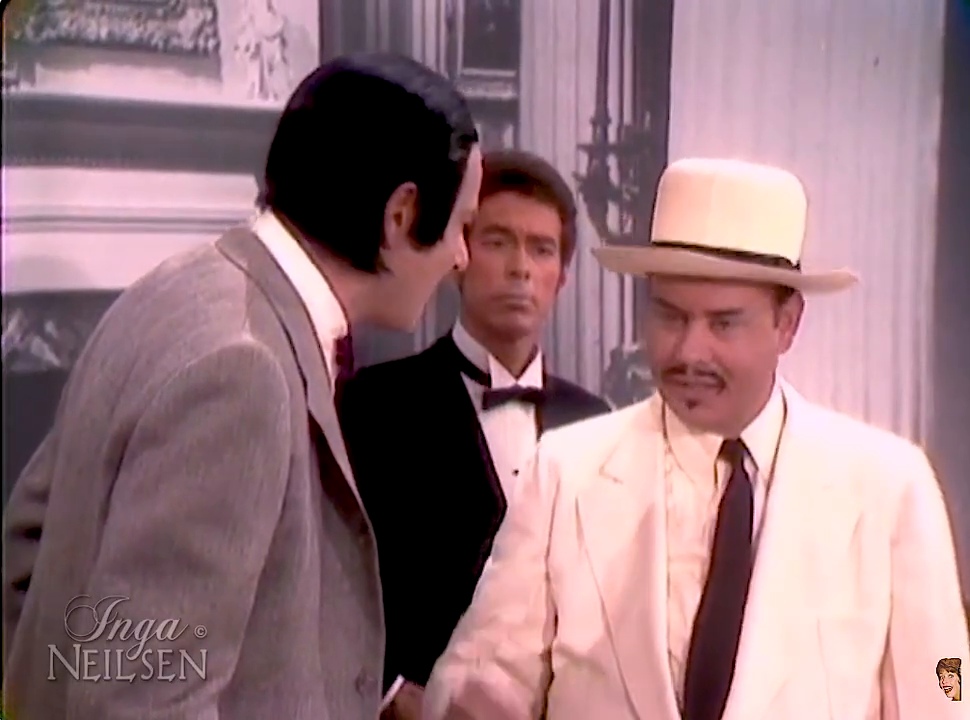
Naturally, he does not.
Then comes the body.
The detective asks where the corpse is.
Tim points out that his father has just stepped over it.
Once again, he is technically helpful.
And once again, the timing makes the moment ridiculous.
The detective praises him for being observant.
That only encourages Tim.
Suddenly, he is talking even more.
He reassures his father.
He keeps saying “Pop.”
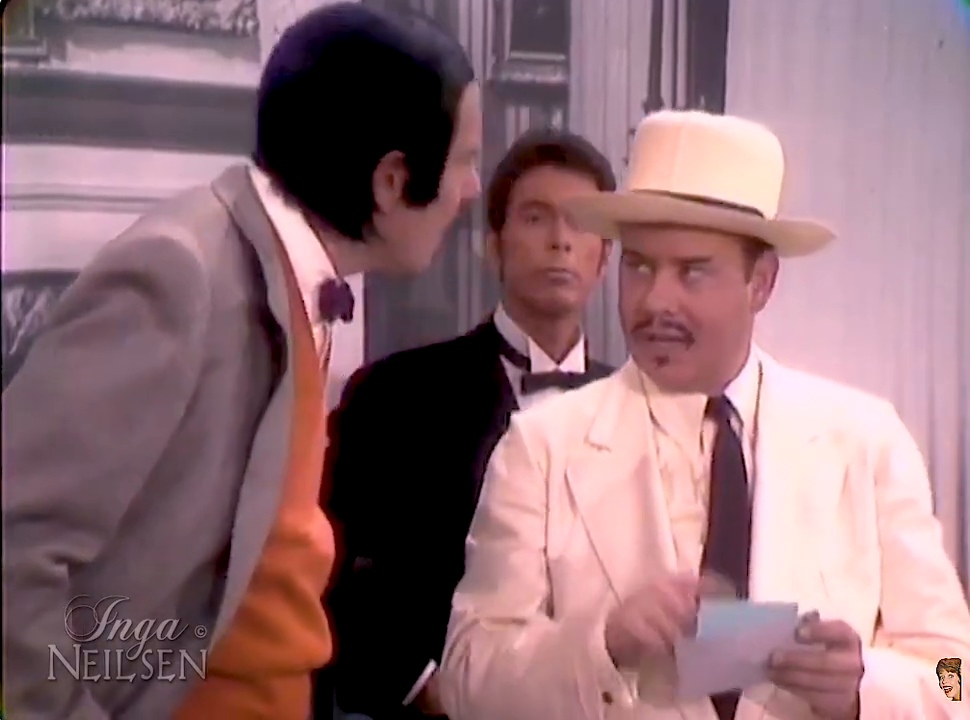
He keeps inserting himself into the moment.
Eventually, the detective threatens him again.
One more “Pop,” and Tim is going to get popped.
But that threat does not really solve the problem.
Tim Conway’s character is incapable of staying out of the investigation.
And that becomes the engine of the whole sketch.
The detective examines the victim.
He notices the knife.
Perhaps the knife in the back is a clue.
Then there is a note attached to the knife.
Another clue.
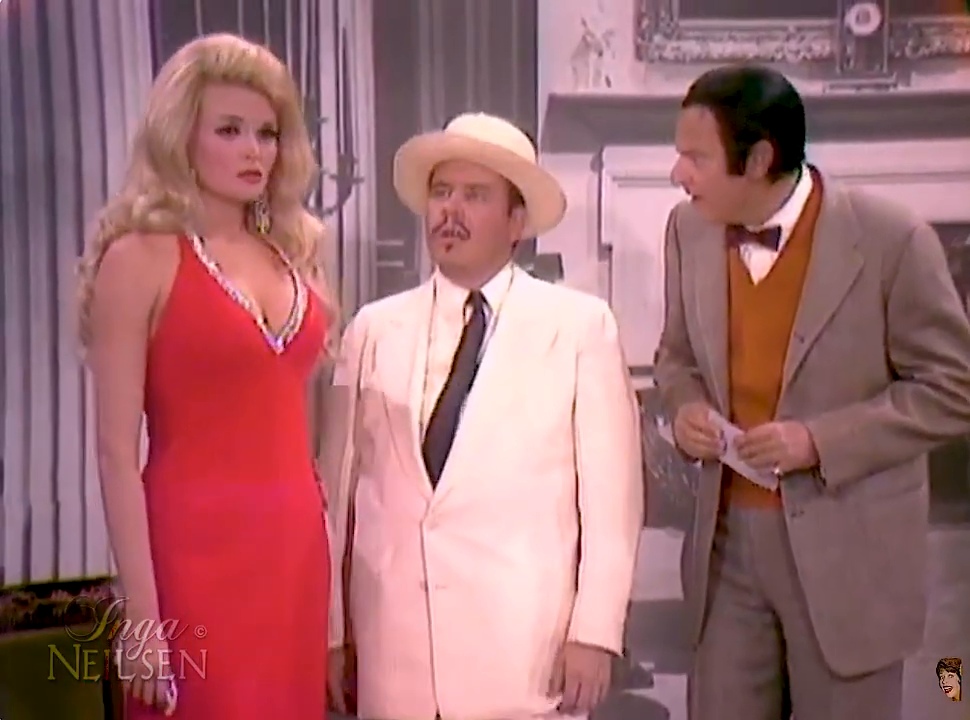
Tim immediately wants to know what it says.
The detective reads the note and concludes that the murderer must be in show business.
Tim responds the same way he has responded to nearly every revelation.
He wants clarification.
He asks questions.
He keeps the detective from ever having a clean dramatic moment.
That is one of Conway’s strengths in the scene.
He does not need to dominate physically.
He does not need a huge monologue.
His comedy comes from timing.
A word.
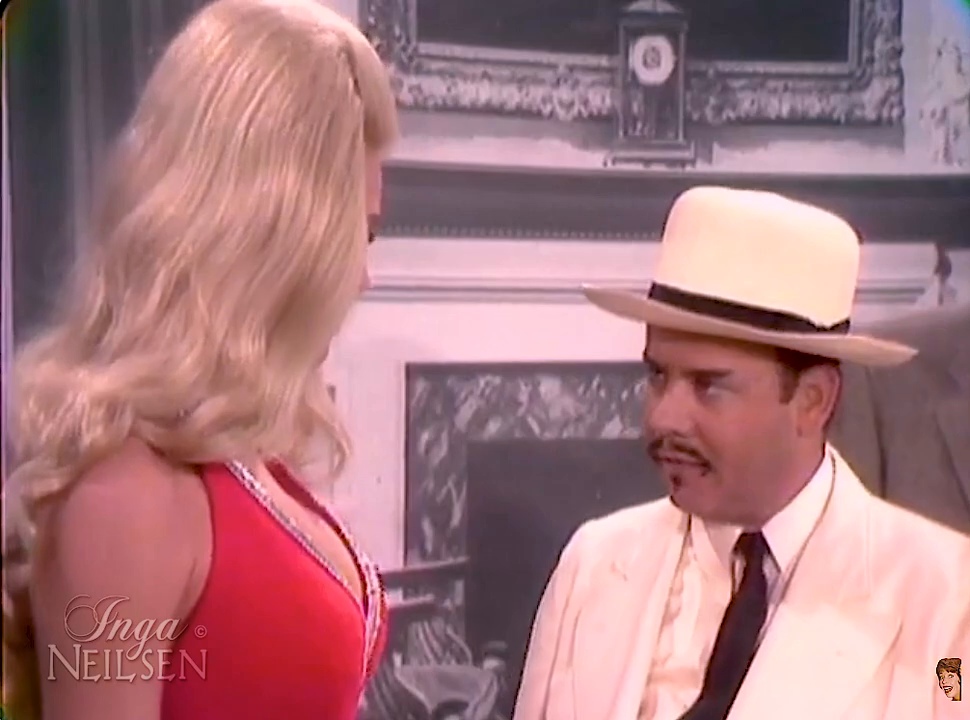
A reaction.
A badly timed question.
A perfectly placed “Pop.”
Every interruption weakens the detective’s authority just a little more.
Then the questioning turns to the victim’s wife.
She becomes an obvious suspect almost immediately.
She was close to the victim.
She has a motive because she stands to inherit money.
She is left-handed.
The knife is treated as left-handed.
Her fingerprints are on it.
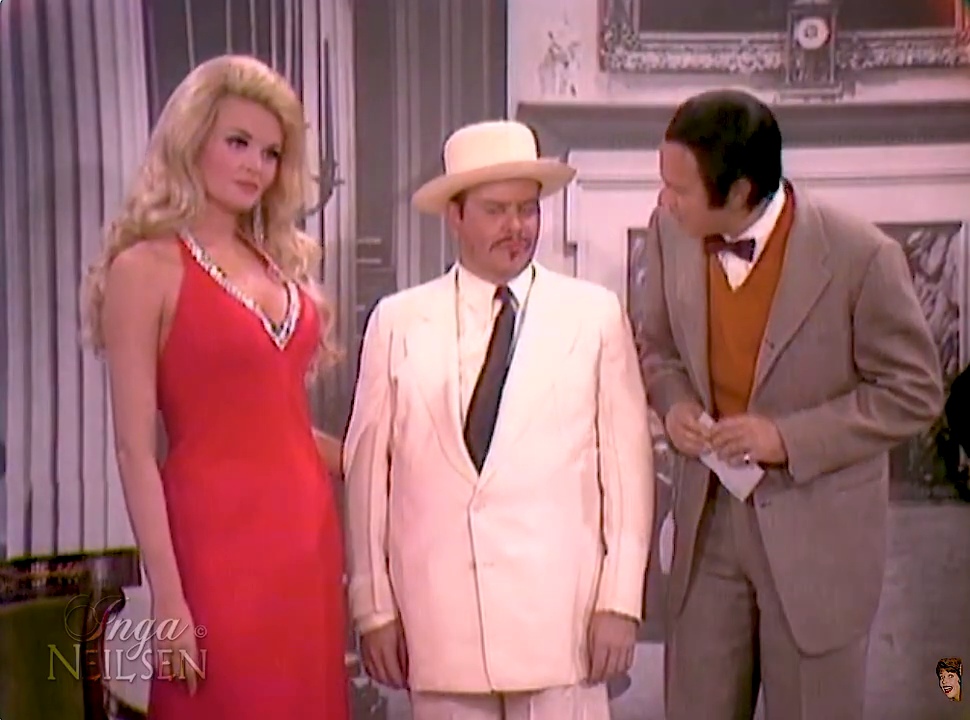
And, according to the sketch, six people actually saw her commit the crime.
At this point, the case should be over.
Even Tim seems suspicious.
But the woman insists that she did not do it.
The detective responds:
He believes her.
That is where the logic of the mystery completely collapses.
All the evidence points in one direction.
The detective simply ignores it.
Tim notices.
He tells his father he does not think she is innocent.
That would normally be a reasonable observation.
But in this sketch, reason is never safe for long.
The detective responds with his own ridiculous twist.
He hopes she is not innocent.
Suddenly, it becomes clear that the detective may have interests that have nothing to do with solving the murder.
Tim, once again, is stuck trying to understand what is happening.
And the audience is already ahead of him.
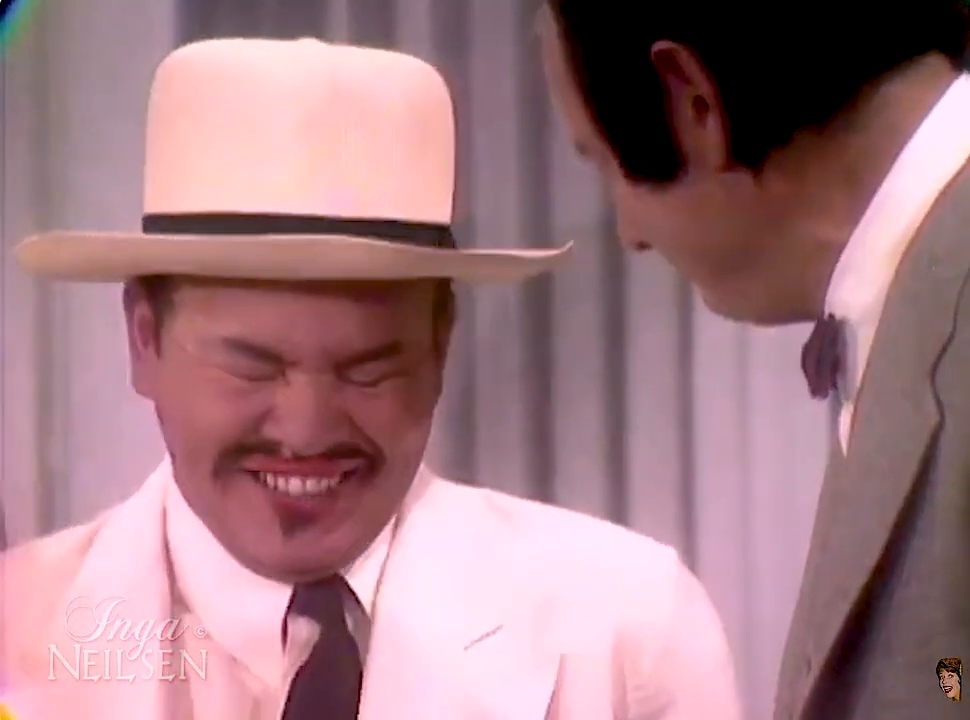
The scene keeps escalating.
The wife says that when the murder occurred, she was in her husband’s arms.
The detective immediately turns that into another joke.
Tim is still there.
Still listening.
Still interrupting.
Still unable to let any line pass without reacting.
Then the detective announces that they are going to reenact the crime.
This sounds like a classic mystery technique.
Recreate the conditions.
Watch what happens.
Maybe the truth will reveal itself.
But there is a problem.
The detective wants the lights turned off.
Tim points out that the lights were not off when the crime originally happened.
That is a completely reasonable objection.
The detective does not care.
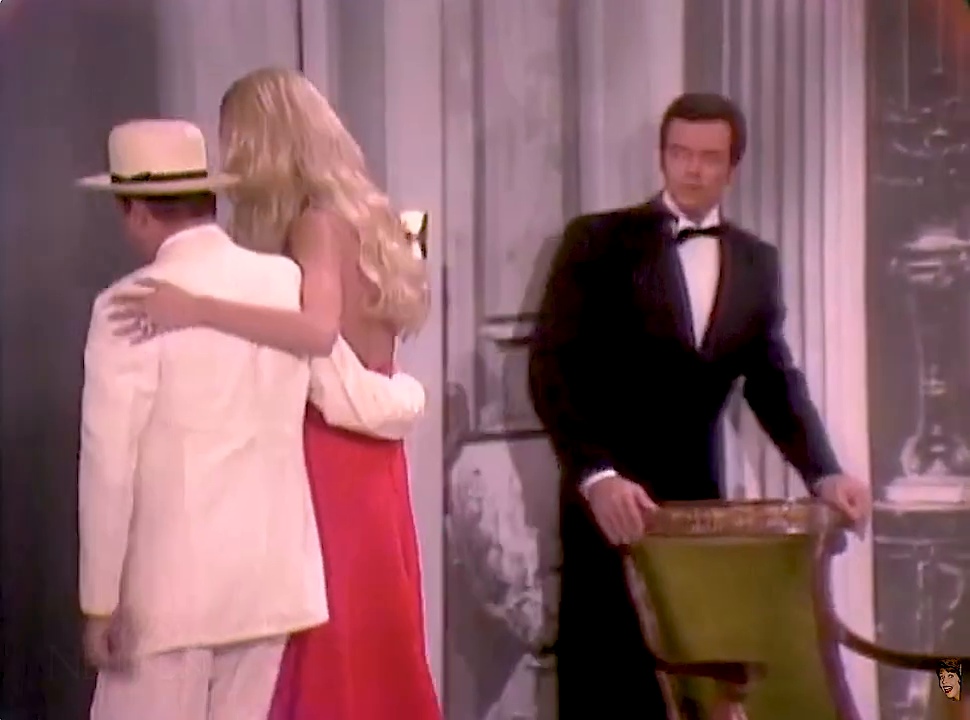
The lights will be off during this version.
That line tells the audience everything.
This is no longer about solving anything.
Something else is about to happen.
The lights go out.
There is confusion.
There is laughter.
Tim is once again left trying to understand what his father is doing.
By this point, his repeated interruptions are not just jokes on their own.
They help the audience experience the absurdity through him.
He is the one person in the room still trying to follow the rules of the investigation.
The problem is that the detective has clearly stopped following them.
Then comes the final reveal.
The detective says they are taking the woman with them.
Tim immediately asks the obvious question.
Is she the murderer?
After everything they have just seen, it would make sense.
But the answer is no.
FULL VIDEO:
She is not the murderer.
She is Tim’s new mother.
That punchline completes the whole sketch.
The murder case never really mattered.
The clues never really mattered.
The investigation never had to make sense.
The detective has been moving toward his own completely different goal.
And Tim Conway’s character has spent the entire scene desperately trying to keep up.
That is why his performance is so funny.
He is not the smartest person in the room.
He is not the detective.
He is not the mastermind.
He is the interruption.
Every “Pop” slows the investigation down.
Every question exposes another piece of nonsense.
Every reaction makes the detective’s behavior look even more absurd.
And because Conway plays the character with such eager energy, the interruptions never feel accidental.
They become the rhythm of the scene.
A serious clue appears.
Tim interrupts.
The detective makes a deduction.
Tim interrupts.
A suspect answers a question.
Tim interrupts.
The detective tries to move forward.
Tim says “Pop.”
Again.
And again.
By the end, that running gag is almost as important as the murder mystery itself.
The audience knows Tim is going to speak.
The detective knows Tim is going to speak.
Tim probably knows he should not speak.
He does it anyway.
That is classic Tim Conway.
He can take a simple supporting role and turn it into the funniest thing in the scene without ever needing to take control of the entire sketch.
He just needs the right reaction.
The right pause.
And one more perfectly timed:
“Pop.”