There was something truly special about watching Tim Conway perform on The Carol Burnett Show. He never needed an elaborate setup, expensive effects, or complicated dialogue to make an audience laugh. Sometimes all he needed was a strange expression, an unexpected pause, or one perfectly timed reaction.
And once Tim Conway got started, almost nobody around him was safe.
One of the most memorable things about Conway was his ability to turn an ordinary comedy sketch into complete chaos without ever looking like he was trying too hard. While other performers might build toward a big punchline, Conway often worked in the opposite direction. He slowed things down. He waited. He allowed the silence to become uncomfortable. Then, just when everyone thought the moment was over, he would add one tiny gesture or ridiculous line that completely changed the scene.
That timing was his secret weapon.
The audience usually saw what was happening before the other actors could recover. You could watch Harvey Korman desperately trying to stay serious. Carol Burnett might turn away for a moment, clearly fighting back laughter. Even experienced performers who had spent years working together sometimes looked completely helpless once Conway decided to push a scene in an unexpected direction.
That was part of the magic.
Tim Conway was famous for occasionally adding something during a performance that his castmates were not expecting. The result was genuine laughter rather than laughter written into the script. The actors were professionals, but when Conway found the right moment, professionalism could only take them so far.
A smile would appear.
Then someone would look away.
Someone else would cover their mouth.
And eventually, the entire scene could fall apart.
Instead of ruining the sketch, those moments often made it even better.
Audiences loved seeing performers lose control because it created a connection between the people onstage and the people watching at home. Everyone was sharing the same joke. The actors were laughing for the same reason the audience was laughing.
There was no distance between performer and viewer.
That feeling is one of the reasons clips from The Carol Burnett Show remain so enjoyable decades later.
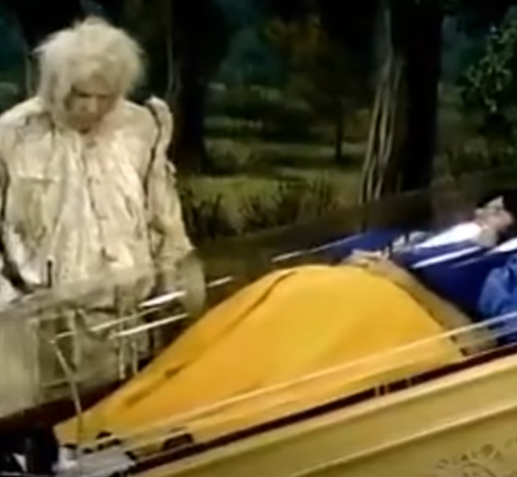
Tim Conway’s humor was also incredibly physical. He could transform himself simply by changing the way he walked, stood, or looked at someone. One of his most famous recurring characters, the Oldest Man, moved so slowly that even crossing a room could become an entire comedy routine.
Conway understood that anticipation could sometimes be funnier than action.
The audience knew something was coming.
The cast knew something was coming.
But Conway would make everyone wait for it.
That waiting became the joke.
He could stretch a simple movement far beyond what anyone expected, and somehow the longer it lasted, the funnier it became.
Harvey Korman was often the perfect partner for this style of comedy. Korman was an extremely talented comedian himself, but he was also famous for having difficulty keeping a straight face around Conway.
Their chemistry created some of the greatest moments in classic television comedy.
Conway would remain completely committed to whatever ridiculous character he was playing, while Korman gradually began losing the battle against laughter.
Sometimes Korman would bite his lip.
Sometimes he would lower his head.
Sometimes he would simply turn away from Conway because looking at him made the situation even worse.
But Conway rarely gave him a break.
If he noticed Korman struggling, he could make the moment even more ridiculous.
That relationship became part of the entertainment. Fans were no longer only waiting for the punchline. They were waiting to see whether Harvey Korman could survive the sketch without laughing.
Most of the time, that struggle was nearly as funny as the sketch itself.
Carol Burnett understood exactly why these moments worked.
The Carol Burnett Show had beautifully written sketches, talented performers, elaborate costumes, musical numbers, and impressive production. But some of its greatest moments came from something that could never be completely planned: genuine human reaction.
That spontaneity gave the show warmth.
You were not simply watching actors perform characters. Occasionally, you were watching friends make each other laugh.
Tim Conway was one of the best at creating those moments.
His comedy was rarely mean-spirited. He did not need shock value to get attention. Instead, he relied on character, timing, physical movement, and absurd situations.
That is one reason his work has aged so well.
A younger viewer can discover a Tim Conway clip today without knowing much about television from the 1960s or 1970s and still understand why it is funny.
The rhythm may be different from modern comedy, but the fundamental idea remains universal.
Someone is desperately trying not to laugh.
Another person knows exactly how to make them laugh.
And the audience gets to watch the battle unfold.
There is something wonderfully simple about that.
Classic television also had a unique relationship with live audiences. When Conway caused his fellow performers to break character, the audience reaction made everything even stronger. You could hear the laughter growing as viewers realized that the actors were struggling.
That laughter was contagious.
It encouraged the performers.
The performers reacted to each other.
The audience laughed even harder.
Suddenly, a scripted television sketch became something spontaneous and unpredictable.
Those moments could only happen once.
That is why watching them today feels like opening a small window into another era of entertainment.
You are not simply watching an old television show.
You are watching a moment that happened between real people in real time.
Tim Conway understood comedy at its most basic level. He knew that sometimes the funniest thing a performer could do was almost nothing.
A pause could be hilarious.
A confused stare could be hilarious.
Walking across a room could be hilarious.
Trying to perform a simple task could become hilarious if the character approached it in exactly the wrong way.
Conway could take those tiny moments and stretch them into unforgettable comedy.
Decades after The Carol Burnett Show originally aired, people still share clips of Tim Conway making Harvey Korman laugh, confusing Carol Burnett, or completely disrupting a sketch with some unexpected bit of physical comedy.
That continued popularity says something important.
Great comedy does not always need to be complicated.
Sometimes it simply needs the right performer, the right moment, and perfect timing.
Tim Conway had all three.
Watching him today brings back memories of an era when television comedy often felt spontaneous, warm, and wonderfully unpredictable. Even viewers who were not alive when the show originally aired can appreciate the chemistry between these performers.
And perhaps that is Tim Conway’s greatest legacy.
He did not simply make audiences laugh.
He made the people standing next to him laugh too.
And when everyone onstage finally lost control, the audience became part of the moment.
That is why these scenes continue to feel alive.
Years may pass, television may change, and comedy styles may evolve, but watching Tim Conway slowly destroy Harvey Korman’s ability to keep a straight face will probably never stop being funny.
Some comedy gets older.
Tim Conway’s comedy simply becomes more nostalgic with every replay.