A house is on fire.
The garage is burning.
The flames are starting to spread.
The owner is panicking because his antiques and valuables may be destroyed.
And the fire department has already taken 90 minutes to arrive.
That should be enough to make anyone furious.
Then Tim Conway shows up.
And somehow, the emergency gets even slower.
That is the entire joke at the heart of this classic Carol Burnett Show sketch.
The homeowner begins the scene already at the end of his patience.
He is on the phone with the fire department, explaining that the fire is still burning and getting worse.
He has called more than once.
No one has arrived.
He is worried that everything he owns is about to go up in flames.
Then he learns that a fire truck was supposedly sent 90 minutes earlier.
He cannot believe it.
How could it possibly take that long?
Before he can finish complaining, a bell rings.
At last.
The fire department has arrived.
The homeowner immediately starts shouting.
“Hurry!”
That word becomes the unofficial theme of the entire sketch.
He wants speed.
He wants action.
He wants someone to run in and stop the fire.
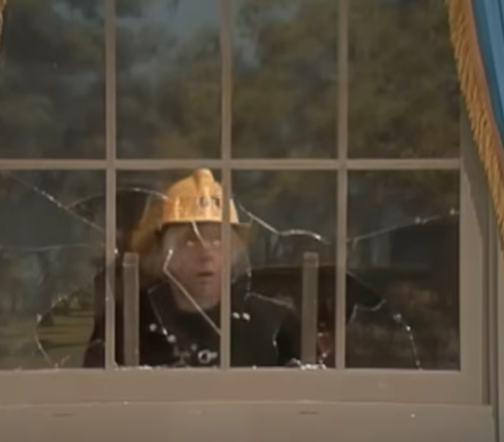
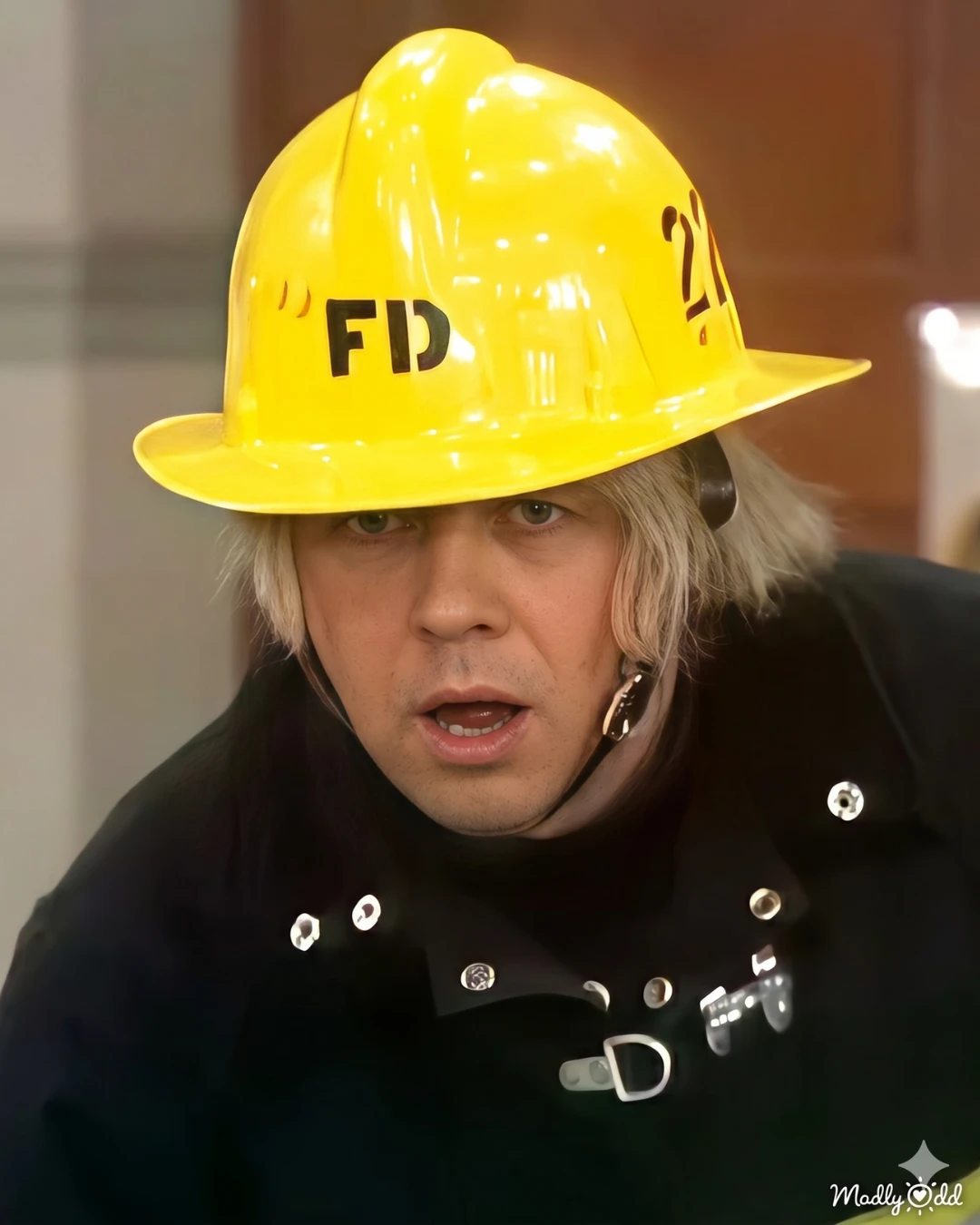
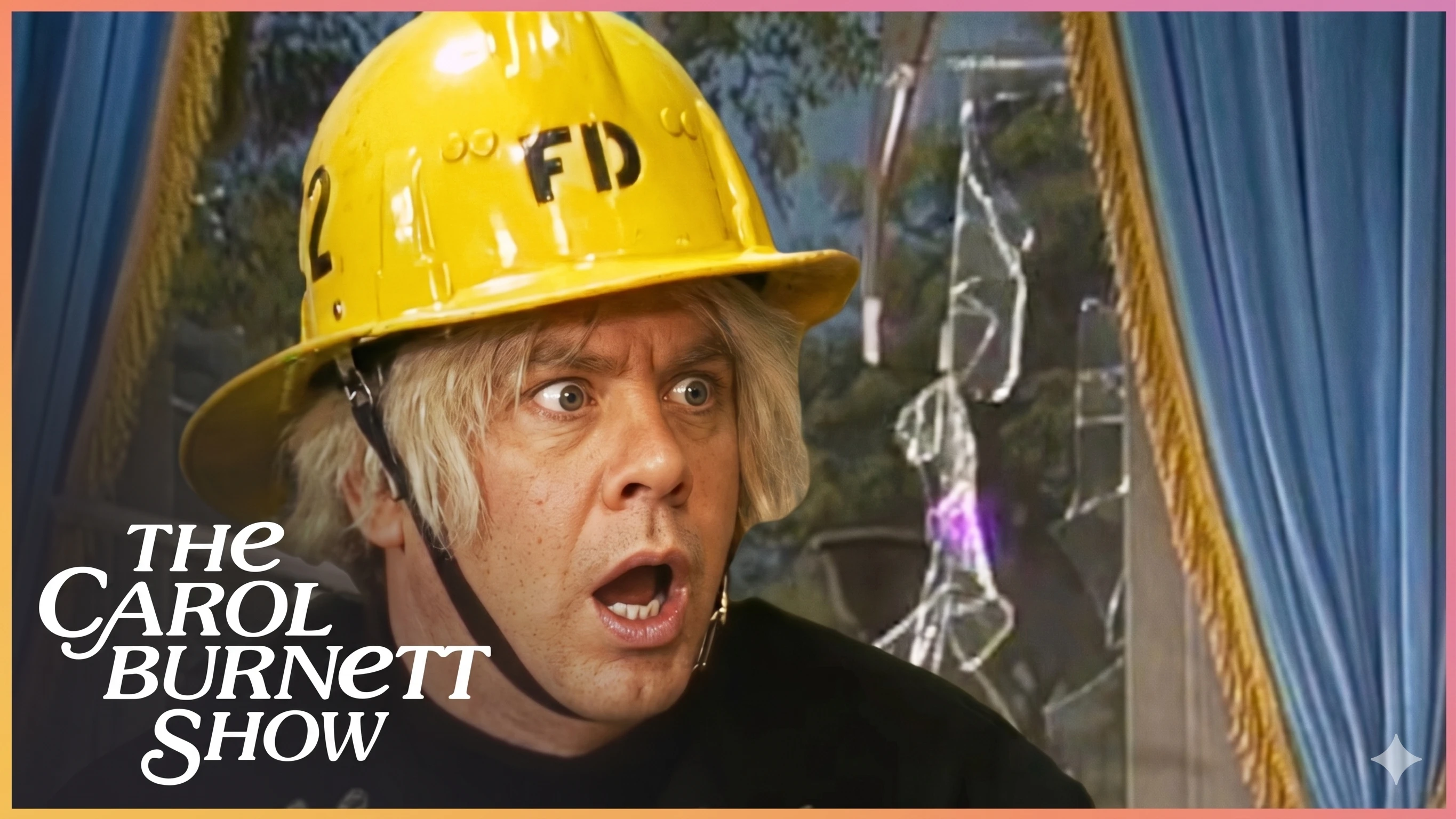
Instead, Tim Conway appears.
And he does almost everything at the slowest possible pace.
The contrast is immediate.
The homeowner is moving emotionally at full speed.
Conway’s fireman seems to be operating in another dimension.
The homeowner waves him inside.
“Hurry!”
Conway barely reacts.
The homeowner becomes more frantic.
“Hurry in here!”
Conway keeps moving slowly.
The fire may be spreading, but his character never seems to feel the urgency.
That is what makes the scene work.
The comedy is not built around one giant punchline.
It is built around timing.
More specifically, it is built around refusing to match the urgency of the situation.
The homeowner tells him not to bother with the ladder because the fire is on the first floor.
That should make things easier.
Instead, Conway looks at the height and reacts as if even that might be too much.
The joke keeps expanding.
The homeowner is dealing with a real emergency.
The fireman is dealing with himself.
Every basic task becomes a challenge.
Every second matters to one man.
Almost no second appears to matter to the other.
Then the homeowner explains that he has antiques and valuables inside.
He wants them saved.
Conway calmly responds as though that makes perfect sense.
But he still does not move any faster.
The homeowner repeats the same command again and again.
“Hurry!”
The more he says it, the funnier it becomes.
Because Tim Conway does not hurry.
In fact, every time the homeowner pushes him to move faster, another problem appears.
At one point, the fireman seems to suffer from a leg cramp.
Now the person who was supposed to rescue the homeowner’s property needs a moment to recover.
The emergency has been interrupted by the rescuer’s body.
The homeowner asks if he is all right.
FULL VIDEO:
For one brief second, the roles have reversed.
The man whose building is burning is now checking on the firefighter.
That reversal is one of the strongest comic ideas in the sketch.
The fireman came to save the day.
But he keeps becoming another problem that needs attention.
And Tim Conway plays every moment with complete seriousness.
He never seems embarrassed by how slow he is.
He never appears to realize how ridiculous the situation has become.
That deadpan attitude makes everything funnier.
Then comes another physical gag.
The fireman explains that if the homeowner had slid down as many fire poles as he had, he would be uncomfortable too.
It is another delay.
Another excuse.
Another reason not to deal with the actual fire.
The homeowner keeps trying to redirect the scene back to the emergency.
Smoke.
Fire.
Valuables.
Danger.
Tim Conway keeps pulling the scene in another direction.
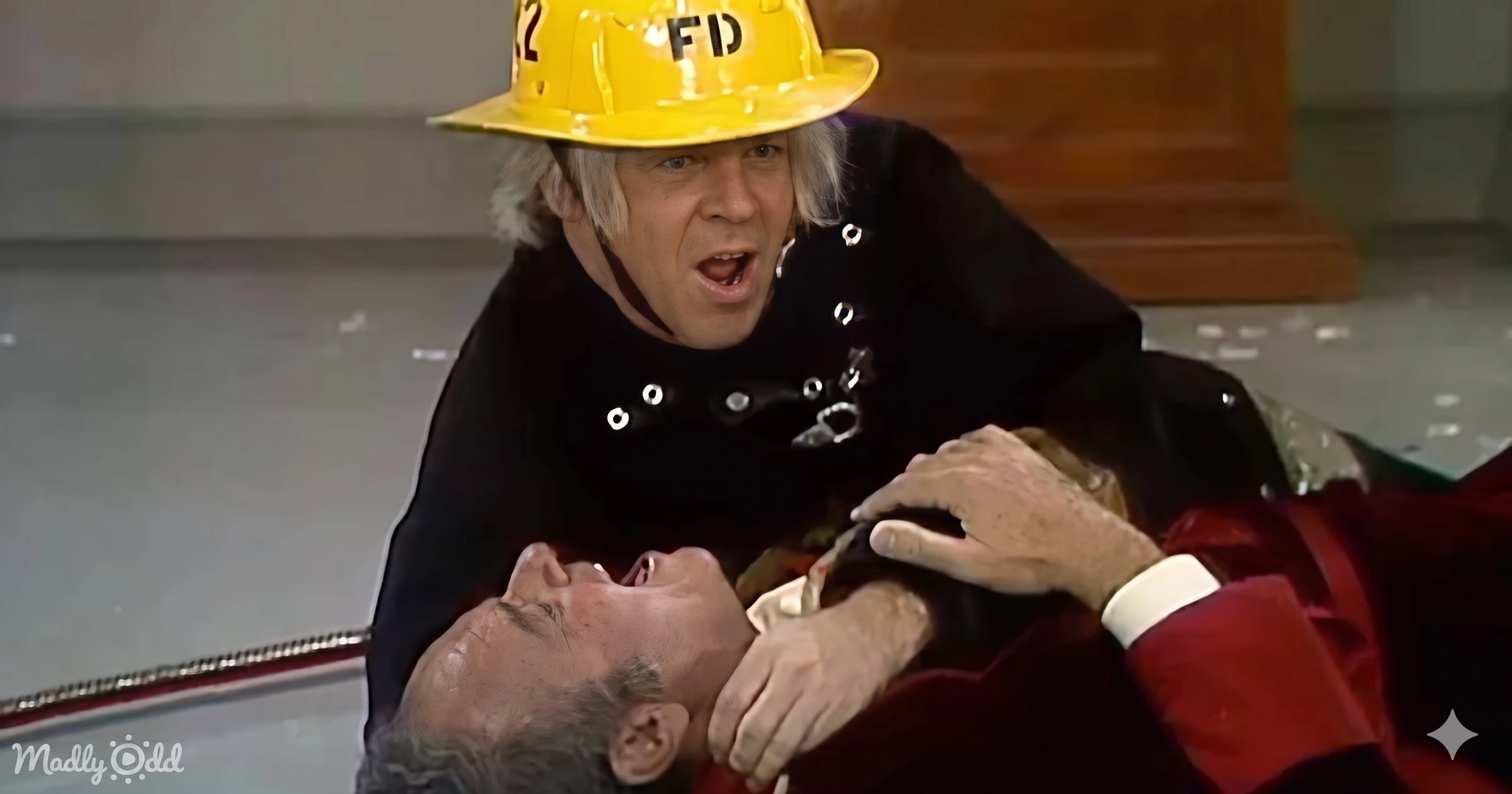
Eventually, the homeowner begins struggling to breathe.
Now the stakes go up.
He appears to be suffering from smoke inhalation.
He says he is suffocating.
He needs help.
Surely this is the moment when the firefighter will finally become efficient.
Not exactly.
Tim Conway attempts to help, but even the rescue becomes awkward and painfully slow.
The homeowner says he cannot breathe.
He needs oxygen.
The fireman begins a kind of respiration attempt.
Nothing goes smoothly.
The homeowner keeps asking for more help.
Harder.
Harder.
The situation becomes more chaotic.
The supposed rescuer still seems strangely calm.
Then the homeowner says he needs oxygen.
There is only one solution left.
Mouth-to-mouth resuscitation.
And suddenly, the sketch moves into another level of awkward comedy.
The emergency is still real inside the scene.
The homeowner is still desperate.
But Tim Conway turns the rescue into something uncomfortable, hesitant, and absurd.
That is what makes the performance so effective.
He never needs to explode with energy.
He never tries to out-shout the other actor.
He lets the other character carry the panic.
Conway does the opposite.
He slows everything down.
That difference creates the rhythm.
The homeowner gets more frantic.
Conway gets more deliberate.
The danger increases.
Conway becomes less efficient.
The audience knows exactly what should happen.
A firefighter should rush in.
Assess the danger.
Help the victim.
Control the fire.
Instead, Conway turns every one of those expected steps into another delay.
That is why the 90-minute setup is so important.
Before Tim even appears, the audience already knows the fire department is late.
The homeowner has been waiting forever.
So when Conway finally arrives and continues moving like there is no rush, the frustration becomes even funnier.
The rescue is not just slow.
It feels impossibly slow.
The audience is essentially watching one man realize that the person sent to save him may be the least urgent firefighter alive.
And Tim Conway commits completely to that idea.
No matter how many times the homeowner shouts “Hurry,” nothing changes.
That repetition becomes the joke.
The word loses its power.
It becomes almost meaningless.
The homeowner wants time to speed up.
Conway makes time feel slower.
By the end, the sketch is no longer really about the fire.
It is about the battle between urgency and delay.
One character wants everything to happen immediately.
The other character seems incapable of doing anything quickly.
That simple contrast creates nearly the entire scene.
It also shows exactly why Tim Conway was so effective at physical comedy.
He understood that being funny did not always mean doing more.
Sometimes it meant doing less.
Moving slower.
Pausing longer.
Reacting later.
Letting the other actor become more frustrated.
That was enough.
The fire truck may have taken 90 minutes to arrive.
But once Tim Conway finally showed up, the homeowner discovered something even worse.
The waiting was not over.
It had only just begun.