The Good, the Bad and the Ugly (1966): The Definitive Western Masterpiece
Few films in the history of cinema occupy as towering and influential a position as Sergio Leone’s 1966 epic, The Good, the Bad and the Ugly (Il buono, il brutto, il cattivo). As the crowning achievement of the Spaghetti Western genre, Leone’s masterpiece transcends its pulp origins, evolving into a sweeping, operatic examination of human greed, morality, and survival against the backdrop of the American Civil War. Decades after its release, its cultural footprint remains indelible, setting a gold standard for visual storytelling, pacing, and character dynamics.
A Clash of Morality in a Lawless Land
Set against the violent turbulence of the Civil War, the plot follows three distinct gunslingers locked in a relentless race to locate a hidden fortune of Confederate gold. Despite the title, none of the protagonists fit traditional heroic molds; instead, they represent varying shades of moral ambiguity.
-
“The Good” (Blondie – Clint Eastwood): Cool, calculated, and cynical, Eastwood’s iconic “Man with No Name” archetype operates with a pragmatic moral compass. He is driven by self-preservation and a sharp eye for opportunity, yet he maintains a peculiar sense of professional honor that separates him from true monsters.
-
“The Bad” (Angel Eyes – Lee Van Cleef): Cold, sadistic, and utterly devoid of empathy, Angel Eyes is a ruthless mercenary who views murder as business. Van Cleef’s terrifyingly controlled performance brings a chilling, predatory tension to every frame he inhabits.
-
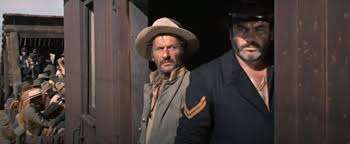
“The Ugly” (Tuco – Eli Wallach): Loud, chaotic, and driven by a primal desperation, Tuco is the emotional core of the film. Wallach’s magnetic performance turns a volatile outlaw into a remarkably sympathetic, layered character whose survival instincts and sharp comedic timing prevent the film from descending into pure nihilism.
The brilliance of the narrative lies in the shifting alliances between these three men. Because none of them can trust the others, their temporary truces crackle with palpable tension, culminating in one of the most famous and psychologically rich rivalries on film.
Ennio Morricone’s Immortal Soundscape
It is impossible to discuss The Good, the Bad and the Ugly without addressing its legendary musical score by Ennio Morricone. More than a mere accompaniment, Morricone’s music functions as a principal character. Utilizing electric guitars, whistling, whips, yodeling, and full orchestral thunder, the score mirrors the harsh, unforgiving landscapes of the American Southwest.
The iconic main theme—mimicking the haunting howl of a coyote—instantly establishes a mood of epic scale and impending danger. Meanwhile, the climactic track, “The Ecstasy of Gold,” builds with frantic, triumphant urgency, turning the final search for the cemetery into a nearly religious cinematic experience.
Masterclass in Visual Storytelling and Pacing
Leone revolutionised cinematic grammar through his revolutionary approach to framing and pacing. The film relies heavily on extreme close-ups of weathered eyes, sweating brows, and twitching fingers on gun holsters, juxtaposed against sweeping, sun-baked wide shots of desolate deserts and war-torn towns.
The legendary final three-way duel—the Standoff at Sad Hill Cemetery—is a textbook masterclass in tension building. Spanning several minutes of near-silence, Leone uses rapid editing, intense close-ups, and spatial geography to amplify the psychological pressure on the characters. When the final draw happens, the emotional release is overwhelmingly satisfying.
Legacy and Cultural Impact
While initial critical reception upon its 1966 release was somewhat mixed—with some reviewers dismissing its violence—history has firmly vindicated the film. It redefined the Western genre, proving that high art could be forged from genre cinema. Directors like Quentin Tarantino, Martin Scorsese, and Christopher Nolan have repeatedly cited Leone’s visual style and storytelling rhythm as primary influences on their own work.
The Good, the Bad and the Ugly is much more than a shoot-’em-up cowboy flick. It is a cynical yet darkly humorous portrait of human nature stripped of civilization’s veneer, driven entirely by gold and blood. Driven by Eastwood’s effortless cool, Van Cleef’s menacing presence, Wallach’s explosive vitality, and Morricone’s immortal melodies, it remains a peerless cinematic triumph that continues to captivate audiences generation after generation.
Download Interactive Maps