There are celebrity guest appearances, and then there are television moments that feel like two eras of comedy shaking hands.
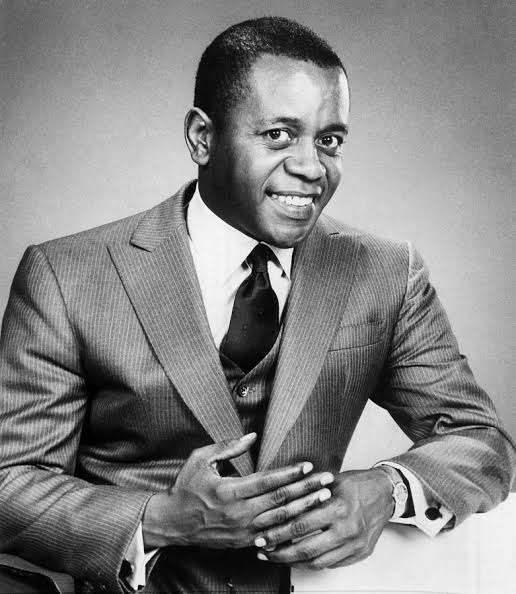
That is exactly what happened in September 1971, when Flip Wilson appeared in the Season 4 premiere of Here’s Lucy—and just three days later, Lucille Ball returned the favor by appearing on the Season 2 premiere of The Flip Wilson Show.
It was more than clever cross-promotion.
It brought together Lucille Ball, one of television’s most established comedy icons, and Flip Wilson, one of the fastest-rising stars in American entertainment at the very moment his own NBC variety show had become a national phenomenon.
And the timing could not have been better.


😂 FLIP WILSON OPENS SEASON 4 OF HERE’S LUCY
The fourth season of Here’s Lucy premiered on September 13, 1971, with an episode titled “Lucy and Flip Go Legit.”
Flip Wilson appeared as himself.
The premise was wonderfully suited to both performers: Lucy Carter gets involved with Flip and eventually persuades him to participate in a local theatrical production of Gone with the Wind.
According to the episode listing, Lucy plays Scarlett O’Hara, Gale Gordon’s Harry Carter takes on Rhett Butler, Lucie Arnaz’s Kim becomes Melanie—and Flip is convinced to play Prissy. (IMDb)
That alone tells you what kind of evening it was.
Flip Wilson was not being treated as a celebrity who should simply walk onto the set, wave at the audience, and deliver a few promotional lines.
He was there to play.
And Lucille Ball knew exactly how to use a guest who understood character comedy.
The result placed two very different performers inside the same comic machine.
Lucy brought her famous physical reactions, escalating panic, and impeccable timing.
Flip brought his relaxed storytelling style, sly expressions, and ability to shift effortlessly between straight-man calm and complete absurdity.
🌟 THREE DAYS LATER, LUCY WALKED ONTO FLIP’S SHOW
Then came the beautiful reversal.
On September 16, 1971, Lucille Ball appeared on the Season 2 premiere of The Flip Wilson Show alongside Ed Sullivan and the Osmond Brothers. (TVmaze)
One surviving description of the episode notes that Flip involved the guests in a Peanuts parody, while Geraldine appeared as a rival carhop who tangled with Lucille Ball over Ed Sullivan. (TVGuide.com)
So within the space of three days, American audiences had seen:
Flip Wilson enter Lucy’s comedy world.
Then:
Lucille Ball enter Flip’s.
That is an extraordinary little piece of television history.
It also says something about how highly the two performers regarded one another.
📈 FLIP WASN’T JUST POPULAR — HE WAS ONE OF THE BIGGEST STARS ON TELEVISION
By this point, The Flip Wilson Show was not simply doing well.
It was dominating.
The Television Academy’s historical account calls it the first successful network variety series with an African-American star and notes that during its first two seasons it ranked as America’s second most-watched television show in the Nielsen ratings. (Television Academy Interviews)
That distinction matters.
Nat “King” Cole had previously hosted an important network variety series in the 1950s, but his show struggled to secure sponsors and adequate affiliate support. Flip’s breakthrough came later—and with the commercial success that earlier Black television pioneers had been denied. (Television Academy Interviews)
Flip was not appearing in a marginal time slot.
He was not hosting a niche program.
He was competing near the very top of American television.
At a time when All in the Family was redefining the sitcom and becoming a ratings giant, The Flip Wilson Show was right there among the most-watched programs in the country.
🏆 AND THE EMMYS FOLLOWED
The show’s success was not limited to ratings.
In 1971, The Flip Wilson Show won two Primetime Emmys.
One was for Outstanding Variety Series – Musical.
The other was for Outstanding Writing Achievement in Variety or Music. (Television Academy)
Flip Wilson himself was credited on both winning entries, meaning he personally received two Emmys that year. The Television Academy lists him as a winner for both categories. (Television Academy)
That distinction is worth making because the achievement was remarkable:
Flip was not merely standing in front of material somebody else had created.
He was part of the writing process.
Part of the producing identity.
Part of the creative voice of the show.
He helped shape what audiences were seeing.
🎭 WHY THE FLIP WILSON SHOW FELT DIFFERENT
Wilson and producer Bob Henry made an important creative decision.
They stripped away some of the clutter associated with traditional variety television.
Instead of relying constantly on enormous chorus lines and oversized production numbers, the show concentrated on Flip, the guests, the sketches, the music, and the chemistry between performers. (Television Academy Interviews)
That gave the series an intimacy that served Wilson perfectly.
He could tell a story.
Introduce Geraldine.
Trade jokes with a guest.
Then step aside and allow a singer to perform.
The show felt loose without actually being careless.
And that looseness made superstar guests appear comfortable.
James Brown.
Ray Charles.
Aretha Franklin.
The Jackson 5.
Tim Conway.
Don Rickles.
Lucille Ball.
These were not people simply passing through.
Flip gave them something to do.
😂 GERALDINE HELPED TURN FLIP INTO A CULTURAL PHENOMENON
Of course, no discussion of Flip Wilson can avoid Geraldine Jones.
The glamorous, outspoken character became an American television sensation.
Geraldine was bold.
Confident.
Flirtatious.
Unapologetic.
She talked endlessly about her boyfriend “Killer,” and phrases associated with the character entered everyday conversation.
Television Academy history notes that Geraldine became by far the program’s most popular character and that Wilson wrote Geraldine’s material himself. (Television Academy Interviews)
That makes Geraldine’s clash with Lucille Ball in the 1971 premiere even more enjoyable.
You are watching one of Lucy’s era-defining comedy stars sharing a scene with one of the defining television characters of the new decade.
❤️ LUCY AND FLIP REPRESENTED TWO DIFFERENT KINDS OF TV GREATNESS
Lucille Ball had already changed television.
She had helped define the American sitcom and become one of the medium’s most recognizable stars.
Flip Wilson was changing television in another way.
His success demonstrated that a Black entertainer could anchor a major network variety show, attract a truly mass audience, welcome stars from every corner of entertainment, and compete at the very top of the ratings.
Putting those two performers together meant more than another funny episode.
It represented television passing something from one generation to another.
Lucy did not need to prove she belonged.
Flip was proving that the boundaries surrounding who could dominate prime time were changing.
And both of them understood comedy.
📺 FOUR SEASONS THAT LEFT A MUCH BIGGER LEGACY
The Flip Wilson Show ran from 1970 to 1974.
Four seasons may sound relatively short compared with some long-running classics.
But impact is not measured only in years.
During that run, Flip created memorable characters, introduced millions of viewers to extraordinary musical performances, welcomed some of the era’s biggest celebrities, and became part of a major shift in American television representation.
The Television Academy describes the show as one of the last major successes of the classic variety-show era. (Television Academy Interviews)
And when you look back at September 1971, the scale of Flip’s rise becomes especially clear.
On Monday night, he was the star guest opening Lucille Ball’s new season.
By Thursday night, Lucille Ball was stepping onto his stage.
That is not merely a guest-star exchange.
That is a sign that Flip Wilson had arrived.
Lucy welcomed Flip into her world. Flip welcomed Lucy into his. And for one unforgettable week in 1971, two television legends proved that great comedy doesn’t belong to one generation—it gets passed forward. ❤️📺✨
🔥 Suggested Facebook headline
📺 LUCILLE BALL PUT FLIP WILSON IN HER SEASON PREMIERE — THREE DAYS LATER, SHE WALKED ONTO HIS HIT SHOW. THAT’S HOW BIG FLIP HAD BECOME! 🔥
#FlipWilson #LucilleBall #HeresLucy #TheFlipWilsonShow #ClassicTV #VintageTelevision #ComedyHistory #GeraldineJones #ClassicComedy #TelevisionLegends