There was something wonderfully unpredictable about The Carol Burnett Show.
One minute, audiences could be watching an elaborate musical production filled with costumes, dancers and a full orchestra.
The next, Carol Burnett could simply be standing onstage talking to someone.
And somehow, both could be equally entertaining.
That versatility became one of the defining qualities of a show that lasted 11 seasons and became one of American television’s most celebrated variety programs. The series ultimately won 25 Emmy Awards, and its mixture of comedy sketches, music, guest stars and spontaneous interaction helped define its identity.
It Wasn’t Just a Sketch Comedy Show
When people remember The Carol Burnett Show, it’s easy to immediately think of the famous sketches.
Tim Conway trying to break Harvey Korman.
Carol transforming into outrageous characters.
Vicki Lawrence becoming Mama.
Movie parodies.
Absurd costumes.
All of those things matter.
But the show was called a variety show for a reason.
Music was an important part of the experience.
Guest stars weren’t simply brought in to sit on a couch and answer interview questions. They could sing, dance, act, perform comedy or become part of an elaborate production number.
That meant audiences never knew exactly what kind of entertainment was coming next.
The Stage Could Suddenly Explode With Energy
That’s part of what makes old variety-show footage so fascinating today.
Modern television tends to separate entertainment into categories.
A comedy program does comedy.
A concert does music.
A talk show interviews celebrities.
Classic variety television could do all three within the same hour.
TV Talent & Variety Shows
A performer could burst onto the stage in an extravagant costume and turn the studio into a miniature concert hall.
Then Carol could walk out and immediately change the tone.
That constant movement created energy.
Carol Wasn’t Afraid to Let Someone Else Have the Spotlight
Another important part of Carol’s success was generosity.
She was the star.
Her name was literally in the title.
But that didn’t mean every joke, song or moment had to belong to her.
Guest performers were given room to shine.
Supporting performers could steal a scene.
And occasionally an ordinary member of the audience could unexpectedly become the funniest person in the building.
That takes confidence.
Then Carol Would “Bump Up the Lights”
One of the show’s most beloved traditions was remarkably simple.
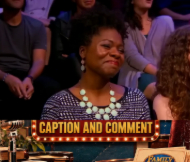
Carol would interact directly with the studio audience.
No character.
No complicated costume.
No elaborate set.
Just Carol and a microphone.
The questions could go almost anywhere.
CBS later described these audience exchanges as impromptu, and Carol explained that she didn’t know what people would ask.
That uncertainty wasn’t a flaw.
It was the entire point.
Carol Called the Audience Her Partner
Years after the original series ended, Carol continued using the same basic concept in her live appearances.
She explained to The Washington Post that there were no planted questions and that she didn’t want to know in advance what anybody would ask.
Her description of the relationship was perfect:
The audience was her partner.
That’s an unusually good way to understand her comedy.
Carol wasn’t simply delivering entertainment to an audience.
She was often creating it with them.
Sometimes the Audience Gave Her Better Material Than a Writer Could
Consider some of the stories Carol remembered decades later.
One woman from the audience asked to sing.
Carol invited her onto the stage.
The woman confidently told the orchestra what song she wanted and even specified the key.
Carol joined her.
When their endings didn’t match, the woman blamed Carol for messing it up.
Carol remembered the incident for years.
You couldn’t reliably script that.
If you did, it might feel artificial.
The reason it worked was because it actually happened.
Young Audience Members Could Be Even More Dangerous
Children and young people are especially unpredictable in Q&A situations.
Carol learned that firsthand.
Years later she told a story about spotting a nine-year-old boy named Andrew in the audience.
She asked him whether he knew who she was.
His response?
“Surprisingly, yes.”
The audience loved it.
Carol loved it too.
She continued retelling the exchange years later because it was such a perfectly accidental punchline.
That’s the beauty of spontaneous comedy.
The person delivering the funniest line might not even realize they’ve written one.
Carol Had to React Instantly
A comedian working from a script can prepare timing.
An audience Q&A doesn’t offer that luxury.
Carol had to listen.
Understand what the person meant.
Recognize whether there was a joke available.
And respond.
Sometimes she could deliver a punchline.
Sometimes a facial expression was enough.
Sometimes the audience member had already created the joke and Carol’s smartest move was simply to let it breathe.
That’s an entirely different comedic skill from memorizing dialogue.
The Musical Side Required Another Set of Skills
Then the show could suddenly move into a musical number.
Carol wasn’t simply a comedian.
She could sing.
She could dance.
She could perform Broadway-style material.
She could transition from an absurd comedy sketch into a polished musical production.
That flexibility helped make the show feel enormous.
And it allowed guest stars from very different areas of entertainment to fit naturally into the format.
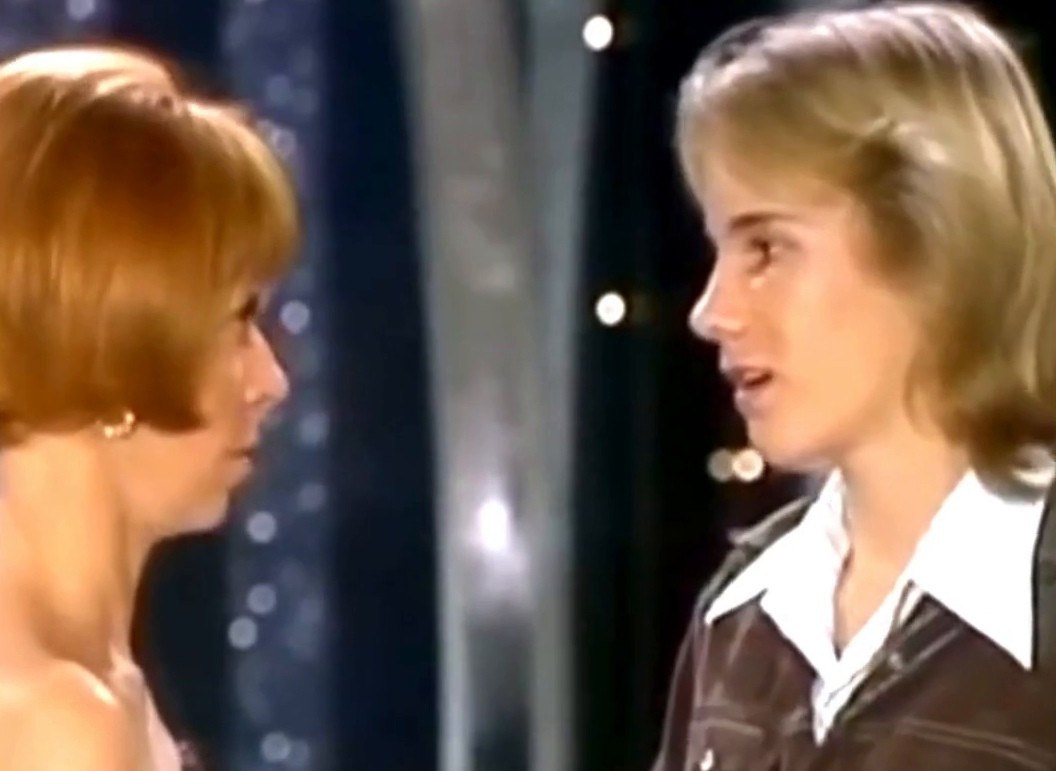
Cher Was One of Those Guests
For example, Cher guest-starred during Season 9 in an episode that aired September 27, 1975. Peacock describes the episode as including Cher in sketches involving dueling pianists, spoofs and a love triangle, while Apple TV likewise identifies her as the episode’s guest star.
That tells you something about the show’s approach to celebrity guests.
You didn’t merely appear.
You participated.
Carol Could Match Almost Anybody
A glamorous singer could arrive.
Carol could work with her.
A Broadway performer could arrive.
Carol could sing alongside them.
A comedian could arrive.
Carol could become the straight woman.
A child could ask an unexpected question.
Carol could improvise.
Tim Conway could deliberately try to destroy the scene.
Carol could try desperately not to laugh.
The format changed.
Carol adapted.
That’s Why Short Clips Still Work
These qualities translate surprisingly well to modern short-form video.
A viewer doesn’t necessarily need to know the entire episode.
They can see a performer doing something outrageous and immediately understand the energy.
Or they can see Carol interacting with someone and become curious about what the other person is going to say.
The basic mechanics haven’t changed.
Recognition.
Curiosity.
Reaction.
Payoff.
Those things worked on network television in the 1970s.
They work on Facebook Reels today.
The Difference Is That Nothing Felt Overproduced
Classic footage often has imperfections.
The picture isn’t 4K.
The cameras don’t move like modern cameras.
Editing can be slower.
But those limitations can actually emphasize the performers.
There’s nowhere to hide.
If something is funny, the people onstage have to make it funny.
If a musical performance has energy, the performer has to create that energy.
If an audience member says something unexpected, Carol has to respond.
Carol’s Face Could Tell the Entire Story
That may be one of the reasons Carol remains so enjoyable in short clips.
You don’t always need to hear every word.
Look at her expression.
She could communicate surprise, confusion, embarrassment, delight or disbelief instantly.
Her reaction often becomes part of the punchline.
That skill is particularly valuable when someone else has just said or done something unexpected.
The Audience Knew They Might Become Part of the Show
Imagine attending a taping.
You aren’t simply watching television being produced.
Carol might turn toward your section.
The lights might come up.
Someone hands you a microphone.
Suddenly you’re talking to Carol Burnett.
What do you ask?
More importantly:
What will Carol say back?
That possibility created a relationship between performer and audience that was unusually intimate for such a large television production.
And That’s What These Clips Preserve
When we revisit footage like your videos today, we’re not only revisiting old jokes.
We’re seeing a style of television.
A huge variety program could still feel spontaneous.
A glamorous musical production could be followed by a completely unscripted conversation.
A major celebrity could share the stage with someone the audience had never seen before.
Carol could be the star without insisting that every moment revolve around her.
Laughter Really Did Bring Everyone Together
Your Carol Burnett frame actually uses the phrase “Laughter Brings Us Together.”
It’s an appropriate description of why these old clips remain useful for a nostalgia page.
The costumes change.
The television technology changes.
The celebrities change.
But watching someone unexpectedly make another person laugh hasn’t changed very much at all.
That’s why Carol’s Q&A footage remains compelling.
That’s why the musical performances remain fun.
And that’s why a show made decades before Facebook, YouTube or Reels can still produce moments perfectly suited to all three.
Sometimes classic television didn’t need a perfect script.
It simply needed Carol Burnett, a live audience, talented guests — and the possibility that absolutely anything could happen next.
https://www.youtube.com/watch?v=h31EVSRRVjo