
Some comedy sketches announce exactly where they are going within the first 30 seconds.
“Black Jeopardy with Tom Hanks” does the opposite.
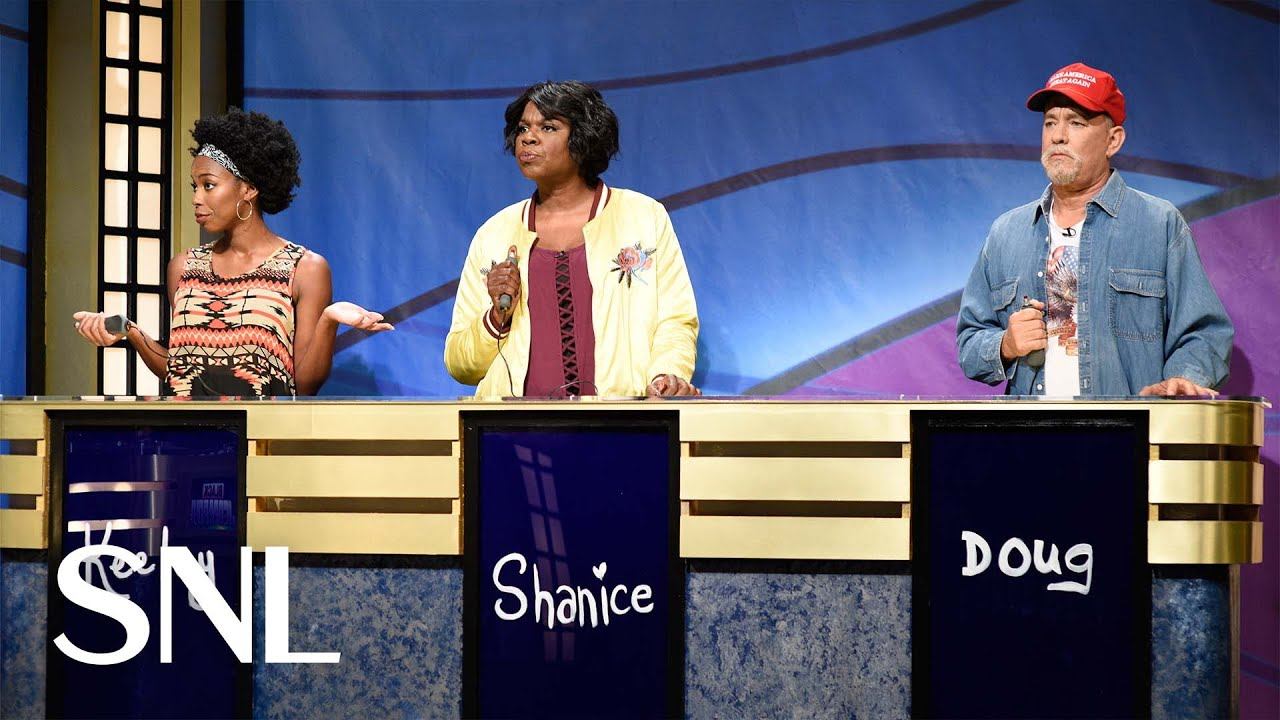
The moment Tom Hanks appears behind a contestant podium wearing a denim shirt, an American-eagle T-shirt, a goatee, and a red “Make America Great Again” hat, the audience thinks it already understands the joke.
His character, Doug, looks completely out of place.
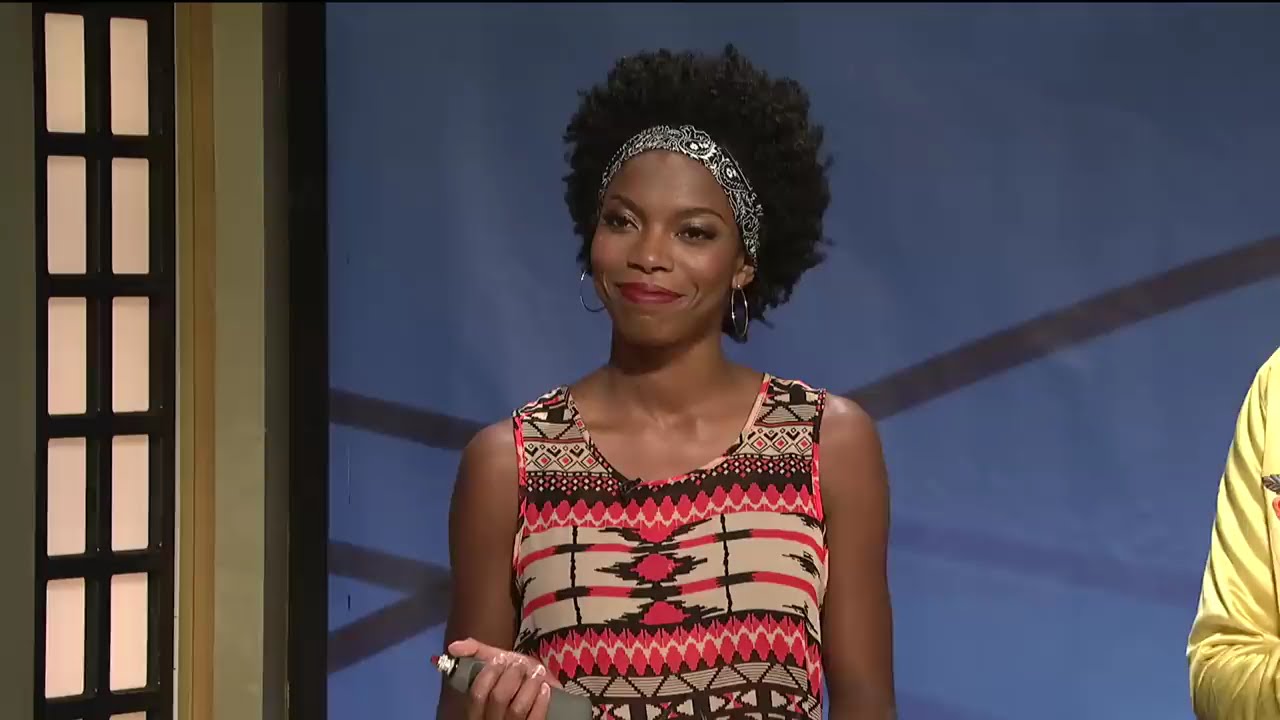
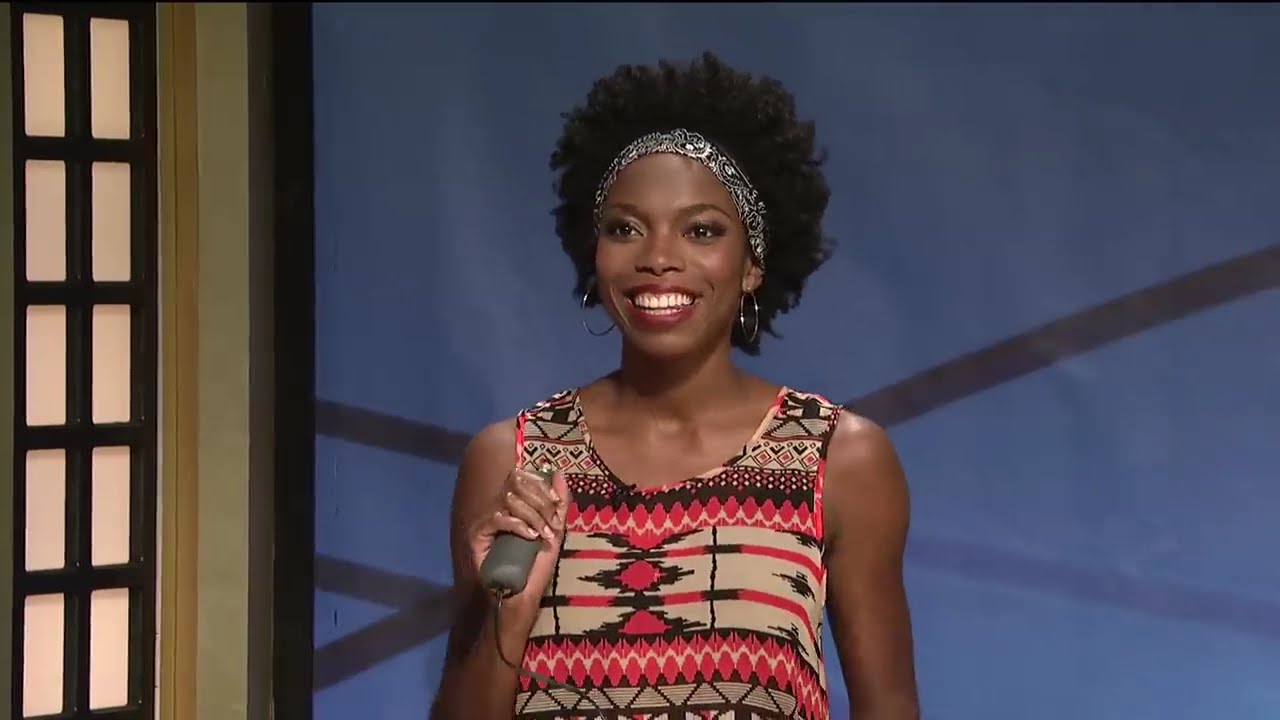
Across from him are Keeley, played by Sasheer Zamata, and Shanice, played by Leslie Jones. Running the game is Darnell Hayes, played by Kenan Thompson. The premise of SNL’s recurring “Black Jeopardy” format is familiar: contestants are asked questions built around experiences, phrases, attitudes, and cultural references associated with parts of Black American life.
Doug appears to have walked into the wrong television studio.
Then he starts answering correctly.
And that is when the sketch becomes much more interesting.
The October 2016 installment of “Black Jeopardy” became one of the most discussed sketches from that period of Saturday Night Live because it refused to follow the easiest path. Instead of spending six minutes simply making Doug the joke, the writers gradually reveal that the contestants have more common ground than anyone expected. Contemporary coverage identified Michael Che and Bryan Tucker as the writers behind the sketch.
The result is a comedy routine about assumptions, cultural distance, class, race, suspicion, family life, and the strange experience of discovering that someone who appears completely different may occasionally understand exactly what you mean.
Doug Looks Like the Obvious Outsider
The visual joke arrives before Doug says much of anything.
Darnell introduces Keeley and Shanice without hesitation. Then he reaches Doug.
Everything about Kenan Thompson’s expression tells the audience that Darnell has questions.
Doug is a white man standing on the set of “Black Jeopardy,” wearing clothing designed to communicate a very specific identity. Most visibly, he is wearing a Trump campaign hat during the final weeks of the 2016 presidential election.
The initial tension is deliberate.
Hanks does not play Doug as aggressive or eager for confrontation. He looks nervous. He is clearly aware that he does not fit in, and Darnell is equally aware of it.
Everyone expects disaster.
That expectation becomes the setup for nearly every joke that follows.
When the game begins, however, Doug hears a clue about mistrusting information from people in authority.
He understands it.
Another clue involves skepticism about whether ordinary people really control political outcomes.
Again, Doug understands.
Darnell starts looking at him differently.
So do the other contestants.
The man everyone assumed would fail the game is suddenly doing just fine.
The Comedy Comes From Recognition
This is where the sketch takes an unusual turn.
The joke is not that Doug secretly knows a lot about Black popular culture. He does not suddenly reveal encyclopedic knowledge of music, slang, or entertainment.
Instead, many of his correct responses come from shared attitudes.
He understands financial anxiety.
He understands being suspicious of people who claim to know what is best for you.
He understands having a resourceful person in the neighborhood who can fix almost anything.
He understands family members who make decisions that everyone else immediately questions.
And he definitely has opinions about food and women.
The specifics differ, but the underlying experiences overlap.
Darnell slowly moves from suspicion to surprise and then to genuine amusement.
That progression gives the sketch its shape.
A less interesting version would have made Doug wrong about everything. Darnell would make fun of him, the audience would laugh, and the sketch would end.
Instead, Doug keeps ruining everyone’s expectations by making sense.
Kenan Thompson Controls the Entire Sketch
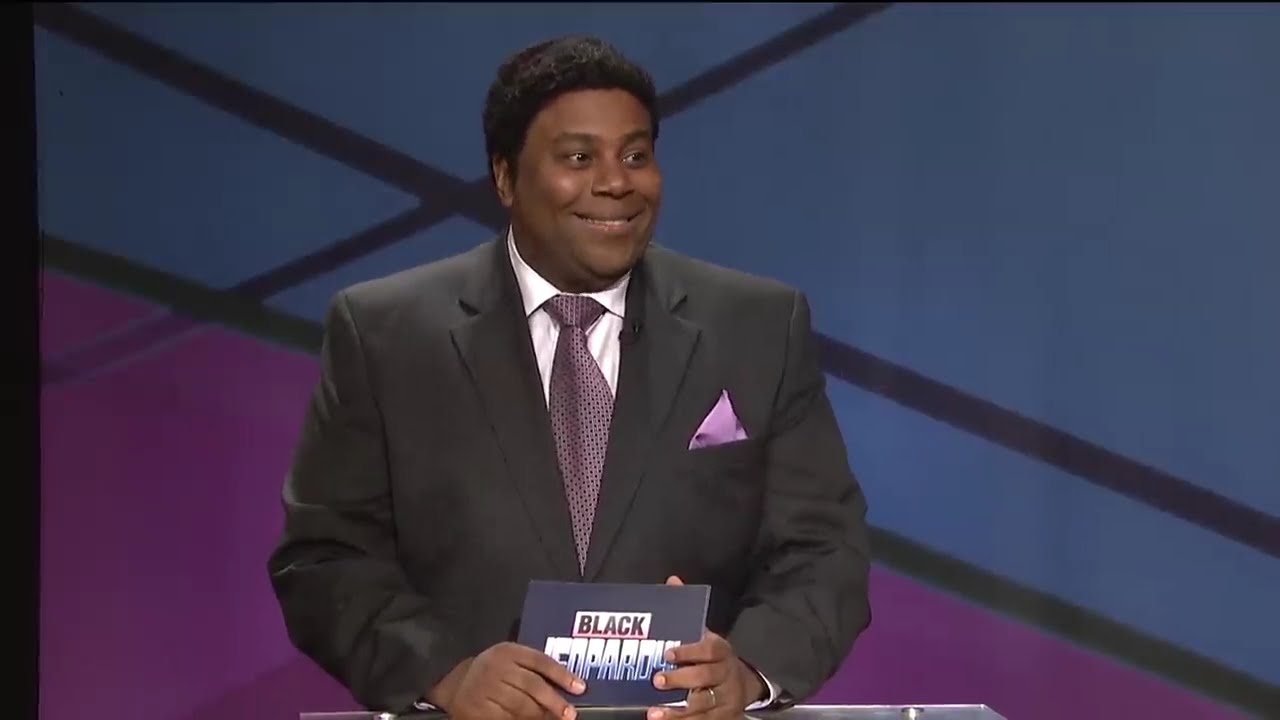
Tom Hanks gets much of the attention, but Kenan Thompson’s performance is essential.
Watch Darnell’s face throughout the game.
At first, he studies Doug carefully.
Then Doug gives a correct response.
Darnell pauses.
There is a tiny moment where he seems to reconsider the contestant standing in front of him.
Then it happens again.
And again.
Thompson does not rush those reactions. He allows the audience to watch Darnell update his opinion in real time.
That is difficult comedy.
If he immediately welcomed Doug, there would be no tension.
If he remained hostile no matter what happened, the sketch would become repetitive.
Instead, every correct response earns Doug a little more acceptance.
By the middle of the game, Darnell is almost rooting for him.
Keeley and Shanice begin reacting the same way.
Doug is no longer simply “the white guy in the red hat.”
He is Doug.
That change is the emotional center of the sketch.
Tom Hanks Plays Doug Without Turning Him Into a Cartoon
Hanks also makes an important choice.
Doug could easily have become a broad stereotype.
The costume is already exaggerated enough that the performance does not need to be.
Hanks keeps him relatively quiet and cautious.
Doug seems like a man who would rather be almost anywhere else when the game begins. He does not walk in expecting everyone to understand him. He assumes there will be distance.
That makes his growing comfort funnier.
Every time Darnell approves of one of his answers, Doug relaxes a little.
Eventually, the group begins celebrating him.
For a few moments, the differences everyone noticed at the beginning stop being the most important thing in the room.
Contemporary critics repeatedly focused on this aspect of the sketch. The Washington Post described its central mechanism as finding unexpected common ground between Black contestants and a white working-class conservative character, while other cultural commentary similarly emphasized the intersection of race and class in the humor.
The sketch does not claim those differences have disappeared.
That becomes very important later.
But first, it allows the characters to enjoy discovering what they share.
One Handshake Says a Lot
One of the funniest moments arrives when Darnell becomes impressed enough with Doug to move toward him for a friendly handshake.
Doug hesitates.
For just a moment, his body pulls back.
Darnell notices.
The audience notices.
Doug notices that Darnell noticed.
It could turn into a confrontation.
Instead, Doug eventually accepts the gesture.
The entire exchange takes only seconds, but it shows why the sketch works so well.
Neither character is presented as completely free of assumptions about the other.
Darnell judged Doug immediately when he saw the hat.
Doug has his own moment of discomfort when Darnell approaches him.
But rather than freezing the characters inside those assumptions, the sketch lets them move beyond them—at least temporarily.
Comedy comes from the awkwardness.
Humanity comes from what happens afterward.
The Game Keeps Finding Unexpected Connections
As the categories continue, the writers make a clever decision: they keep the shared experiences ordinary.
The characters do not suddenly agree on some grand philosophical statement about America.
They connect over everyday things.
A suspicious relative.
Saving money.
Women.
Movies.
People who claim things are good for you.
These small points of recognition are funnier because they feel plausible.
Most real relationships do not begin with two strangers discovering they have identical worldviews.
They begin with something smaller.
Maybe they hate the same annoying television commercial.
Maybe their mothers say similar things.
Maybe they both know a guy who can repair a refrigerator without reading the manual.
That is what happens to Doug and Darnell.
For several minutes, a game designed around cultural difference starts revealing unexpected familiarity instead.
Then the Final Category Appears
Eventually, the sketch has to decide how far this newfound friendship can go.
The answer arrives with the final category.
“Lives That Matter.”
Everything changes.
Darnell looks at the board.
Then he looks at Doug.
Doug looks back.
Nobody needs to hear an answer.
The room already understands that the easy agreement has reached a more difficult subject.
That ending is what prevents the sketch from becoming sentimental.
The message is not that class makes racial differences meaningless.
It is not that political disagreement disappears after a few laughs.
Instead, the sketch shows something more complicated: people can share experiences and frustrations while still having major disagreements rooted in different histories and perspectives.
The Guardian later highlighted that balance, describing the sketch as one that explored similarities while still recognizing significant differences between the characters.
That last turn is essential.
Without it, the sketch might feel as though it had discovered an easy solution to an extremely complicated subject.
With it, the ending acknowledges that common ground and conflict can exist at the same time.
The Audience Is Part of the Experience
Another reason the sketch works so well is the live audience.
You can hear people reacting as the relationship changes.
At the beginning, they laugh at Doug simply because of how obviously out of place he looks.
Then he gets an answer right.
The response becomes louder.
Another correct answer produces more excitement.
By the time the other contestants are cheering him on, the studio audience feels as if it has joined the game.
That atmosphere matters.
Saturday Night Live is often at its best when a sketch seems to discover its energy in real time.
The performers know where the script is going.
The audience does not.
So every new connection between Doug and the others creates a small surprise.
The laughter grows because the audience is repeatedly forced to revise its expectations alongside the characters.
“Black Jeopardy” Was Already a Flexible Format
The Tom Hanks installment was not the first “Black Jeopardy.”
Earlier versions had used outsiders who misunderstood the game or assumed they understood Black experiences better than they actually did.
According to an oral history of the recurring sketch, the format evolved over time because the writers wanted different types of outsiders rather than repeating the exact same joke.
Doug provides one of the most effective reversals of that formula.
He looks like the contestant least likely to succeed.
Yet he succeeds precisely because the questions touch experiences that are not limited to one cultural group.
The game-show structure makes this discovery especially effective.
Nobody has to give a speech.
A clue appears.
Doug responds.
Darnell reacts.
The audience understands what has changed.
Then the next clue appears.
The Sketch Trusts Viewers to Notice the Complications
One of its strongest qualities is that it does not explain every idea.
There is no final monologue telling the audience what to think.
No character turns toward the camera and summarizes the lesson.
Instead, the comedy presents a sequence of interactions and allows viewers to interpret them.
Some contemporary commentators emphasized class.
Others focused more on race.
Others saw a commentary on political polarization during the 2016 election.
Those readings are not identical, and the sketch leaves room for more than one interpretation.
That is part of why people continued discussing it long after the episode aired.
A sketch built only around one topical punch line can become dated quickly.
A sketch built around human assumptions has a longer life.
It Is Also Simply Funny
The cultural discussion sometimes makes people forget the obvious point:
This is a comedy sketch.
And it has a lot of jokes.
Kenan Thompson’s reactions are funny.
Leslie Jones brings enormous energy to Shanice.
Sasheer Zamata’s quieter reactions provide another rhythm.
Tom Hanks delivers Doug’s answers with perfect seriousness.
The category titles are funny before anyone even answers them.
The contestants interrupt one another.
Darnell becomes increasingly excited every time Doug surprises him.
The social commentary works because the comedy works first.
If the sketch felt like a lecture, people probably would not still be watching it.
Instead, viewers are invited into the argument through laughter.
Why It Still Works Years Later
The sketch originally appeared in October 2016, in the closing weeks of a highly contentious U.S. presidential campaign.
That historical setting matters.
But the central comedic situation is broader than one election.
A person enters a room where everyone assumes they know who he is.
He makes assumptions about them too.
Then conversation reveals connections nobody expected.
Finally, they reach a subject where the differences return.
That pattern can happen at a workplace, a family dinner, a neighborhood barbecue, or anywhere else people from different backgrounds meet.
Sometimes strangers really do have more in common than appearances suggest.
Sometimes those similarities do not erase serious disagreement.
Both things can be true.
That tension gives “Black Jeopardy with Tom Hanks” its unusual staying power.
The sketch does not end with Doug becoming exactly like Darnell, Keeley, or Shanice.
Nobody changes identity.
Nobody gives up every belief.
For a few minutes, however, four people who seemed unlikely to understand one another discover enough common language to laugh together.
Then one category reminds them that understanding has limits.
Darnell looks at Doug.
Doug looks back at him.
The friendship suddenly becomes complicated again.
And Kenan Thompson delivers the perfect reaction to the entire experience.
For a little while, things were going surprisingly well.
Maybe that was the joke.
Or maybe that was the point.