Some Western scenes become unforgettable because of a massive gunfight. Others need only a few men standing in the middle of a dusty street.
The famous “He Ain’t Bluffin’” confrontation in Tombstone belongs to the second category.
There are guns everywhere. Tempers are already out of control. A crowd of armed Cowboys believes it has the numerical advantage. Wyatt Earp is surrounded, and logically, he should be the man in the weakest position.
Instead, within seconds, he turns one terrified hostage and a few perfectly chosen words into complete control of the situation.
That is what makes the scene so powerful.
It is not really about who has more guns.
It is about who is willing to pull the trigger first.
The confrontation begins after violence has already thrown Tombstone into chaos. Wyatt is attempting to enforce order while armed men gather around him. The Cowboys are aggressive, angry, and convinced that numbers are on their side.
They tell him to release Ike Clanton.
Wyatt refuses.
Immediately, the scene becomes a test of nerve.
One of the Cowboys threatens that if Wyatt does not step aside, they will rush him.
That would appear to be a serious problem. There are several armed men standing against him. Even the fastest gunfighter cannot realistically shoot everyone at once.
Wyatt understands that.
But he also understands something more important.
They cannot attack him without sacrificing Ike.
So instead of trying to intimidate the entire group, Wyatt simplifies the problem.
He presses his gun against Ike and essentially tells him that if the Cowboys rush, Ike will die first.
Suddenly, the numerical advantage becomes almost meaningless.
The scene has transformed.
Wyatt does not need to defeat every man standing in the street. He only needs the man in front of him to believe that he is absolutely serious.
And Ike believes him.
That is where the legendary exchange becomes so effective.
One of the men suggests that Wyatt is bluffing.
Ike immediately understands the truth.
“No. He ain’t bluffin’.”
It is a small line, but it completely changes the balance of power.
The most important endorsement of Wyatt’s threat comes from his enemy.
Ike knows him.
He has seen enough to recognize that this is not theatrical intimidation. Wyatt is not hoping they believe him. He has already decided what he will do if they attack.
That certainty frightens Ike more than shouting ever could.
Great Westerns often understand that the most dangerous character is not necessarily the loudest one.
Wyatt does not spend the scene making enormous gestures or firing wildly into the air.
He becomes frightening because he is specific.
If they rush him, Ike dies first.
There is nothing abstract about the threat.
That clarity creates fear.
A vague threat gives a person room to hope.
Wyatt gives Ike no room at all.
The scene also reveals an important part of Wyatt Earp’s personality in Tombstone. Earlier, he repeatedly tries to avoid becoming deeply involved in Tombstone’s violence. He wants business, stability, and a life outside his reputation as a lawman.
But the town keeps pulling him back.
The more violence spreads, the more difficult neutrality becomes.
This confrontation shows the experienced lawman underneath the man trying to live peacefully.
When danger arrives, instinct takes over.
Wyatt knows exactly how armed men think.
He understands fear.
He understands pride.
And most importantly, he knows how quickly a situation can become deadly.
That experience gives him an enormous psychological advantage.
The Cowboys may have more weapons, but Wyatt is thinking several moves ahead.
He knows they have to decide whether attacking him is worth Ike’s life.
Ike already knows the answer.
It is not.
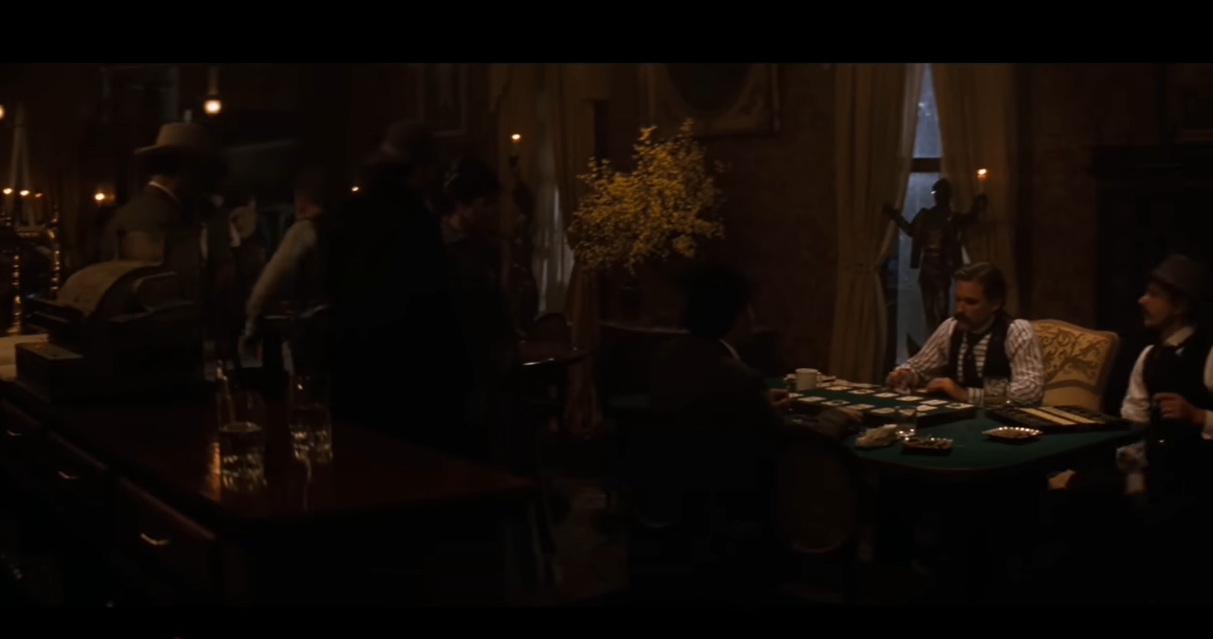
The scene becomes even more memorable when Doc Holliday enters the equation.
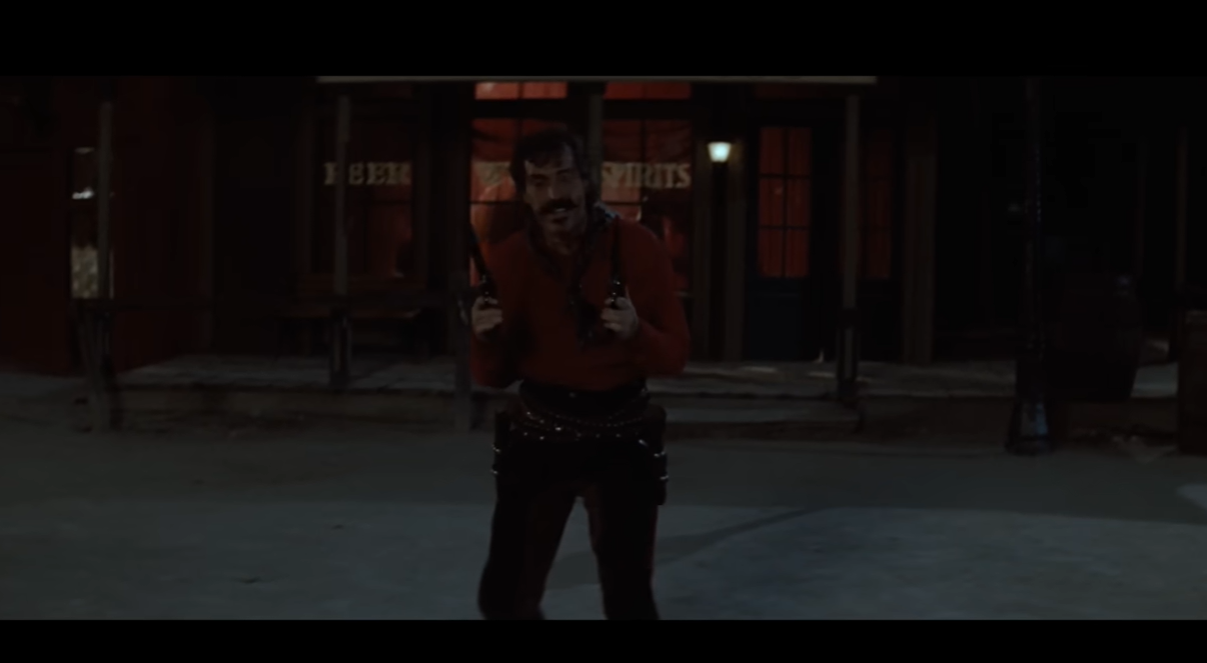
Doc is physically weakened, clearly intoxicated, and appears almost too relaxed for the violence surrounding him. Yet everyone who understands him knows that this appearance is deceptive.
One of the Cowboys mocks him for being drunk.
The implication is simple: Doc is too impaired to be dangerous.
That mistake produces another classic moment.
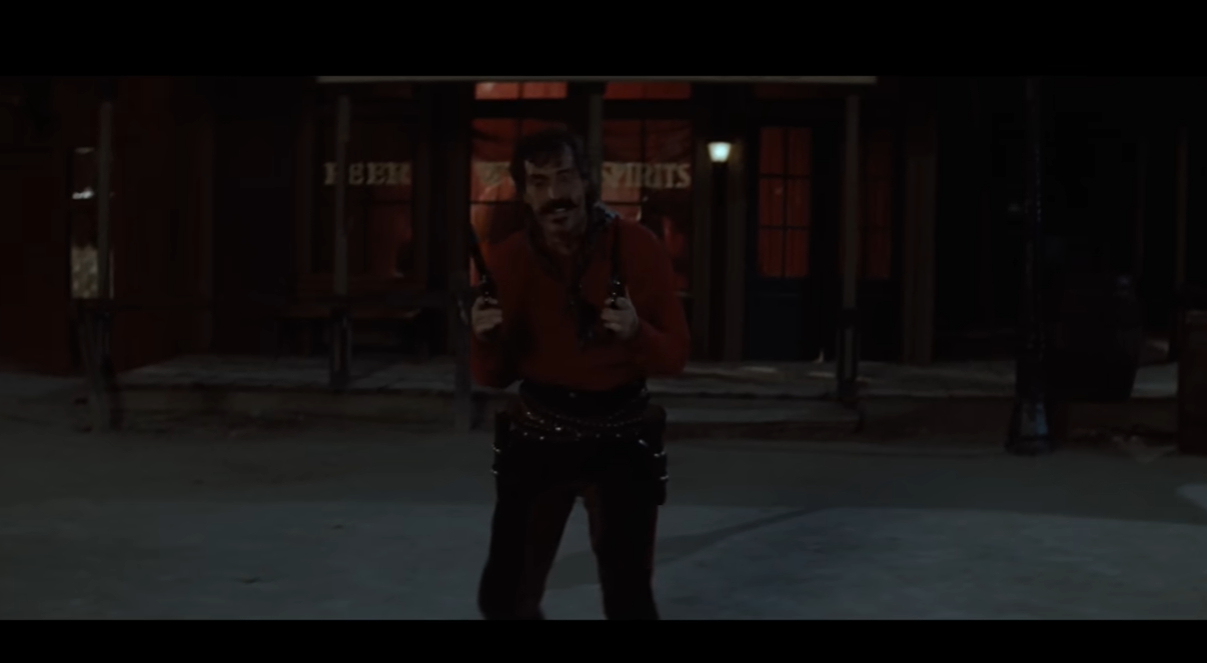
Doc responds by drawing two guns.
The humor works because it arrives in the middle of genuine danger.
Rather than arguing that he can still shoot accurately, Doc turns the insult into a joke and a threat simultaneously.
That is the magic of Doc Holliday throughout Tombstone.
He rarely separates comedy from danger.
For most characters, joking would reduce the tension.
With Doc, joking increases it.
The more relaxed he becomes, the more nervous everyone else should be.
Wyatt and Doc therefore control the confrontation in completely different ways.
Wyatt uses absolute seriousness.
Doc uses amusement.
Wyatt tells the Cowboys exactly what will happen.
Doc makes them wonder what he might do next.
Together, they become an almost impossible pair to intimidate.
This contrast is one reason scenes involving both men remain so entertaining.
Wyatt is controlled pressure.
Doc is unpredictable pressure.
Both are dangerous.
And neither appears impressed by the Cowboys’ numbers.
The physical staging of the scene also deserves attention.
Western movies frequently use wide streets as arenas.
There may be no formal dueling ground, but everyone understands that the open space has become one.
People stand at a distance.
Hands remain close to guns.
Small movements become important.
A step forward can be a challenge.
A hand moving toward a holster can start a battle.
The viewer begins studying everyone in the frame.
Who is nervous?
Who is pretending not to be nervous?
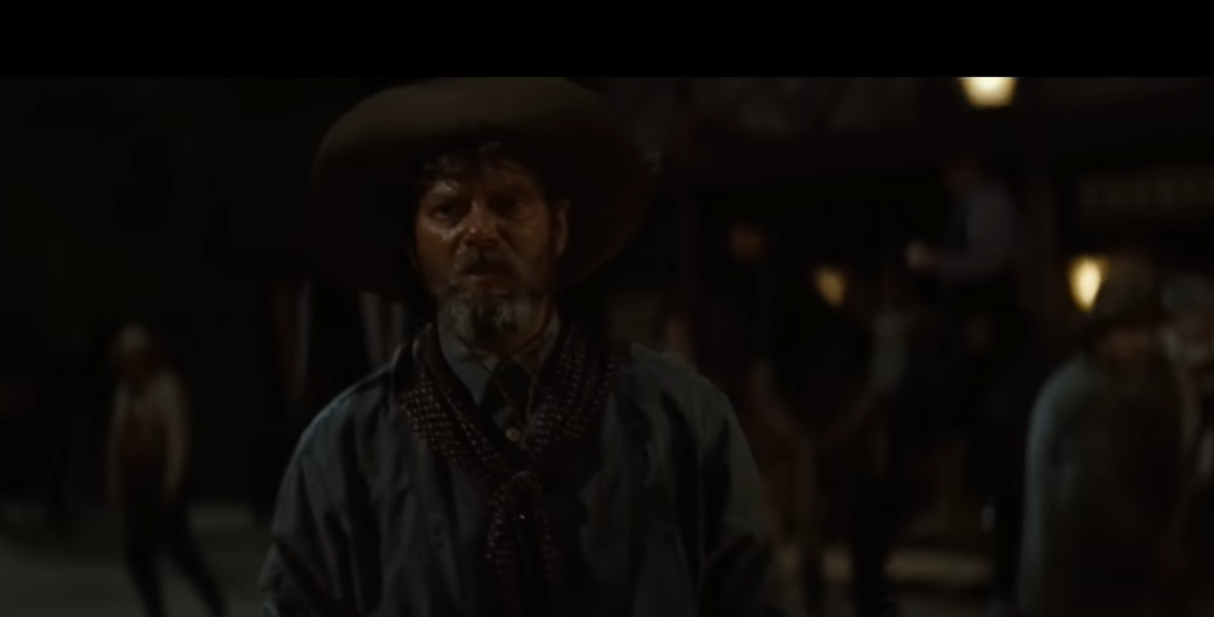
Who will move first?
That anticipation is often more exciting than the shooting itself.
The “He Ain’t Bluffin’” scene understands this perfectly.
For much of the confrontation, the threat of violence is doing more work than actual violence.
We are waiting for somebody to make the wrong decision.
That tension is exactly why the scene is ideal for short-form video even decades after the film was released.
The setup can be understood almost immediately.
One man is surrounded.
Several armed opponents are threatening him.
Instead of backing down, he places his gun against one of them.
Now everyone has to decide whether he is bluffing.
You do not need a long explanation of the plot to understand the stakes.
That makes the sequence extraordinarily effective as a Reel or short clip.
The viewer wants to know what happens next.
Will the Cowboys rush him?
Will Wyatt shoot?
Will Doc become involved?
Who is actually afraid?
A strong movie scene naturally generates questions like these.
That curiosity keeps people watching.
But beyond the tension, the sequence works because it tells us something deeper about reputation in the Western genre.
A gunfighter’s reputation is almost another weapon.
People behave differently when they believe the person facing them has killed before and is willing to kill again.
Yet reputation only works if others believe it.
Wyatt’s reputation becomes powerful in this scene because Ike confirms it through fear.
Ike does not need someone to explain who Wyatt Earp is.
He sees the expression on his face.
He feels the gun against him.
And he knows.
“He ain’t bluffin’” is therefore more than a funny or memorable line.
It is essentially Ike admitting defeat.
The Cowboys may still have their guns.
They may still hate Wyatt.
They may still outnumber him.
But psychologically, the confrontation is finished.
Once Ike orders them back, Wyatt has already won.
That is classic Western power.
Not firing the most bullets.
Not shouting the loudest.
Making the other man decide that drawing his gun is a terrible idea.
There is also something compelling about the way Wyatt refuses to appear heroic while doing it.
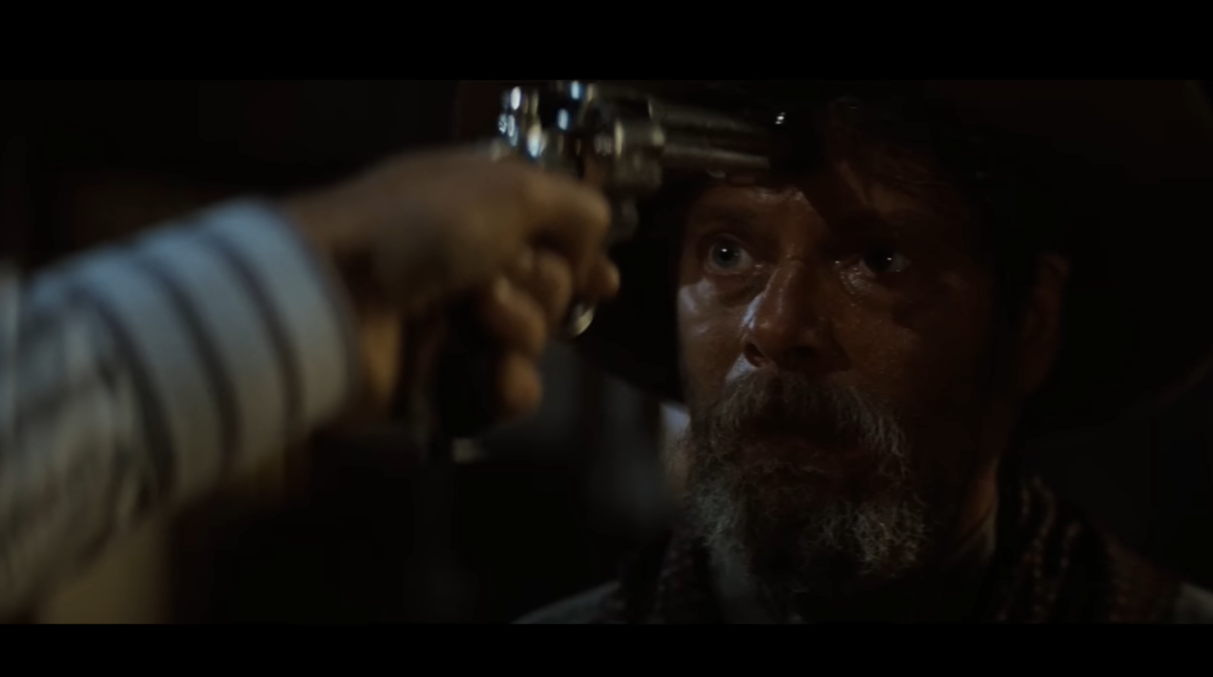
He is angry.
He is dangerous.
The threat he makes is brutal.
The scene does not turn him into a polished superhero.
Instead, it shows how ugly maintaining control in a violent place can become.
He is willing to use fear because fear is the only language the men confronting him respect.
That moral roughness is part of what gives Tombstone its appeal.
The heroes are not clean.
The villains are not abstract.
Everyone inhabits a world where violence can move from possibility to reality in seconds.
Characters survive by reading each other correctly.
Ike reads Wyatt correctly.
Billy does not.
That distinction nearly determines who lives and who dies.
Doc’s involvement adds one final layer.
He demonstrates that confidence comes in more than one form.
Wyatt’s confidence says: “I know exactly what I am going to do.”
Doc’s confidence says: “I’m actually enjoying this.”
For an opponent, both are terrifying.
The scene eventually calms without the huge shootout viewers might initially expect.
But that is not disappointing.
It is the point.
Wyatt wins without needing to fight everyone.
He controls the entire street because the Cowboys believe his willingness to act exceeds their own.
That is far more interesting than simply making him faster with a gun.
It makes him psychologically dangerous.
Nearly every great Western has a moment when a character’s reputation becomes real.
For Wyatt Earp in this sequence, that moment comes when an enemy looks at the men around him and warns them not to test him.
No narrator is necessary.
No heroic introduction is necessary.
The frightened man standing at the end of Wyatt’s gun tells us everything.
He is not bluffing.
And everyone in the street suddenly knows it.
That is why the scene remains one of Tombstone’s most satisfying confrontations.
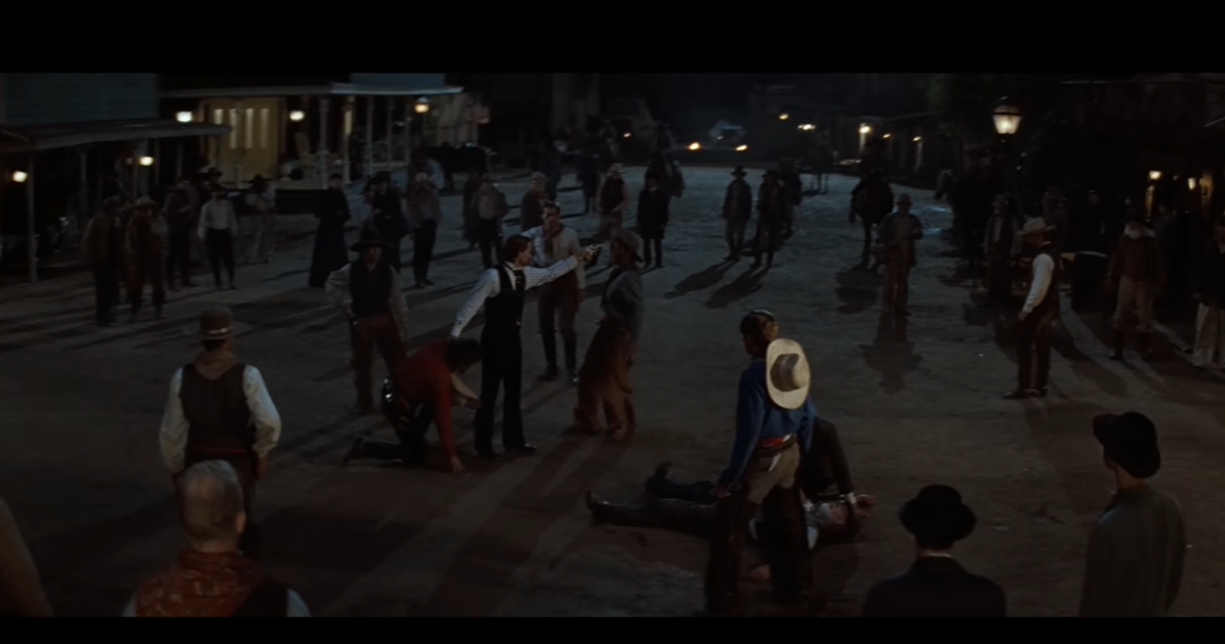
It contains everything audiences love about a classic Western: danger, courage, humor, loyalty, armed men staring each other down, and the possibility that one small movement could ignite an entire street.
But above all, it demonstrates that the strongest weapon Wyatt Earp carries is not the revolver in his hand.
It is certainty.
When everyone else is still deciding what they are willing to do, Wyatt has already decided.
And in the violent world of Tombstone, that makes him the most dangerous man standing there.