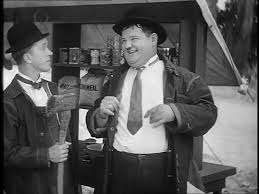
Few comedy teams in the history of cinema have created a style as recognizable and enduring as Stan Laurel and Oliver Hardy. With their contrasting personalities, expressive faces, physical timing, and perfectly synchronized comic performances, the duo transformed simple situations into unforgettable scenes of chaos. One wonderful example of their early work is The Hoose-Gow, a 1929 short film that captures Laurel and Hardy during an important period in the development of their classic comedy partnership.
Released during the transition from silent cinema to sound, The Hoose-Gow showcases many of the qualities that would eventually make Laurel and Hardy international comedy legends. The film combines physical humor, exaggerated reactions, unfortunate circumstances, and the duo’s unique ability to make even the smallest problem become a complete disaster.
A Look at the Story
The Hoose-Gow places Laurel and Hardy in a very different environment from the comfortable domestic or workplace settings seen in some of their other films. The story revolves around the two characters becoming involved with a chain-gang and the harsh world of prison labor. Naturally, their presence does not make the situation more efficient or orderly. Instead, their personalities quickly turn ordinary tasks into ridiculous complications.
Oliver Hardy generally tries to act confident, practical, and authoritative. He often believes that he understands the situation and can control what is happening. Stan Laurel, on the other hand, appears innocent, confused, and almost childlike. His actions frequently make matters worse, even when he has the best intentions.
This contrast is one of the central ingredients of Laurel and Hardy’s comedy. Hardy wants to maintain dignity, while Laurel unintentionally destroys it. Hardy becomes frustrated by Laurel, Laurel becomes confused by Hardy’s anger, and the audience gets to enjoy the escalating consequences.
The Classic Laurel and Hardy Dynamic
One of the most entertaining aspects of The Hoose-Gow is the familiar relationship between Stan and Ollie. They are rarely simply friends or partners. Their relationship is often a mixture of friendship, irritation, dependence, and mutual disaster.
Hardy frequently believes he is the responsible one. He tries to give instructions and maintain control, but his plans almost always collapse. Laurel seems incapable of understanding why Hardy becomes so upset. His innocent expressions and slow reactions make the situation even funnier.
Stan’s famous crying routine is another important part of his performance. When things become too overwhelming, he can transform from a confident participant into a genuinely distressed character within seconds. His strange combination of sadness, confusion, and innocence became one of his most recognizable comic trademarks.
Hardy’s reactions provide the perfect contrast. A raised eyebrow, a disappointed look, a sigh, or a frustrated gesture can communicate an entire paragraph without a single word. This visual communication was especially important during the silent-film era.
Physical Comedy at Its Best
Like many Laurel and Hardy productions from this period, The Hoose-Gow relies heavily on physical comedy. Objects, movements, accidents, and characters become part of an elaborate comic machine.
The humor often comes from cause and effect. One small mistake creates another problem, which produces another reaction, eventually leading to complete chaos. This escalating structure was one of Laurel and Hardy’s greatest strengths.
Their comedy is rarely based simply on someone falling down. Instead, the physical humor usually develops through carefully timed interactions. A movement happens at exactly the wrong moment. An object is used incorrectly. A character misunderstands an instruction. A seemingly simple task becomes increasingly complicated.
This style makes the comedy feel almost like a carefully choreographed dance.
Stan Laurel’s Innocent Chaos
Stan Laurel’s character is particularly memorable because he rarely appears intentionally mischievous. He does not usually create trouble because he wants to cause harm. Instead, trouble follows him naturally.
His wide-eyed expressions and slow understanding make audiences sympathize with him even when he has clearly contributed to the disaster. That innocence is an important part of the character’s appeal.
In The Hoose-Gow, Laurel’s behavior fits perfectly into the chaotic environment. He reacts to situations rather than planning them. When something goes wrong, he often looks genuinely surprised, as if he cannot understand how the problem happened.
This innocence allows the audience to laugh at the situation without necessarily disliking the character.
Oliver Hardy’s Endless Frustration
If Laurel represents innocent chaos, Hardy represents frustrated dignity.
Oliver Hardy always seems to believe that there must be a sensible way to handle the problem. He attempts to remain composed, but Laurel’s behavior repeatedly pushes him toward exasperation.
Hardy’s comic personality is built around pride. He wants to appear sophisticated and capable. Unfortunately, his partnership with Laurel makes this almost impossible.
His famous gestures and facial expressions are essential to the humor. A simple glance toward the camera can suggest that he is silently asking the audience how he ended up in such a ridiculous situation.
This ability to communicate frustration without dialogue demonstrates why Hardy remains such an influential figure in physical comedy.
The Importance of the 1929 Period
The year 1929 was a fascinating moment in Hollywood history. Silent films were giving way to talking pictures, and filmmakers were experimenting with new technology and performance styles.
Laurel and Hardy were particularly successful during this transition because their comedy did not depend entirely on dialogue. Their physical performances, facial expressions, and timing remained effective regardless of language.
The Hoose-Gow therefore belongs to an important chapter in their careers. It demonstrates the visual comedy that had already become their strength while also reflecting the filmmaking style of the late silent era.
For modern audiences, watching a film from 1929 can feel like entering another world. The costumes, locations, camera techniques, and pacing are different from contemporary cinema. Yet the basic humor remains surprisingly accessible.
A confused character, an angry friend, a simple task that goes terribly wrong—these are universal comedy ingredients.
Why the Film Still Matters
Nearly a century after its release, The Hoose-Gow remains interesting because it represents an important stage in the evolution of Laurel and Hardy’s screen identities.
The duo would go on to create numerous celebrated shorts and feature films, but their early productions reveal how their partnership developed. Their comic relationship became more refined over time, but many of the essential ingredients were already present.
Their influence can be seen throughout physical comedy. Later comedians borrowed elements of their timing, character contrast, reaction shots, and escalating destruction. The idea of two mismatched friends repeatedly making a bad situation worse has become one of the most recognizable formulas in comedy.
A Timeless Comedy Experience
What makes The Hoose-Gow especially enjoyable today is its simplicity. The film does not require complicated explanations or extensive background knowledge. The audience can understand the characters through their actions.
Stan Laurel looks confused.
Oliver Hardy looks frustrated.
Something goes wrong.
They attempt to fix it.
The problem becomes worse.
And eventually, everything collapses into chaos.
That basic formula is remarkably effective because Laurel and Hardy perform it with extraordinary precision.
Their comedy also has a warmth that separates them from many other performers. Even when they are fighting, arguing, or destroying everything around them, there is usually a sense that they will continue being partners. Their friendship survives every disaster.
Conclusion
The Hoose-Gow (1929) is a fascinating example of Laurel and Hardy’s early screen comedy and a reminder of why their work has survived for generations. The film combines physical humor, expressive performances, visual storytelling, and the unforgettable contrast between Stan Laurel’s innocent confusion and Oliver Hardy’s endless frustration.
Although the technology of filmmaking has changed dramatically since 1929, the fundamental appeal of good comedy has not. Audiences still enjoy watching characters struggle with simple problems, misunderstand each other, and accidentally create bigger disasters.
For fans of classic cinema, The Hoose-Gow offers an entertaining glimpse into the early years of one of the greatest comedy partnerships in film history. More than ninety years later, Laurel and Hardy can still make viewers smile with nothing more than a look, a gesture, or a perfectly timed mistake.
Their world may be old-fashioned, but their comedy remains timeless—and The Hoose-Gow is another delightful piece of that remarkable legacy.