Few comedy duos in film history have created a legacy as enduring as Laurel and Hardy. With their distinctive personalities, unforgettable expressions, and perfectly timed physical comedy, Stan Laurel and Oliver Hardy became icons of classic cinema. Among their many memorable silent-era productions, “The Finishing Touch” stands out as a wonderful example of everything that made the duo so entertaining.
Originally released in 1928, “The Finishing Touch” captures Laurel and Hardy at their best: two well-meaning but hopelessly chaotic workers whose simple task quickly turns into a hilarious disaster. Presented today in a colorized version, the film offers modern audiences a fresh way to experience the visual humor and timeless charm of one of comedy’s greatest partnerships.
A Simple Job Turns Into Complete Chaos
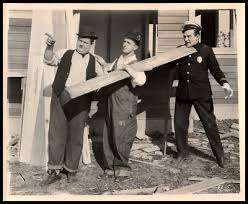
The basic premise of “The Finishing Touch” is wonderfully simple. Stan and Ollie are hired to complete a construction job, and their responsibility seems straightforward: finish building a house. However, anyone familiar with Laurel and Hardy already knows that nothing ever goes according to plan when these two are involved.
Instead of completing their work efficiently, the pair creates one problem after another. Their attempts to perform ordinary construction tasks become increasingly complicated, leading to accidents, misunderstandings, and escalating destruction.
The humor comes partly from the contrast between their intentions and their results. Laurel and Hardy are not deliberately trying to cause trouble. They genuinely want to finish the job. Their confidence, however, is rarely matched by their abilities.
Stan Laurel’s character is innocent, childlike, and often completely unaware of the consequences of his actions. Oliver Hardy, meanwhile, tries to appear sophisticated and authoritative. He wants to be the responsible leader of the partnership, but his attempts to control Stan usually make matters worse.
This relationship became one of the defining characteristics of their comedy.
The Perfect Comedy Partnership
What makes “The Finishing Touch” especially enjoyable is the chemistry between Laurel and Hardy. Their comedic partnership was based on contrast.
Stan was thin, nervous, innocent, and unpredictable. Ollie was larger, more confident, and constantly concerned about maintaining his dignity. When things went wrong, Ollie often reacted with frustration while Stan seemed genuinely confused about what had happened.
That dynamic created endless opportunities for physical comedy.
A simple glance from Hardy could communicate an entire paragraph of dialogue. Laurel’s facial expressions could transform a small mistake into an unforgettable comedic moment. Their movements, reactions, and pauses were carefully timed, creating a rhythm that remains effective even decades later.
The duo also understood the importance of escalation. A small mistake would become a larger problem, which would lead to another accident, eventually resulting in complete chaos.
Physical Comedy at Its Finest
“The Finishing Touch” is a perfect example of silent-era slapstick comedy. Without relying heavily on dialogue, the film tells its story through movement, expressions, props, and visual situations.
Construction provides an ideal setting for this type of humor. Tools, ladders, boards, walls, nails, and building materials become sources of comedy. Objects that should make their work easier frequently become obstacles.
The physical environment almost becomes another character in the film.
Every hammer swing, stumble, fall, and unexpected accident contributes to the comedy. Yet the humor is not simply about people falling down. The best moments come from the characters’ reactions to what happens.
Hardy’s frustration is particularly funny because he constantly tries to maintain his dignity. Laurel, on the other hand, often responds to disaster with innocent curiosity.
Their contrasting reactions make the same situation even more entertaining.
The Importance of Timing
One of the greatest strengths of Laurel and Hardy’s comedy was timing. “The Finishing Touch” demonstrates how carefully physical comedy can be constructed.
A successful slapstick sequence requires more than simply performing an action. The audience needs time to understand what is happening, anticipate the possible outcome, and then experience the surprise.
Laurel and Hardy mastered this process.
A pause before an accident can make the eventual impact much funnier. A character’s reaction can sometimes be more amusing than the accident itself. The duo knew exactly when to move, when to stop, and when to look at each other.
This precision is one reason their films continue to entertain modern audiences.
A Window Into Silent-Era Hollywood
Beyond its comedy, “The Finishing Touch” provides an interesting glimpse into filmmaking during the silent era.
In the 1920s, filmmakers had to communicate stories visually. While intertitles could provide information or dialogue, much of the storytelling depended on physical performance and visual composition.
This encouraged performers to develop extremely expressive acting styles.
Laurel and Hardy were particularly successful because they understood how to communicate emotions without words. Their body language and facial expressions were instantly recognizable.
The film also reflects the fascination of silent cinema with everyday situations. Instead of relying on complicated plots, filmmakers could take an ordinary activity and transform it into an extraordinary comedic adventure.
Building a house becomes a battle against gravity, machinery, tools, and ultimately their own incompetence.
Why the Colorized Version Feels Different
Modern colorization gives “The Finishing Touch” a different visual atmosphere. Although the original film was created in black and white, carefully colorized versions can make the environments and costumes easier for contemporary viewers to appreciate.
The addition of color can create a stronger sense of depth and make the physical comedy visually accessible to audiences who are more accustomed to modern color filmmaking.
However, the heart of the movie remains unchanged.
The humor still depends on Laurel and Hardy’s performances. Their expressions, movements, timing, and personalities are what make the film memorable.
Color does not create the comedy; it simply provides a new visual way to experience it.
The Enduring Legacy of Laurel and Hardy
Laurel and Hardy’s influence on comedy is difficult to overstate. Their style influenced generations of performers, from television comedians to modern physical-comedy artists.
What makes their work particularly special is its universal quality.
You do not need to understand a complicated cultural reference to enjoy Stan and Ollie. Their comedy is based on recognizable human experiences: trying to complete a job, dealing with frustration, making mistakes, and attempting to maintain your dignity when everything goes wrong.
That universality has allowed their films to survive across generations.
Even viewers discovering Laurel and Hardy for the first time can quickly understand their personalities and become invested in their ridiculous situations.
A Classic Worth Revisiting
“The Finishing Touch” is more than an old comedy short. It is a demonstration of how much can be achieved through visual storytelling, physical performance, and perfectly coordinated comedic timing.
Stan Laurel and Oliver Hardy turn a simple construction assignment into an unforgettable sequence of disasters. Their inability to complete a basic task becomes the foundation for some of the most charming slapstick comedy of the silent era.
The film reminds us that great comedy does not necessarily require complicated stories or elaborate technology. Sometimes, all it takes is two unforgettable characters, a simple problem, a few tools, and a situation that gradually gets completely out of control.
Nearly a century after its original release, “The Finishing Touch” continues to showcase why Laurel and Hardy remain among the most beloved comedy performers in cinematic history.
Whether you are a longtime fan or discovering their work for the first time, this colorized presentation offers an entertaining opportunity to revisit the golden age of silent comedy.
Put on your hat, pick up the hammer, and prepare for trouble. With Laurel and Hardy on the job, you can be certain that the “finishing touch” will never be as simple as it sounds. 🎩🔨😂