One of the fundamental rules of All in the Family was simple:
Let Archie Bunker become completely confident about something.
Then give him information that turns his entire worldview upside down.
Few episodes demonstrate that formula better than “Archie the Hero.”
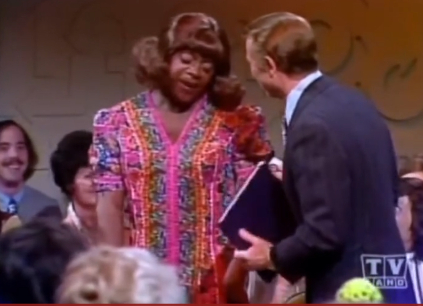
First broadcast in September 1975, the episode introduces a memorable character named Beverly LaSalle, played by entertainer Lori Shannon.
And Beverly’s first encounter with Archie couldn’t have been designed more perfectly.
Archie Becomes a Hero
While working as a cab driver, Archie encounters an unconscious passenger.
He performs mouth-to-mouth resuscitation and saves the passenger’s life.
At first, Archie is delighted with himself.
Why wouldn’t he be?
In his mind, he has performed a heroic act and rescued an attractive woman.
It’s exactly the kind of story Archie would enjoy telling.
Then Beverly reveals something Archie wasn’t prepared to hear.
Beverly is a professional female impersonator.
Suddenly Archie’s heroic story becomes something he desperately wishes everyone would stop talking about.
That’s the joke.
Nothing about Archie’s heroic action has changed.
He still saved someone’s life.
The only thing that changed was Archie’s perception of the person he saved.
Turning Archie Into the Punchline
That structure was one of All in the Family’s greatest weapons.
Archie frequently believed he represented common sense.
The writers would then construct situations exposing contradictions in that “common sense.”
Here, Archie did something unquestionably good.
Someone needed help.
He helped.
For a moment, prejudice didn’t enter into the equation.
Only afterward does Archie become uncomfortable.
And that’s precisely why the situation works.
The audience can see something Archie cannot:
His heroic act remains heroic regardless of Beverly’s identity or profession.
Archie’s embarrassment therefore becomes the joke.
Beverly LaSalle Wasn’t a One-Off Character
Beverly proved memorable enough to return.
Records of the series list Lori Shannon’s Beverly in three episodes: “Archie the Hero” in 1975, “Beverly Rides Again” in 1976 and “Edith’s Crisis of Faith” in 1977.
That matters because Beverly wasn’t simply introduced for a single punchline.
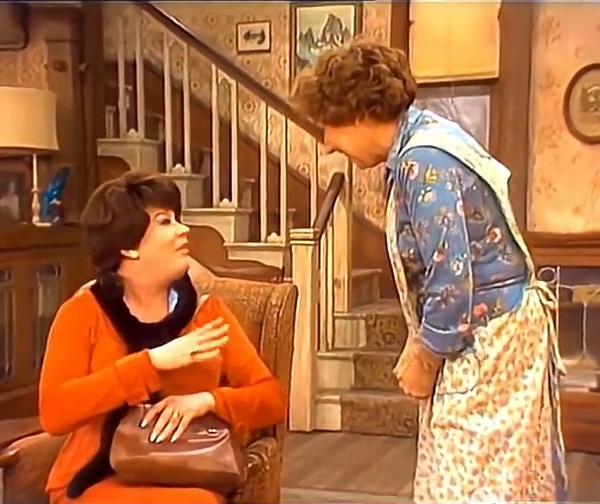
The character became connected to the Bunker household, particularly through Edith.
And Edith’s reaction to Beverly was characteristically Edith.
Where Archie sees categories and differences, Edith tends to see a person.
It’s one reason Jean Stapleton’s character was such an important counterbalance to Archie.
Carroll O’Connor’s Reactions
Much of the humor depends on Carroll O’Connor.
Archie doesn’t simply hear surprising information.
He processes it physically.
The eyes change.
The face tightens.
The voice changes.
Suddenly you can almost watch Archie’s brain attempting to reorganize everything he thought he knew about the previous few hours.
That reaction is comedy gold.
O’Connor understood that Archie couldn’t simply be a collection of offensive statements.
For the character to work, audiences needed to understand his confusion, stubbornness and vulnerability.
Archie frequently creates his own misery.
That’s why people laugh.
A Very 1970s Episode That Still Feels Interesting
Watching the episode today requires understanding the language and social context of American television in 1975.
Terminology surrounding gender expression has changed substantially since then. Contemporary descriptions often identify Beverly as a drag performer or female impersonator, while older program descriptions use terminology that would be handled differently today.
But the basic comedic mechanism remains remarkably recognizable.
A prejudiced character makes assumptions about someone.
Reality contradicts those assumptions.
And suddenly the supposedly confident person has no idea what to say.
That’s a structure comedy continues to use.
Norman Lear’s Sitcom Formula
This was the larger brilliance of the Norman Lear era.
All in the Family could begin with an ordinary sitcom setup and suddenly introduce a subject many other television programs would have avoided.
The Bunker living room became a place where America argued with itself.
Race.
Religion.
Politics.
Generational conflict.
Gender roles.
Sexuality.
Economic anxiety.
Nothing stayed outside the front door for long.
But these subjects weren’t presented as lectures.
They arrived through characters.
Archie reacts.
Edith responds.
Mike argues.
Gloria pushes back.
And audiences laugh while the argument unfolds.
Why Beverly Worked
Beverly is especially effective because the character doesn’t behave as though Archie has all the power.
That’s crucial.
Archie expects Beverly to become embarrassed.
Instead, Archie becomes embarrassed.
Beverly can remain composed while Archie struggles.
That reverses the expected dynamic.
And reversal is one of comedy’s oldest tools.
The character Archie thinks should be uncomfortable isn’t.
Archie is.
More Than a Punchline
Beverly’s later appearances would give the character greater emotional significance within the All in the Family universe.
But even the introduction tells us something important.
Archie’s prejudices don’t prevent him from doing the right thing when he doesn’t have time to think about them.
He sees someone unconscious.
He acts.
Only afterward does his ideology catch up.
There’s an unexpectedly clever idea buried underneath the comedy:
Sometimes instinctive humanity arrives before learned prejudice.
Whether viewers consciously analyze the episode that way or simply laugh at Archie’s horrified reaction, the construction works.
Why All in the Family Remains Fascinating
More than half a century later, some language and attitudes in All in the Family naturally feel tied to their era.
But that’s also why watching it can be fascinating.
It provides a window into what American television was willing to discuss in the 1970s — and how comedy was used to introduce those conversations into millions of living rooms.
Beverly LaSalle walking into Archie Bunker’s world was guaranteed to create conflict.
Archie believed he knew exactly how the world worked.
Beverly gave him a situation that didn’t fit neatly inside those assumptions.
And when Archie Bunker couldn’t make the world fit his expectations?
That’s usually when All in the Family was at its funniest. 😂