There are certain Saturday Night Live sketches that could only have happened at one very specific moment in American pop culture.
“Samurai Night Fever” is one of them.
It was 1978.
Disco was everywhere.
John Travolta had become a sensation.
The Bee Gees were dominating the radio.
And Saturday Night Fever had transformed a white suit, a glowing dance floor, and one confidently raised finger into some of the most recognizable images of the decade.
So naturally, Saturday Night Live looked at all of that and asked one ridiculous question:
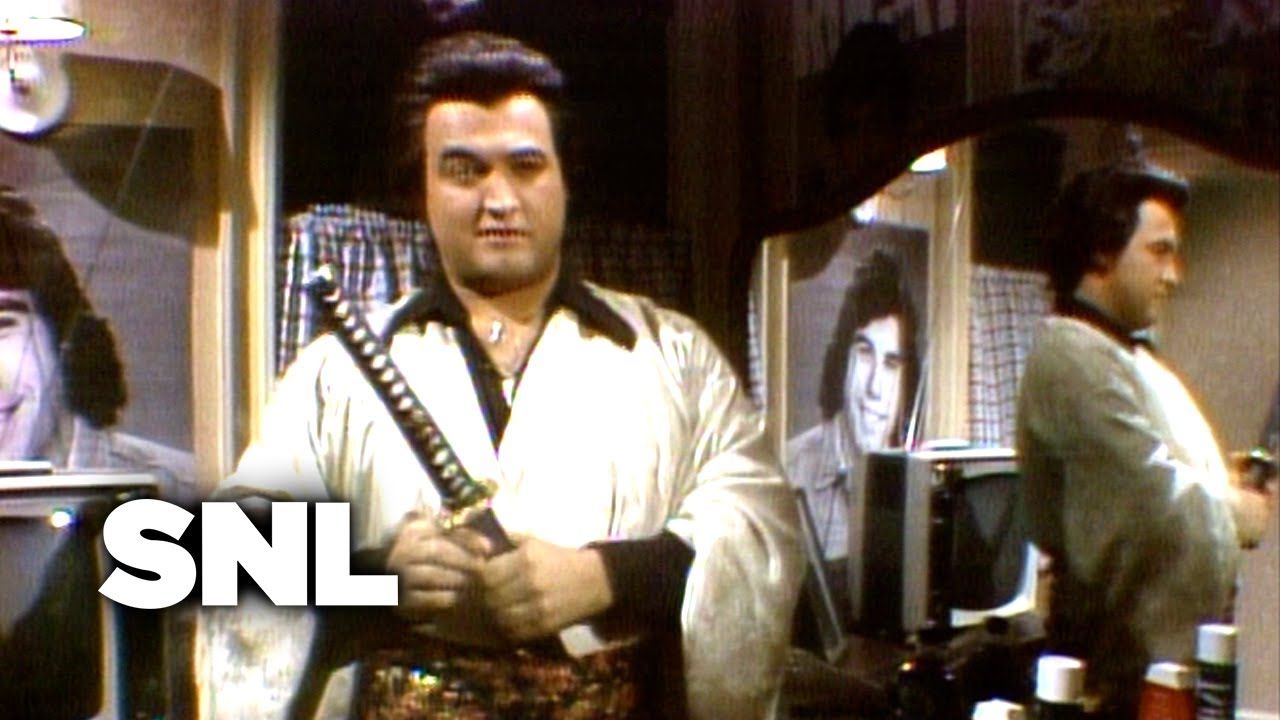
What if John Belushi’s Samurai Futaba became Tony Manero?
The result is one of those wonderfully strange pieces of early SNL comedy that sounds impossible when you describe it.
A samurai.
An Italian-American family.
A disco club.
A parody of one of the hottest movies in America.
John Belushi dancing like he owns the floor.
Somehow, all of those ingredients fit together.
And that is exactly why “Samurai Night Fever” remains such a memorable showcase for Belushi.
The Timing Could Not Have Been Better
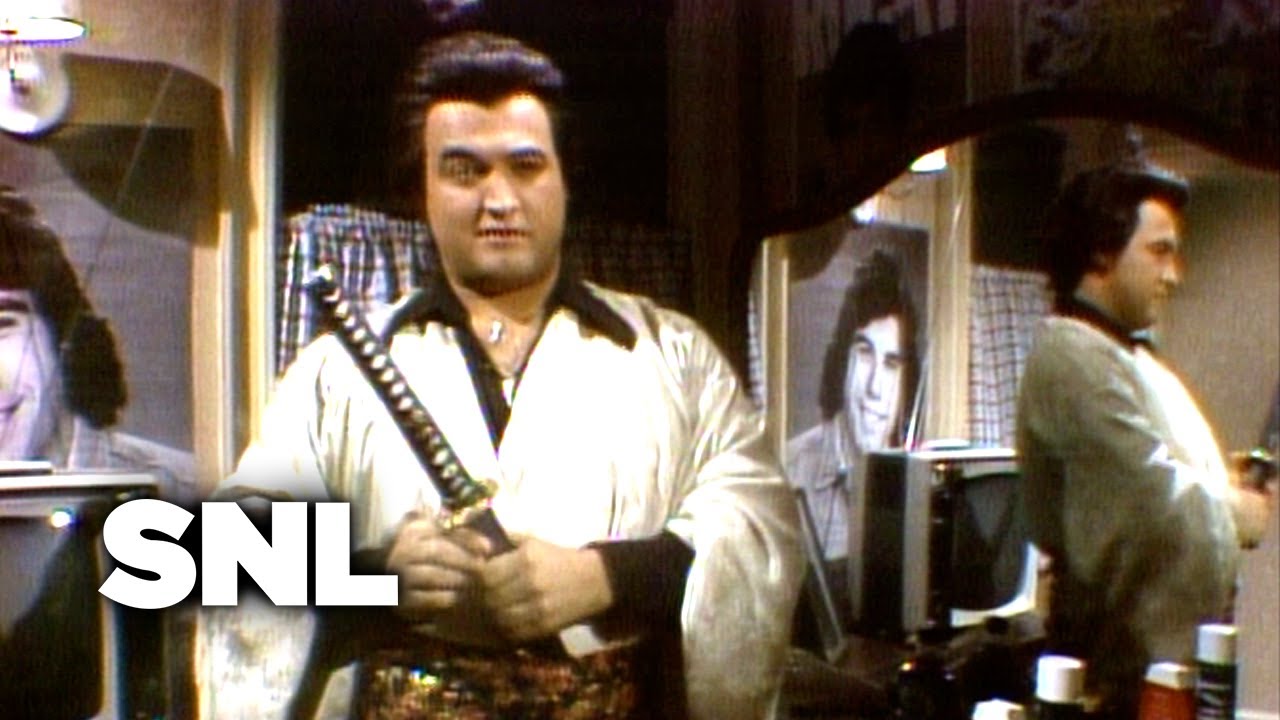
The sketch aired on February 25, 1978, during SNL’s third season. John Belushi played his recurring Samurai Futaba character, while the cast included Bill Murray, Jane Curtin, Gilda Radner, Dan Aykroyd, Laraine Newman, and host O.J. Simpson.
The parody arrived at almost the perfect cultural moment.
Saturday Night Fever had been released only a few months earlier in December 1977 and quickly became a phenomenon. John Travolta’s Tony Manero was a working-class Brooklyn kid who spent his weekdays living an ordinary life but transformed himself every Saturday night into the undisputed king of the local disco floor. The movie’s soundtrack, fashion, and dancing helped push disco even deeper into mainstream American culture.
SNL barely had to explain the reference.
Audiences knew the walk.
They knew the clothes.
They knew the music.
They knew Tony Manero.
So the moment Belushi appeared as a samurai version of that character, the joke was already working.
Samurai Futaba Meets Tony Manero
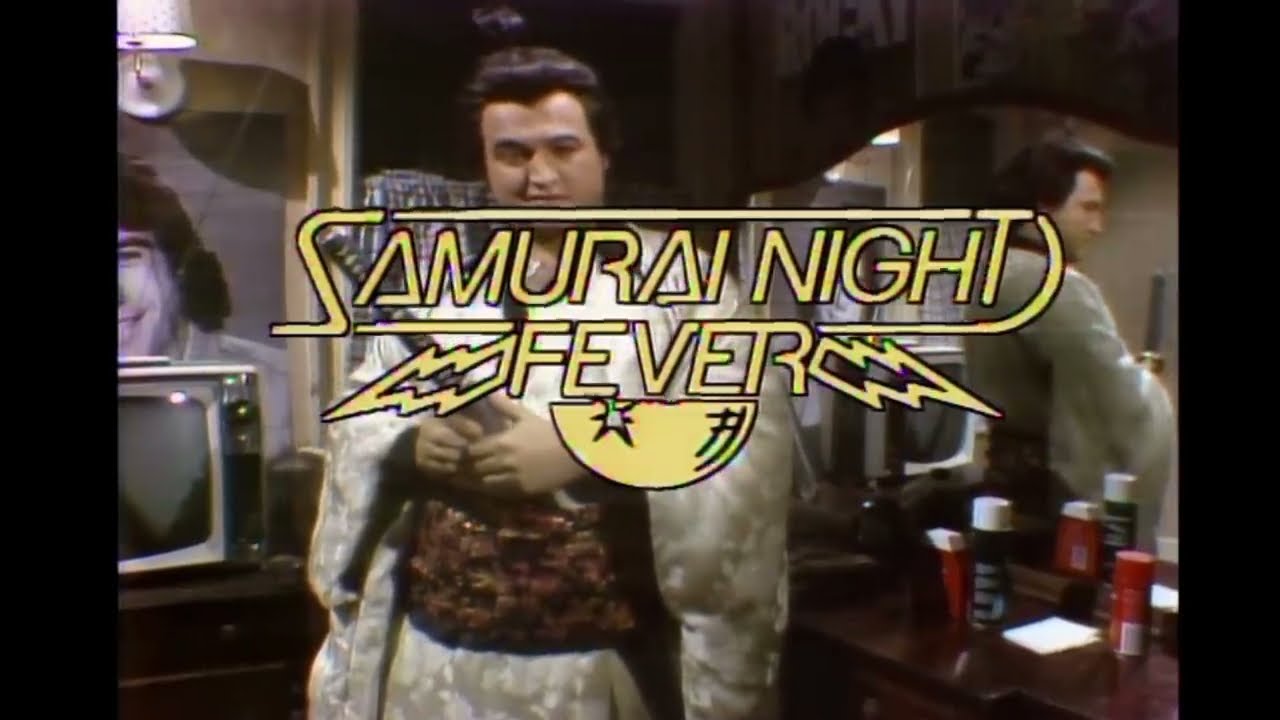
Belushi’s Samurai Futaba was already one of his signature SNL characters.
The basic concept was wonderfully absurd.
Futaba was an intensely serious samurai who appeared in completely inappropriate modern occupations and situations.
He could be working behind a counter.
Running a business.
Helping a customer.
Performing some ordinary everyday task.
Yet he approached everything with the dramatic intensity of a warrior from an old samurai movie.
Belushi largely communicated through exaggerated mock Japanese, facial expressions, movement, and his sword.
The comedy came from the contrast.
The setting might be completely mundane.
Futaba treated it as life and death.
That character had already appeared repeatedly on SNL before “Samurai Night Fever,” and contemporary recollections of the character connect Belushi’s physical style to the samurai persona associated with Toshiro Mifune in Akira Kurosawa’s Yojimbo.
But “Samurai Night Fever” takes Futaba somewhere completely new.
Instead of simply dropping a samurai into another occupation, SNL drops him into another movie.
Suddenly Samurai Futaba is essentially Tony Manero.
And Belushi commits to that idea completely.
The Family Dinner Tells You Everything
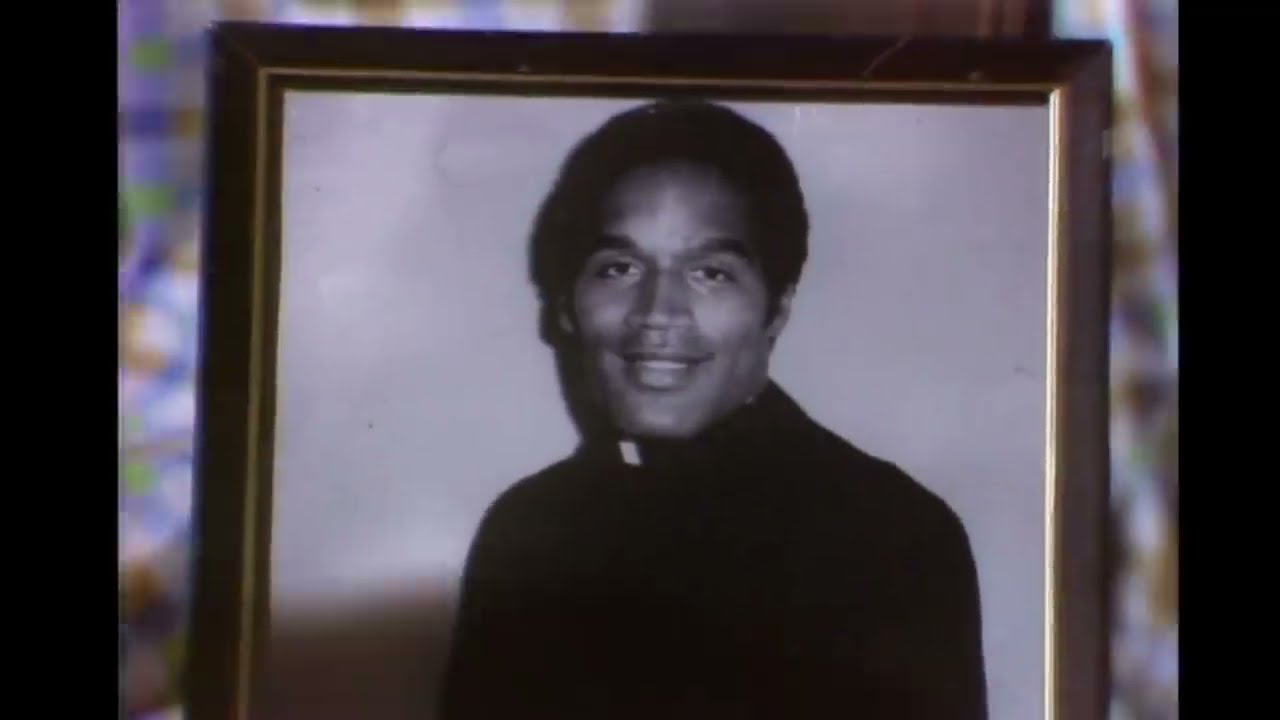
One of the funniest parts of the sketch is seeing Futaba inside a family environment modeled after Tony Manero’s home life.
This is already an absurd image.
Here is Belushi, completely committed to the Samurai character, sitting with what looks like a working-class family straight out of the world of Saturday Night Fever.
Bill Murray plays the father.
Jane Curtin plays the mother.
Laraine Newman appears as the grandmother.
The household is loud, argumentative, cramped, and instantly recognizable as a parody of the tense Manero family dynamic.
And sitting right in the middle of it is Samurai Futaba.
That visual alone is funny.
The sketch does not need to spend several minutes explaining why this Japanese warrior apparently belongs in this particular family.
He simply does.
That is one of the joys of early SNL.
Once the premise was established, everybody committed to it.
The stranger the combination became, the harder the performers played it straight.
Belushi Understands That the Costume Is Only Half the Joke
A weaker comedian might have assumed that putting a samurai into Saturday Night Fever was already enough.
Belushi does much more.
He combines the two characters physically.
There is still the aggressive posture and explosive movement of Samurai Futaba.
But now there is also Tony Manero.
The confidence.
The attitude.
The grooming.
The obsession with going out.
The belief that when Saturday night arrives, the entire world is supposed to notice you.
Belushi takes two completely different physical characters and somehow smashes them together.
That is where the sketch becomes more than a simple costume parody.
Belushi does not merely look ridiculous.
He moves with total conviction.
The audience may be laughing at Samurai Futaba pretending to be a disco king.
Futaba himself does not think there is anything funny happening.
To him, this is serious business.
And that seriousness makes everything funnier.
Then Comes the Bedroom
The parody becomes even more recognizable when the sketch echoes the private world of Tony Manero.
The bedroom is filled with unmistakable late-1970s pop-culture energy.
This is where Tony prepares himself for the one place where he feels powerful: the dance floor.
So what happens when Samurai Futaba prepares for disco?
Belushi transforms the ritual into another physical comedy showcase.
The joke is not simply that he wants to go dancing.
It is that he approaches preparing for the evening with the intensity of a warrior preparing for battle.
For Tony Manero, appearance is armor.
For Samurai Futaba, armor is practically literal.
The worlds fit together much better than they have any right to.
Both characters are defined by pride.
Both care deeply about presentation.
Both believe in ritual.
Both move through their worlds with exaggerated confidence.
Once SNL recognizes that similarity, the parody almost writes itself.
John Belushi Could Get a Laugh Before Saying Anything
This sketch also demonstrates why Belushi was such a powerful television performer.
He did not need a traditional punchline.
Watch his body.
Watch his eyes.
Watch the way he suddenly shifts his weight.
Watch how seriously he performs something completely ridiculous.
Belushi understood physical comedy at an instinctive level.
Sometimes a tiny movement could get a laugh.
Then, seconds later, he could explode across the room.
That unpredictability made him exciting.
You were never entirely sure what his body was going to do next.
With Samurai Futaba, that quality became even stronger because the character communicated so much through movement rather than conventional English dialogue.
Belushi could grunt, stare, gesture, suddenly reach for his sword, and somehow the audience understood the emotional meaning.
Anger.
Pride.
Embarrassment.
Romance.
Confusion.
Confidence.
He could communicate all of it without needing to explain the joke.
And Then He Hits the Disco
Eventually, the location we have been waiting for arrives.
The dance floor.
This is where Saturday Night Fever turned Tony Manero into a king.
During the week, Tony is frustrated.
At home, he fights with his family.
At work, he is ordinary.
But under the lights of the disco, everyone notices him.
SNL gives Samurai Futaba the same opportunity.
And Belushi goes for it.
The nightclub becomes the perfect environment for the character because disco itself was so physical.
You do not need long conversations.
You need attitude.
Movement.
Poses.
Rhythm.
Confidence.
Belushi had all of those things.
Suddenly the character who once seemed most at home waving a sword around is trying to dominate a disco floor.
And somehow he looks strangely comfortable doing it.
That contradiction is the entire joke.
He should not belong there.
Yet by the time he starts dancing, you almost believe that maybe he does.
Gilda Radner Makes the Scene Even Better
Gilda Radner appears as Futaba’s date, adding another layer to the parody. The official SNL archive also lists Dan Aykroyd among Futaba’s friends and Don Novello as Carmine, placing several members of that extraordinary early SNL ensemble inside the spoof.
Radner was especially good at reacting to ridiculous characters without stealing the scene away from them.
That was important with Belushi.
Futaba is already enormous in personality.
If everyone around him tried to perform at the same level, the sketch could become exhausting.
Instead, the supporting cast creates a world around him.
They react.
They stare.
They talk to him as though this is perfectly normal.
And because they treat Samurai Futaba as an actual person rather than simply pointing at him and announcing how strange he is, the absurdity becomes even stronger.
That was one of the great strengths of the original SNL cast.
They knew how to support one another’s characters.
The Dance Is the Payoff
The most memorable section, naturally, is Belushi dancing.
The man had remarkable physical presence.
He was powerful and surprisingly agile, and comedy audiences already knew he could throw his entire body into a performance.
Here, he gets to turn that physical ability into disco parody.
You can see the Saturday Night Fever influence immediately.
The attitude is there.
The poses are there.
The sense that the dance floor belongs to him is there.
But this is still Futaba.
Belushi never completely abandons the Samurai character just because he has entered Tony Manero’s world.
That combination is what makes the dancing so funny.
He is not John Belushi doing a Travolta impression.
He is Samurai Futaba doing a Travolta impression.
There is an extra layer between performer and parody.
Belushi is playing Futaba.
Futaba is playing Tony Manero.
And all three personalities somehow coexist on the dance floor.
Physical Comedy Was Belushi’s Superpower
A lot of John Belushi’s most memorable comedy depended on his ability to go from stillness to explosion.
Think about Bluto in Animal House.
Think about the Olympia Restaurant.
Think about his Joe Cocker impression.
Think about the Blues Brothers.
Or think about Samurai Futaba.
His characters often seemed to contain energy that could not stay inside them.
That made him unpredictable.
A simple stare might suddenly become a shout.
A quiet scene might turn into a physical performance.
A conversation might become chaos.
In “Samurai Night Fever,” that energy has somewhere perfect to go.
The dance floor.
Instead of destroying the room, Belushi can turn the same intensity into movement.
And there is something genuinely joyful about watching him do it.
SNL Was Parodying Something That Was Still Happening
Another reason the sketch feels different from many modern parodies is how quickly SNL responded to the culture.
Today, we look at Saturday Night Fever as a classic.
We think about the Bee Gees.
The white suit.
The pointing pose.
The disco ball.
The late 1970s.
But when “Samurai Night Fever” aired, those things were not nostalgia.
They were current.
The movie was still fresh.
Disco was exploding.
Travolta was becoming a major movie star.
PBS’s history of disco notes just how enormous Saturday Night Fever and its soundtrack became, describing the film as part of the moment when disco moved decisively into the American mainstream.
SNL was essentially grabbing the hottest cultural phenomenon available and immediately running it through the weirdest character they had.
That speed gave early SNL a special kind of energy.
It felt connected to what America was talking about right now.
Some Comedy Belongs to Its Era
Watching the Samurai character today also reminds us how much comedy changes.
The exaggerated faux-Japanese language and cultural caricature are very much products of 1970s American television and can land differently with modern audiences.
But Belushi’s underlying performance skills remain easy to recognize.
The commitment.
The physical precision.
The facial expressions.
The speed.
The willingness to look completely ridiculous without ever signaling that he thinks the character is ridiculous.
That last part is essential.
Belushi does not stand outside Futaba and make fun of him.
He dives inside the character.
And once he is there, he refuses to break the reality.
That commitment is one of the reasons audiences still return to these sketches.
The Original SNL Cast Could Make Anything Feel Possible
Look at the names surrounding Belushi in this sketch.
Bill Murray.
Gilda Radner.
Dan Aykroyd.
Jane Curtin.
Laraine Newman.
These performers would eventually become central figures in American comedy.
Here they are together in 1978, supporting a sketch in which a samurai becomes a disco dancer.
That sentence alone captures something about early Saturday Night Live.
The show was willing to be strange.
It was willing to let characters return again and again.
It was willing to combine unrelated ideas simply because someone realized the collision might be funny.
And the cast had enough confidence to sell almost anything.
Why “Samurai Night Fever” Still Stands Out
There are more famous John Belushi sketches.
There are more famous SNL parodies.
There are certainly more famous moments from Saturday Night Fever.
But “Samurai Night Fever” has something uniquely Belushi about it.
It combines nearly everything he did well.
A strong recurring character.
Broad physical comedy.
Pop-culture parody.
Absurdity.
Movement.
Attitude.
And complete commitment.
You could explain the entire premise in one sentence:
John Belushi’s samurai becomes the hero of Saturday Night Fever.
That is enough.
You immediately want to see what happens.
And once Belushi reaches the dance floor, the concept delivers exactly the kind of controlled insanity you hoped for.
A Perfect Snapshot of 1978 Comedy
Nearly five decades later, “Samurai Night Fever” feels like opening a time capsule.
Disco.
Travolta fever.
The original SNL cast.
John Belushi at full energy.
Everything about it belongs to that moment.
And yet the most important ingredient has not aged at all:
Watching a gifted physical comedian completely commit to an absurd idea is still funny.
Belushi understood that better than almost anyone.
Give him a samurai costume.
Give him a disco suit.
Give him a sword.
Give him a dance floor.
Then get out of the way.
Because once Samurai Futaba hears the music, there is only one man who believes he owns Saturday night.
And somehow, for a few glorious minutes, he does.
👇 Be honest: who else could have turned a samurai parody of Saturday Night Fever into something this unforgettable?
If John Belushi’s Samurai Futaba still makes you laugh, SAY YES — and tell me which Belushi character you remember most: Samurai Futaba, Bluto, Jake Blues, or Pete from the Olympia Restaurant.
#JohnBelushi #SamuraiNightFever #SaturdayNightLive #SNL #ClassicSNL #SamuraiFutaba #SaturdayNightFever #ClassicComedy #ComedyLegends #70sComedy #70sNostalgia #GildaRadner #BillMurray #DanAykroyd #ComedyGold