Some of the funniest moments on The Dick Van Dyke Show required almost nothing.
No elaborate set.
No enormous physical comedy sequence.
No celebrity guest star.
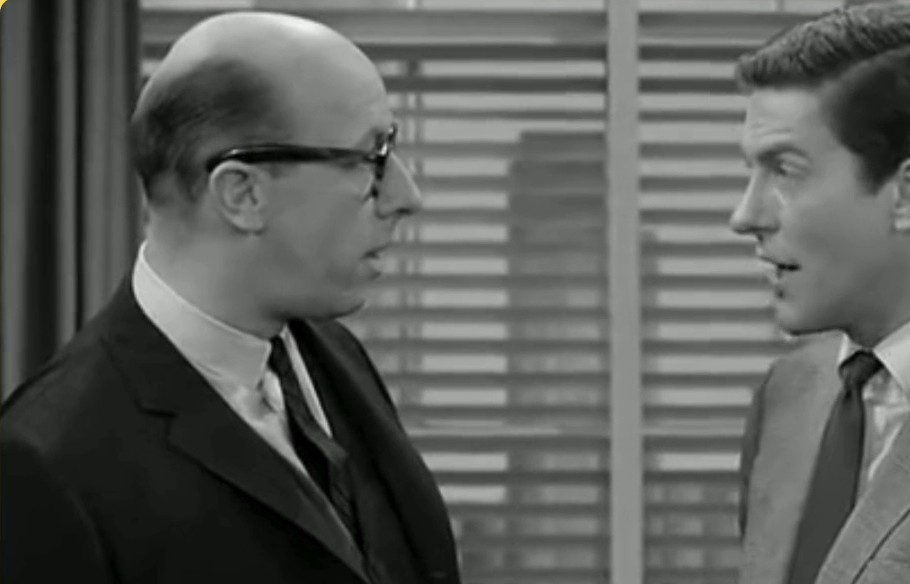
Sometimes all the show needed was Rob Petrie sitting in an office with Buddy Sorrell and Sally Rogers.
Then the conversation would begin.
Rob, played by Dick Van Dyke, worked as the head writer of the fictional Alan Brady Show. His two fellow writers were Sally Rogers, played by Rose Marie, and Buddy Sorrell, played by Morey Amsterdam.
Together, they formed one of classic television’s great workplace comedy teams.
The setup was deceptively simple.
Rob was usually the person trying to keep everybody focused. There was a television show to write, deadlines to meet and a temperamental boss to satisfy.
Buddy and Sally made that considerably more difficult.
Buddy was almost incapable of letting an opportunity for a joke pass without taking it. Sally could be equally sharp, and she was perfectly capable of matching Buddy line for line.
That left Rob somewhere in the middle.
He was their friend, their colleague and technically their boss.
But controlling them was another matter entirely.
This balance was essential to the show’s comedy.
If all three characters had behaved like Buddy, the office would have become complete chaos.
If all three behaved like Rob, it might have been too orderly.
Instead, the writers created three distinct personalities that could bounce jokes off one another.
Buddy could throw out an insult.
Sally could immediately add another joke.
Rob could try to restore order.
And before he finished his sentence, somebody had already started the next gag.
Morey Amsterdam was particularly well suited to this style of comedy. Buddy is frequently described as an energetic joke machine, and his ongoing exchanges with producer Mel Cooley became one of the show’s most recognizable running comic relationships.
Rose Marie gave Sally something equally important.
She wasn’t simply there to react to the men.
Sally was one of the writers.
She could be louder than Buddy, smarter than Rob and faster with a punchline than either of them.
That was significant for a sitcom produced in the early 1960s.
The show even addressed the way Sally’s male colleagues sometimes treated her as “one of the guys.” Season 1’s “Sally Is a Girl,” for example, builds its story around Laura realizing that the men don’t always recognize Sally as a woman outside their workplace dynamic.
But inside the writers’ room, Sally belonged completely.
Then there was Rob.
Dick Van Dyke’s greatest contribution to these scenes was often his reaction.
He didn’t need to have every punchline.
Sometimes Buddy’s joke became funnier simply because of the expression on Rob’s face.
Van Dyke could look confused, irritated, amused and defeated almost simultaneously.
That ability made Rob the ideal center of the group.
It also made the workplace portions of The Dick Van Dyke Show unusually convincing.
The series wasn’t only about Rob’s family life with Laura and Ritchie.
It was also a workplace comedy years before that format became one of American television’s most familiar sitcom structures.
Viewers got to see writers trying to invent comedy.
They argued about sketches.
They worried about their jobs.
They dealt with producers.
They made fun of one another.
And occasionally their personal lives became mixed up with their professional ones.
One episode even has Rob becoming suspicious when Buddy and Sally suddenly stop socializing with him outside work. He eventually imagines an affair before discovering a very different explanation.
That storyline only works because viewers already believe these three people are genuinely close.
They’re not simply coworkers placed together because the script requires it.
They feel like friends.
That’s why their disagreements are funny instead of uncomfortable.
It’s also why the office scenes remain enjoyable decades later.
Anyone who has worked closely with the same people for years recognizes some version of this relationship.
There is the person trying to keep the meeting moving.
There is the person who can’t stop making jokes.
There is the coworker who knows exactly how to make everybody else laugh.
Technology has changed.
Workplaces have changed.
Television has changed.
Office banter hasn’t disappeared.
And The Dick Van Dyke Show understood its comic potential more than sixty years ago.
The show could certainly produce spectacular physical comedy when Dick Van Dyke was given the opportunity.
But it didn’t always need it.
Put Rob Petrie behind a desk.
Bring in Sally Rogers.
Let Buddy Sorrell open his mouth.
Then wait.
Sooner or later, somebody was going to say something that made the entire room — and the audience — laugh.