The Dick Van Dyke Show: How Ordinary Situations Became Extraordinary Comedy
Great comedy doesn’t always begin with something extraordinary.
Sometimes it begins with a door opening.
Someone walks into a room.
A conversation starts.
Everything appears completely normal.
Then something changes.
A misunderstanding develops. Someone says the wrong thing. A character realizes something the others don’t know. Suddenly, an ordinary situation becomes increasingly complicated.
That simple formula was one of the great strengths of The Dick Van Dyke Show.
At the center of the series was Dick Van Dyke as Rob Petrie, a television comedy writer whose professional and personal lives constantly provided opportunities for humor.
The character wasn’t a superhero of comedy.
He was recognizable.
He had a job.
He had a family.
He made mistakes.
He became embarrassed.
He misunderstood people.
And sometimes he had absolutely no idea how to escape the situation he had gotten himself into.
That relatability made the comedy stronger.
Audiences weren’t simply laughing at Rob.
They could imagine themselves making exactly the same mistake.
Van Dyke’s performance made those moments particularly memorable.
He possessed an unusual combination of talents. He could handle sophisticated dialogue, physical comedy and subtle reactions equally well.
That meant the writers didn’t always need to give him a huge punchline.
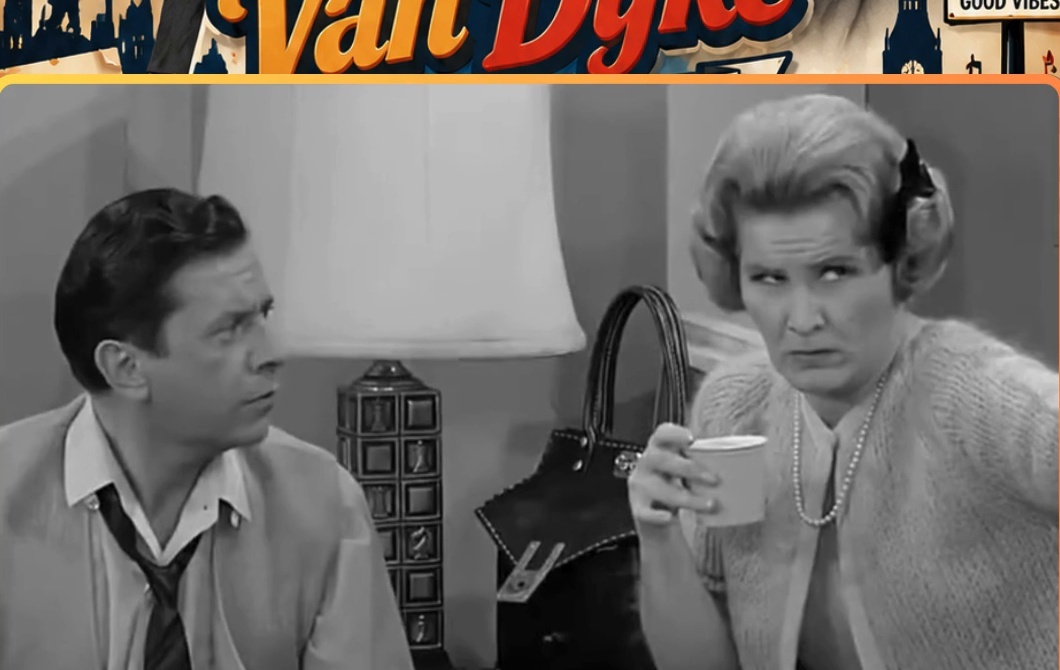
Sometimes they could simply put Rob in an uncomfortable situation and allow Van Dyke to react.
His face would do the rest.
A nervous glance.
A confused expression.
A sudden realization.
The audience immediately understood.
That ability is one of the reasons scenes from the series remain accessible decades later.
Comedy based entirely on topical references can age quickly.
Comedy based on human behavior often doesn’t.
People still misunderstand each other.
People still become embarrassed.
Couples still argue over silly things.
Friends still create problems for each other.
Visitors still arrive at inconvenient moments.
Those experiences remain familiar.
The Dick Van Dyke Show knew how to transform them into entertainment.
The show’s supporting cast was equally important.
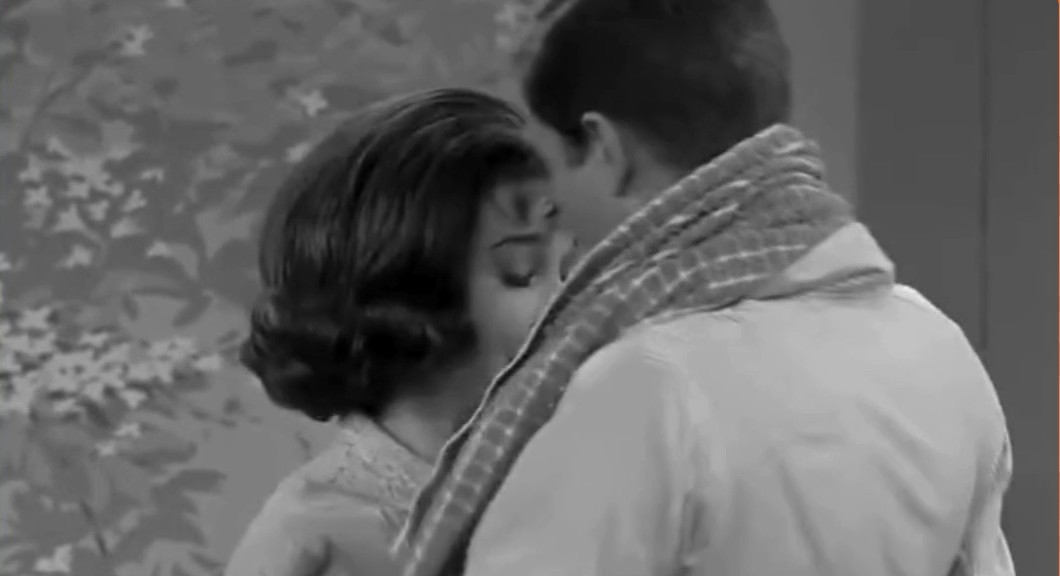
Mary Tyler Moore’s Laura Petrie gave the series one of television’s most memorable comedy partnerships.
Laura wasn’t simply there to react to Rob.
She had her own personality, perspective and comic timing.
That allowed scenes between the two characters to move naturally between affection, frustration and humor.
The result felt more like watching a real relationship than a simple setup for jokes.
That authenticity helped the comedy.
When Laura became frustrated, viewers understood why.
When Rob tried to explain himself, viewers could often predict that the explanation would make everything worse.
And when the situation finally collapsed into complete confusion, the audience had been involved from the beginning.
That gradual escalation is an important element of classic sitcom comedy.
The scene doesn’t necessarily begin with the funniest moment.
It builds toward it.
First, everything seems normal.
Then something feels slightly wrong.
Then another complication appears.
The characters attempt to solve it.
Their solution creates another problem.
By the time the scene reaches its payoff, the audience has watched the entire situation unravel.
It’s a remarkably effective structure.
Interestingly, it also resembles the way many successful short videos work today.
A viewer needs an immediate question.
What’s happening?
Why is this person acting strangely?
What is going to happen when someone enters the room?
Then the situation needs to escalate.
Finally, there needs to be a payoff.
Classic television writers understood this structure decades before anyone used terms like retention or short-form content.
They simply called it good comedy.
Van Dyke was the perfect performer for that structure because he could make the journey toward the punchline just as entertaining as the punchline itself.
He didn’t need to rush.
His timing allowed the audience to anticipate what was coming.
And anticipation is often one of comedy’s most powerful tools.
If viewers know that a character is about to discover something embarrassing, waiting for that discovery can be funnier than the discovery itself.
Van Dyke knew how to use that tension.
So did the rest of the cast.
That chemistry helped transform the series from a collection of jokes into something audiences genuinely cared about.
The characters felt familiar.
Their homes and workplaces became familiar.
Their relationships became familiar.
And because viewers understood the characters, even a simple visit could become an opportunity for comedy.
That’s part of what makes watching these scenes today so enjoyable.
Modern television frequently relies on faster editing, bigger situations and more explicit punchlines.
Classic sitcoms often had to work differently.
They relied on writing.
Performance.
Timing.
Chemistry.
And the audience’s willingness to follow a situation as it gradually became more ridiculous.
When all those ingredients worked together, the results could be unforgettable.
Dick Van Dyke’s physical abilities added another dimension.
Even when a scene wasn’t built around physical comedy, he remained extremely expressive.
His posture changed with the situation.
His movements communicated nervousness or confidence.
His face often revealed exactly what the character wanted to hide.
That made him particularly effective in scenes involving misunderstandings.
The audience could see Rob thinking.
And often, we could see the exact second when he realized things were about to go terribly wrong.
That moment never gets old.
It’s one reason classic television clips continue finding audiences online.
Someone who has never watched an entire episode can see a short scene and immediately recognize the basic human situation.
They don’t need decades of context.
They simply need to understand the characters’ reactions.
And when those reactions are performed by someone as talented as Dick Van Dyke, the humor survives.
More than sixty years after the series first became famous, that remains one of its greatest achievements.
It wasn’t simply funny for its time.
At its best, it was funny because it understood people.
People are awkward.
People make mistakes.
People misunderstand one another.
And sometimes an ordinary day can become ridiculously complicated for no good reason.
The Dick Van Dyke Show turned those moments into comedy.
And Dick Van Dyke made them unforgettable.
Sometimes the funniest stories don’t begin with chaos. They begin with something completely ordinary — and then everything goes wrong.