Few comedy programs have left a lasting impression on television history quite like The Carol Burnett Show. Known for its unforgettable sketches, talented performers, outrageous characters, and perfectly timed physical comedy, the series became a showcase for some of the greatest comedic performers of its generation. Among them, Tim Conway developed a reputation for turning even the simplest situation into an unforgettable comic performance. One excellent example is the classic sketch “The Oldest Butcher,” a hilarious piece that demonstrates Conway’s unique ability to create comedy through character, timing, facial expressions, and unexpected reactions.
At the heart of the sketch is a simple premise: a butcher whose age and experience become the central source of comedy. Rather than relying on an elaborate storyline, the sketch builds its humor around the character and the absurd situations surrounding him. This was one of the great strengths of The Carol Burnett Show. The writers and performers could take an ordinary profession or everyday situation and transform it into something completely ridiculous.
Tim Conway was particularly talented at this kind of comedy. His performances often began with an innocent-looking character who seemed completely ordinary. Slowly, however, the audience would discover that something about the character was unusual. Conway rarely needed to shout or exaggerate immediately. Instead, he allowed the humor to develop naturally through his delivery and reactions. His ability to maintain a completely serious expression while performing something absurd made his comedy even funnier.
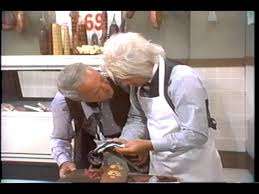
In “The Oldest Butcher,” the character of the butcher provides Conway with an ideal opportunity to use this style. The butcher shop is a familiar environment, which makes the unusual behavior of the character even more entertaining. The audience understands what should normally happen in a butcher shop, so every unexpected moment creates a stronger comedic effect.
One of the most memorable qualities of Tim Conway’s comedy is his incredible sense of timing. He understood that comedy is often about waiting for exactly the right moment. A pause that lasts only a second longer than expected can turn an ordinary line into a hilarious moment. Conway frequently used pauses, slow movements, confused expressions, and understated reactions to make the audience anticipate what would happen next.
This technique is especially effective in sketch comedy because the audience is constantly waiting for the next unexpected development. Conway could stretch a simple interaction far beyond what viewers expected, allowing the tension to build until the eventual reaction became much funnier than the original setup.
Another important element of the sketch is physical comedy. Tim Conway was one of the great masters of physical humor. His movements were often deliberately slow, awkward, exaggerated, or completely unexpected. Rather than simply telling a joke, he used his entire body as part of the performance.
This physical approach was perfectly suited to The Carol Burnett Show. The program was famous for sketches that combined dialogue with visual comedy, and Conway was able to communicate humor through the smallest gestures. A look, a movement of the hands, a change in posture, or a strangely timed reaction could generate laughter without requiring a traditional punchline.
The supporting cast also played an important role in making sketches like “The Oldest Butcher” successful. The Carol Burnett Show featured an ensemble of performers who understood how to play off one another. The humor was rarely dependent on one performer alone. Instead, each actor contributed to the rhythm of the scene.
Carol Burnett herself was famous for her ability to react to Conway’s performances. Their comedic chemistry became one of the show’s most beloved features. Conway had a special talent for making his fellow performers laugh, sometimes by extending a bit longer than expected or introducing an unexpected variation during a performance. These moments gave the sketches a sense of spontaneity.
That spontaneity is one reason old episodes of The Carol Burnett Show continue to entertain audiences decades after their original broadcasts. Modern comedy often depends heavily on fast editing, elaborate production, visual effects, and carefully constructed digital content. By contrast, classic television sketch comedy depended primarily on performers standing on a stage and making people laugh.
Tim Conway demonstrated that a great comedian does not need complicated technology. A strong character, a good script, excellent timing, and the ability to react naturally can be enough.
“The Oldest Butcher” also represents an important characteristic of classic American television comedy: the transformation of ordinary people into extraordinary comic characters. Butchers, doctors, salesmen, waiters, customers, teachers, and neighbors could all become the subjects of humorous sketches. The situations were familiar, but the personalities were exaggerated to create comedy.
Conway had an extraordinary ability to make characters feel believable while simultaneously making them ridiculous. His characters often seemed as though they had stepped out of everyday life, but there was always something slightly strange about them. That contrast between normality and absurdity became one of his trademarks.
His facial expressions were another major part of his appeal. Conway could communicate confusion, innocence, suspicion, embarrassment, or surprise without saying much at all. Sometimes the audience would begin laughing simply because they could see the expression developing on his face.
This subtle form of comedy is particularly impressive because it requires tremendous control. A performer has to know exactly how much to exaggerate without destroying the realism of the scene. Conway understood this balance extremely well.
The sketch also demonstrates why The Carol Burnett Show became such an influential comedy program. The series created a space where performers could experiment with characters and styles. Some sketches were based on clever dialogue, while others depended on slapstick, parody, impressions, costumes, or physical comedy. “The Oldest Butcher” fits comfortably within that tradition while highlighting Conway’s particular strengths.
For longtime fans, watching Tim Conway perform is a reminder of how powerful traditional sketch comedy can be. His humor did not depend on controversial subjects or complicated references. Instead, it came from human behavior. He understood the universal comedy of confusion, awkwardness, exaggeration, and unexpected reactions.
Perhaps the greatest achievement of “The Oldest Butcher” is its simplicity. The premise does not need to be complicated because Conway knows how to extract humor from every moment. He takes the character seriously, and that seriousness makes the absurdity even more entertaining.
Tim Conway’s legacy extends far beyond one sketch. Throughout his career, he became recognized as one of America’s most beloved television comedians. His performances on The Carol Burnett Show introduced generations of viewers to a style of comedy based on patience, character development, physical performance, and impeccable timing.
Even today, clips of Conway continue to circulate online, introducing younger audiences to his work. Viewers who may not have watched the original television broadcasts can still appreciate why audiences laughed so hard when Conway walked onto the stage.
“The Oldest Butcher” remains a wonderful example of this timeless comedic style. It shows that comedy does not always need an enormous setup or an elaborate punchline. Sometimes, the funniest thing a performer can do is simply become a character and allow the situation to unfold.
In the end, the sketch is memorable because of Tim Conway’s ability to turn an ordinary setting into a playground for comedy. His subtle expressions, physical movements, unexpected pauses, and interaction with the cast demonstrate why he remains one of the most respected comedic performers from classic American television.
The Carol Burnett Show gave Conway a stage where his creativity could shine, and “The Oldest Butcher” is another entertaining reminder of what made the program so special. For fans of classic comedy, it is a delightful piece of television history—and proof that great comedic timing never goes out of style.