There are comedy performances that depend on a perfectly delivered punchline, and then there are performances where the performer barely seems to do anything at all. Tim Conway belonged to the second category.
For generations of television viewers, Conway became famous for his extraordinary ability to make fellow performers lose control on camera. His timing was so precise, his pauses so unexpected and his movements so deliberately slow that even experienced comedians could find themselves unable to continue.
Among his most memorable partners was Harvey Korman, whose attempts to remain serious while working alongside Conway became legendary.
The appeal of their sketches was not simply the jokes written into the script. It was the unpredictable chemistry between two performers who understood exactly how to make an audience laugh.
Conway did not always need to rush toward the punchline.
In fact, slowing everything down was often his greatest weapon.
A single step could become a joke. A pause could become funnier than a line. A strange turn of the head or an awkward movement could create anticipation until the audience—and eventually the cast—could no longer hold back.
That was Conway’s particular genius.
He understood that comedy often lives in the space between actions.
Instead of immediately revealing where a scene was going, he allowed the tension to build. He would take his time, seemingly unaware that everyone around him was waiting for the next move.
The longer he waited, the harder it became for his fellow performers to stay composed.
And Harvey Korman was frequently the person who paid the price.
Korman was an accomplished comedian in his own right. He could deliver dialogue with precision and play a wide variety of characters. But when Conway was beside him, maintaining a straight face could become almost impossible.
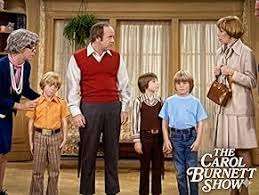
That became part of the magic of The Carol Burnett Show.
The audience wasn’t simply watching a comedy sketch. They were watching comedians trying not to laugh at each other.
When Korman finally broke character, the moment could become even funnier than the original joke. His laughter was genuine, and viewers could see the struggle on his face as he attempted to recover.
Sometimes he would bend over laughing. Sometimes he would wipe tears from his eyes. And sometimes, once the laughter began, there was almost no chance of getting the scene back under control.
Carol Burnett understood this dynamic better than anyone.
As the central star of the show, she worked with Conway and Korman for years and knew exactly how dangerous their chemistry could be. Even Burnett herself could struggle to remain serious when Conway pushed a scene far enough.
That was one of the qualities that made the program feel alive.
Television comedy is normally constructed around control. Actors learn their lines, cameras are positioned carefully and timing is rehearsed.
But Conway had a special ability to disrupt that control without appearing to do very much.
He could create chaos through patience.
Instead of speeding through a scene, he would stretch a moment until it became uncomfortable. Then he would make one tiny movement or deliver one unexpected expression, and the entire room could collapse into laughter.
For viewers, that unpredictability was irresistible.
The claim that Conway could “break” dozens of people in minutes captures the mythology surrounding his comedic talent, although such numbers should be understood as playful exaggeration rather than a literal measurement of every performer he ever made laugh.
What cannot be exaggerated, however, is his reputation for making Harvey Korman break character.
Their partnership became one of the defining comedic relationships associated with The Carol Burnett Show.
Conway joined the show’s regular cast in the mid-1970s, bringing a style that contrasted beautifully with Korman’s more theatrical approach. Their scenes often worked because Conway appeared completely calm while Korman increasingly struggled to maintain control.
The audience knew something was coming.
They just didn’t know when.
That anticipation became part of the joke.
Nearly five decades later, clips from the show continue to circulate because the humor does not depend on contemporary references. There is no complicated cultural context required to understand what is happening.
You simply see one performer trying desperately to stay serious while another performer quietly destroys the scene with timing.
And that kind of comedy remains universal.
There is also something deeply human about watching professionals lose control.
Actors are expected to perform. They are supposed to remain in character even when something goes wrong. Yet when laughter breaks through, viewers see the real people behind the performances.
That is what makes these moments so enjoyable.
The laughter becomes contagious.
When Korman begins to crack, the audience laughs harder. When Burnett struggles to recover, the scene becomes even more chaotic. And when Conway remains completely composed, the contrast makes everything funnier.
In many ways, Conway’s greatest comedic skill was knowing when not to do something.
He understood that silence could be more powerful than dialogue.
A pause could make the audience anticipate a punchline. A slow movement could make a simple action ridiculous. A delayed reaction could turn an ordinary line into an unforgettable moment.
He was never in a hurry.
And that was precisely the danger.
The result was comedy that felt spontaneous even when it was carefully performed. The cast might know the basic structure of the sketch, but Conway’s timing created opportunities for unexpected reactions.
Those reactions became part of television history.
Tim Conway passed away in 2019, but his work continues to introduce new generations to the unique style of classic American sketch comedy. His performances with Harvey Korman remain especially popular because they demonstrate something that cannot easily be taught: comic chemistry.
The funniest moments were sometimes the moments when the performers could no longer perform.
A pause.
A look.
A slow step.
A perfectly timed movement.
Then Harvey Korman breaks.
Carol Burnett starts laughing.
The audience follows.
And suddenly the carefully constructed television sketch becomes something wonderfully unpredictable.
That is the legacy of Tim Conway—not simply that he told funny jokes, but that he understood how to make time itself funny.
And decades later, audiences are still laughing.