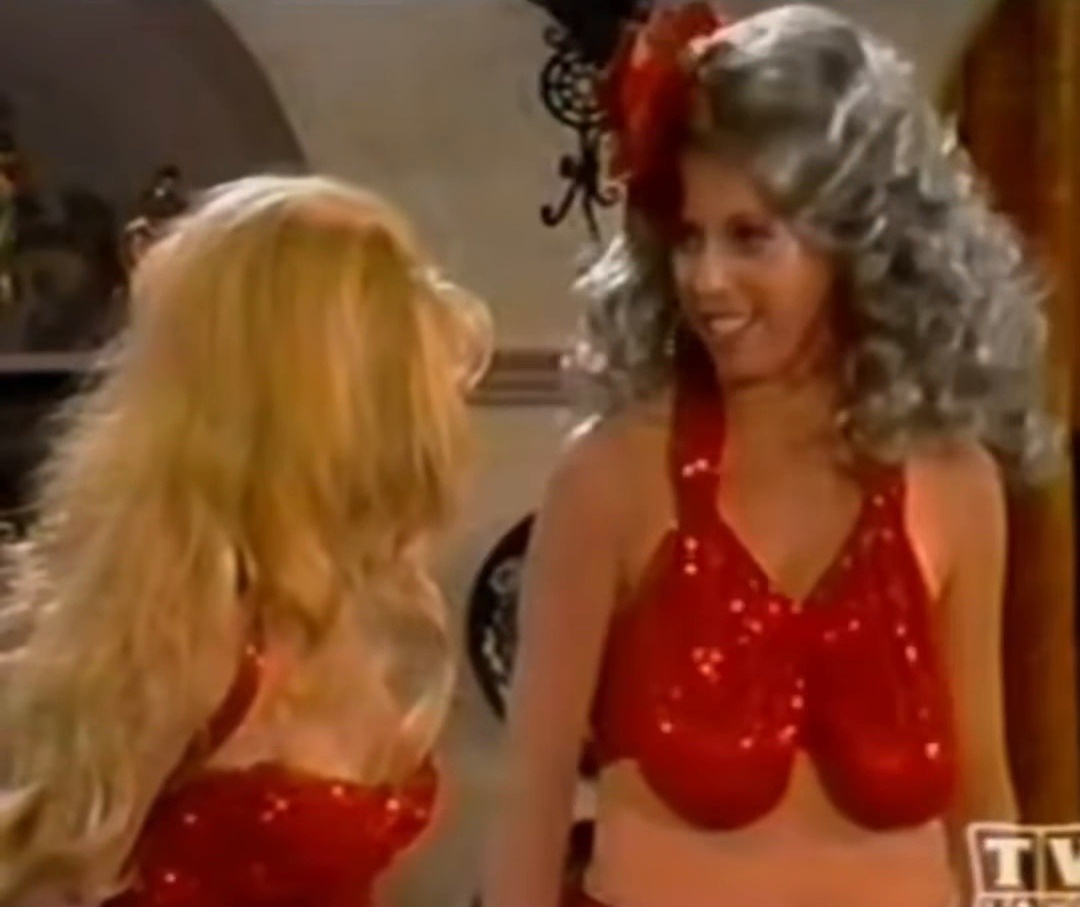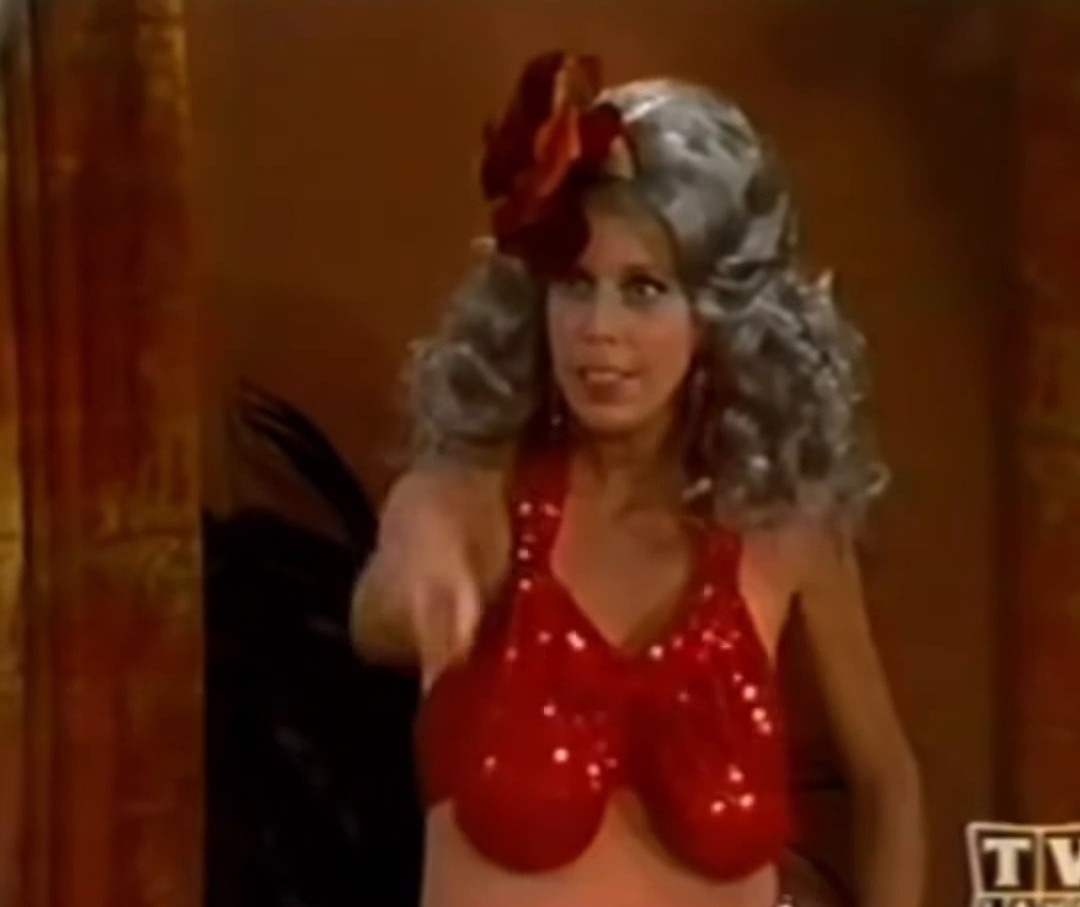
A disputed estate, a mysterious pair of twins, an angry widow and enough insults to fill an entire soap opera episode: this short comedy exchange takes all the ingredients of an overheated family drama and pushes them straight into absurdity.
The premise could easily belong to a serious daytime soap. Two previously unknown heirs suddenly appear and announce that they have come to claim a family estate. The supposed widow immediately objects. Within moments, the inheritance dispute stops resembling a legal matter and turns into a wonderfully childish battle of accusations, insults and competitive name-calling.
And that is precisely what makes the scene work.
Instead of treating the Canoga estate as a believable inheritance dispute, the performers embrace every ridiculous melodramatic possibility.
“You Must Be the Canoga Twins”
The scene wastes almost no time establishing its newest complication.
“Why, you must be the Canoga twins.”
That sentence alone sounds like the beginning of a classic soap-opera revelation. Apparently, everyone knows enough about the Canoga family for the arrival of twins to mean trouble.
The newcomers quickly introduce themselves.
“I’m Billy.”
“And I’m Bessie.”
There is something delightfully formal about the introduction. They have not arrived for a friendly family reunion. They have business to conduct.
“We’re here to claim the Canoga estate.”
Immediately, the stakes become clear.
This is about money, property and inheritance—the perfect ingredients for melodrama.
Then comes the emotional justification:

“Daddy would have wanted it that way.”
It is exactly the sort of line a soap-opera heir might deliver while staring dramatically into the distance. The character is not simply asking for money. The claim is presented as fulfilling the wishes of a beloved father.
Unfortunately for Billy and Bessie, someone else has a very different interpretation of the situation.
“The Estate Is Mine!”
“The estate is mine. I am the widow Canoga.”
Now the battle lines have been drawn.
On one side are the twins, who believe their relationship to their father gives them a legitimate claim.
On the other is the widow, who considers the matter already settled.
In a serious drama, this might lead to lawyers, wills, secret documents and perhaps several episodes of courtroom arguments.
Here, it leads to something much better.
An insult contest.
The moment Bessie spots the woman standing between the twins and their inheritance, any attempt at civilized discussion disappears.
“There she is, Bessie!”
And then the attack begins.
“You Hussy!”
“You hussy!”
The accusation arrives with all the fury of someone who has spent years preparing for this confrontation.
Then another insult follows.
“Fortune hunter!”
Now the comedy is accelerating.
The widow is no longer merely a rival claimant to the estate. She is being portrayed as someone who married into the family specifically for money.
Then comes:
“Barracuda!”
The vocabulary is becoming increasingly theatrical.
And then:
“Trollop!”
At this point, the exchange has completely abandoned ordinary conversation. The characters sound like they have raided an entire dictionary of old-fashioned insults.
That is part of the charm.
Words such as “hussy,” “fortune hunter,” “barracuda” and “trollop” carry an exaggerated quality perfectly suited to parody. They are insults that seem designed to be shouted across a mansion while dramatic organ music plays in the background.
But just when it appears that the characters are completely consumed by hatred, the scene suddenly exposes the game underneath the performance.
“No Fair, You Did Two in a Row”
After the barrage of insults comes an unexpectedly generic attack:
“Evil person.”
And then the tone completely changes.
“No fair, you did two in a row.”
Suddenly, the characters are not furious relatives fighting over a fortune.
They sound like children playing a game.
The response makes it even better:
“I’m sorry.”
That tiny apology destroys the illusion of genuine hostility.
Moments earlier, these people were supposedly battling over a valuable estate. One character was being called a fortune hunter and a trollop. Yet the biggest violation apparently was not greed, betrayal or attempted inheritance theft.
It was breaking the rules of the insult rotation.
Someone used two insults in a row.
That is the punchline that transforms the entire scene.
Melodrama Becomes Playground Logic
The comedy works because two completely different realities collide.
The first reality is soap-opera melodrama.
There is a wealthy family.
There is an estate.
There are unexpected heirs.
There is a widow whose legitimacy is being challenged.
There are accusations of marrying for money.
Everything suggests betrayal, greed and family secrets.
But underneath that is another reality: the performers are essentially taking turns insulting one another.
Once somebody complains, “No fair,” the supposedly intense family confrontation becomes a playground game.
That contrast is extremely effective.
The characters remain inside the dramatic situation while simultaneously behaving as though they understand that the argument has rules.
The Importance of Escalation
Like many strong comedy sketches, this sequence builds its humor one step at a time.
The twins arrive.
They announce their claim.
The widow rejects it.
The twins identify their enemy.
The insults begin.
Each moment raises the level of absurdity until the scene can no longer become more dramatic.
That is exactly when it becomes less dramatic.
“No fair, you did two in a row.”
Instead of escalating further, the sketch suddenly punctures itself.
The audience has been encouraged to expect another vicious insult. Instead, it gets a complaint about fairness.
Then comes the wonderfully polite:
“I’m sorry.”
The contrast could hardly be greater.
Old-Fashioned Insults Make It Even Better
The choice of insults deserves particular credit.
“Hussy.”
“Fortune hunter.”
“Barracuda.”
“Trollop.”
These are not casual modern insults. They sound theatrical and deliberately exaggerated.
“Barracuda” is particularly funny because it transforms the opponent into something almost cartoonishly dangerous. The word carries an image of a predator circling its victim.
Then “trollop” pushes the dialogue even further into melodramatic territory.
The sequence sounds like characters who desperately want to deliver the most devastating line imaginable but are also enjoying the competition.
And then “evil person” arrives.
Compared with everything preceding it, the phrase is almost hilariously weak.
It sounds like somebody has temporarily run out of insults.
A Perfect Parody of Family-Inheritance Drama
Inheritance stories have always been fertile ground for television drama.
Money instantly creates motivation. A previously unknown child can appear. A widow can be accused of marrying for wealth. A secret will can change everything.
This scene recognizes all those conventions and compresses them into a tiny burst of comedy.
The Canoga twins do not require lengthy explanations. Their arrival alone is enough.
“We’re here to claim the Canoga estate.”
That single sentence gives the audience everything necessary to understand the conflict.
Likewise, the widow needs only one response:
“The estate is mine.”
Now everybody has a reason to fight.
The sketch can immediately move to what really matters: the insults.
When Breaking Character Is Almost the Joke
The final exchange has another clever quality.
“No fair, you did two in a row.”
“I’m sorry.”
It feels almost like the performers themselves have briefly interrupted the scene, even though the dialogue remains part of the joke.
That kind of moment can be especially funny in sketch comedy because it creates the illusion that the carefully constructed scene is starting to fall apart.
Instead of weakening the comedy, that apparent breakdown becomes the comedy.
The audience is suddenly invited to laugh not only at the fictional inheritance battle, but also at the mechanics of the argument itself.
A Fortune Worth Fighting — and Laughing — Over
What makes the Canoga estate sequence memorable is ultimately how little it needs.
There are no complicated explanations.
No lengthy legal battle.
No serious discussion of wills or property.
Billy and Bessie arrive believing they deserve the estate. The widow insists it belongs to her. Bessie spots her opponent, and within seconds the confrontation explodes.
“You hussy!”
“Fortune hunter!”
“Barracuda!”
“Trollop!”
For a moment, it seems as though the family feud could become even nastier.
Instead, someone breaks the most important rule of all.
“No fair, you did two in a row.”
And after all the hostility, greed and theatrical outrage, the response is wonderfully simple:
“I’m sorry.”
In one tiny exchange, a dramatic inheritance battle becomes a children’s game—and that unexpected transformation is exactly where the comedy gold lies.