Few historical adventure films capture the beauty, brutality, and heartbreak of war quite like The Last of the Mohicans (1992). Directed by Michael Mann and starring Daniel Day-Lewis, Madeleine Stowe, Russell Means, and Eric Schweig, this unforgettable film takes viewers into the dangerous wilderness of colonial America during the French and Indian War.
At the center of the story is Hawkeye, a skilled frontiersman raised by the Mohican people. Alongside his adoptive father, Chingachgook, and his brother, Uncas, he becomes caught in a violent conflict that threatens to destroy everything they hold dear.
What begins as a journey through dangerous territory quickly becomes a desperate struggle to protect innocent lives. As armies clash and enemies pursue them through the wilderness, the characters discover that survival may demand sacrifices none of them are prepared to make.
But beneath the spectacular battles and breathtaking landscapes lies a deeply emotional story about loyalty, love, family, and the devastating cost of revenge.
Hawkeye: A Frontiersman Caught Between Two Worlds

Hawkeye, portrayed by Daniel Day-Lewis, is not an ordinary soldier. Raised among the Mohican people, he has learned to survive in the wilderness through hunting, tracking, and an intimate understanding of the land.
Although he is of European ancestry, his identity and deepest loyalties are shaped by the family that raised him.
Chingachgook, played by Russell Means, is his adoptive father and the last great representative of a proud Mohican tradition. Uncas, portrayed by Eric Schweig, is Chingachgook’s biological son and Hawkeye’s brother.
Together, the three men share a powerful bond built on trust, respect, and years of surviving together.
They are hunters rather than soldiers, but the war surrounding them makes it impossible to remain outside the conflict.
Their lives change when they encounter Cora and Alice Munro, two sisters traveling through dangerous territory to reunite with their father, Colonel Edmund Munro.
Hawkeye and his companions agree to help escort them through the wilderness. Before long, they find themselves facing an enemy whose hatred threatens everyone in their path.
Magua: The Enemy Driven by Revenge
One of the film’s most memorable characters is Magua, portrayed by Wes Studi.
He is a fierce Huron warrior whose actions are driven by a deeply personal desire for revenge against Colonel Munro.
Magua carries tremendous hatred toward the British officer because of the suffering and humiliation he associates with Munro and the destruction of his family.
His motives make him more than a conventional villain. He is a man consumed by pain who has transformed his suffering into an obsession with revenge.
When Magua encounters the British sisters, he sees an opportunity to strike at the man he despises.
His pursuit of Cora and Alice becomes one of the central conflicts of the film.
Unlike Hawkeye, who fights to protect the people he loves, Magua allows revenge to dictate his choices.
Their opposing motivations create a powerful contrast that runs throughout the story.
The Ambush That Changes Everything
As Hawkeye and his companions guide the sisters through the wilderness, they become increasingly aware of the dangers surrounding them.
The British military presence is under threat, and the French and their Indigenous allies are moving through the region.
The journey becomes a race against time.
Magua and his warriors launch a devastating attack, turning what should have been a relatively safe passage into a terrifying struggle for survival.
The group is forced to fight for their lives as the attackers close in.
Hawkeye’s wilderness skills become essential. He knows how to move quickly through the forest, recognize danger, and use the landscape to escape enemies who are familiar with conventional military tactics.
The ambush also reveals how vulnerable Cora and Alice are in a conflict they never chose to enter.
Their safety becomes a responsibility that Hawkeye takes seriously, especially as his feelings for Cora begin to grow.
From this moment forward, the journey is no longer simply about reaching a military destination. It becomes a fight to keep an entire group of people alive.
Love Amid the Violence of War
One of the most compelling elements of The Last of the Mohicans is the relationship between Hawkeye and Cora, played by Madeleine Stowe.
Their connection develops against the backdrop of a world filled with danger, uncertainty, and conflicting loyalties.
Cora is intelligent, independent, and determined to make her own decisions. She is not simply a helpless character waiting to be rescued.
Hawkeye, meanwhile, is a man who values freedom and refuses to accept the restrictions imposed by military authority.
Although they come from very different backgrounds, they recognize something familiar in each other.
Their growing affection provides an emotional contrast to the violence surrounding them.
But love does not make their situation easier.
As Magua’s pursuit becomes more dangerous, Hawkeye must repeatedly choose between his own survival and the responsibility he feels toward the people traveling with him.
The relationship gives the film much of its emotional weight, making the dangers of the final act even more devastating.
The Fall of Fort William Henry
The larger historical conflict becomes increasingly important as the story moves toward the siege of Fort William Henry.
The British position is under pressure from French forces, and the situation inside the fort becomes desperate.
Colonel Munro attempts to defend his men, but the military balance is turning against him.
Eventually, the British are forced into surrender.
The agreement is supposed to allow the defeated soldiers and their families to withdraw safely. However, the retreat quickly descends into chaos when Magua and his warriors attack the departing column.
The violence is sudden and devastating.
The carefully negotiated surrender offers little protection against the fury of the attackers.
Families are separated, soldiers are slaughtered, and the surviving characters are forced into another desperate fight.
This sequence is among the film’s most intense moments because it shows how quickly promises of safety can collapse during war.
For Hawkeye, the disaster creates an urgent new mission: he must find Cora and Alice before Magua can carry out his revenge.
Uncas: The Courage of a Warrior
While Hawkeye’s journey drives much of the story, Uncas has one of the film’s most heartbreaking arcs.
Portrayed by Eric Schweig, Uncas is a courageous and honorable warrior whose feelings for Alice Munro add another layer of emotional tragedy.
Unlike Hawkeye, who develops a relationship with Cora, Uncas expresses his affection through quiet gestures and determined protection.
His connection with Alice is complicated by the violence surrounding them, but it remains one of the film’s most touching elements.
As the pursuit intensifies, Uncas becomes increasingly determined to protect her.
His courage is ultimately tested during the final confrontation with Magua’s warriors.
Uncas’s fate transforms the story from a conventional adventure into a devastating tragedy.
His sacrifice demonstrates the terrible price paid by those caught between hatred, war, and personal revenge.
It also becomes the defining moment for Chingachgook, who must confront the loss of the son he loves.
The Final Chase: A Battle No One Can Escape
The final act of The Last of the Mohicans delivers an unforgettable sequence of pursuit, sacrifice, and emotional devastation.
Magua has taken Cora and Alice, forcing Hawkeye, Chingachgook, and Uncas into a desperate attempt to rescue them.
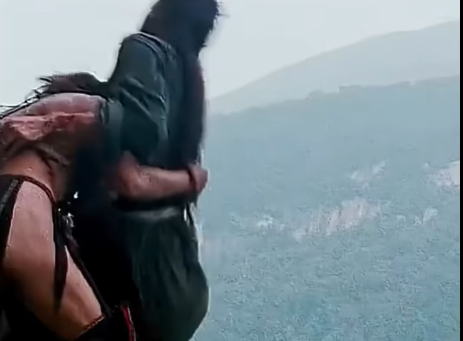
The pursuit leads through rugged mountain terrain, where every decision carries potentially fatal consequences.
The characters move toward a confrontation that has been building throughout the entire film.
Uncas attempts to reach Alice, but Magua’s hatred proves stronger than any possibility of mercy.
The encounter ends in tragedy.
Uncas is killed, leaving Chingachgook devastated. The loss of his son is one of the most painful moments in the film, especially because it represents another devastating blow to the survival of the Mohican people.
Hawkeye must continue fighting, even as the situation becomes increasingly hopeless.
The final confrontation between Chingachgook and Magua brings the story’s central conflict to its conclusion.
It is not simply a battle between two warriors. It is a confrontation between a father who has lost his son and an enemy whose obsession with revenge has destroyed countless lives.
When Chingachgook finally faces Magua, the emotional weight of everything that has happened becomes impossible to ignore.
Daniel Day-Lewis and the Power of the Performances
One reason the film remains so memorable is the strength of its cast.
Daniel Day-Lewis delivers a commanding performance as Hawkeye, bringing physical intensity and emotional restraint to the character.
His portrayal makes the frontiersman believable as both a skilled fighter and a man deeply connected to his family.
Madeleine Stowe gives Cora intelligence and emotional depth, while Russell Means brings dignity and quiet strength to Chingachgook.
Eric Schweig’s performance as Uncas is particularly memorable because of the character’s restrained emotions and tragic fate.
Wes Studi also creates a formidable antagonist in Magua, making him both terrifying and dramatically compelling.
The chemistry among these actors helps transform the film into something more meaningful than a traditional historical action movie.
Why The Last of the Mohicans Still Touches Audiences
More than three decades after its release, The Last of the Mohicans continues to resonate with audiences because its central themes remain universal.
It is a story about protecting family, standing by loved ones, and finding courage when circumstances seem impossible.
Michael Mann’s direction combines breathtaking landscapes with intense action and emotional storytelling.
The film’s powerful musical score, composed by Trevor Jones and Randy Edelman, further strengthens its atmosphere, particularly during the unforgettable final sequence.
Its depiction of the French and Indian War is dramatized and should not be treated as a complete historical account. Nevertheless, the film offers a compelling cinematic experience built around loyalty, conflict, and loss.
Conclusion: The Last Battle Cost More Than Anyone Could Imagine
The Last of the Mohicans is ultimately a story about the terrible consequences of hatred and the strength of the bonds that hold people together.
Hawkeye fights to protect Cora and the people he considers family. Uncas risks everything for Alice. Chingachgook must endure a loss that no father should ever have to experience.
Their journeys lead to a final confrontation that changes their lives forever.
The film’s most powerful message is not about who wins a battle or who survives a war. It is about what remains when violence takes away almost everything.
Through unforgettable performances, breathtaking cinematography, and a deeply emotional conclusion, The Last of the Mohicans remains one of the most memorable historical adventure films of its generation.
Some battles end when the fighting stops. Others leave wounds that last a lifetime.