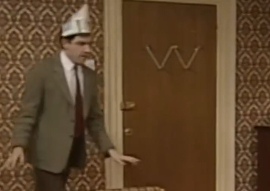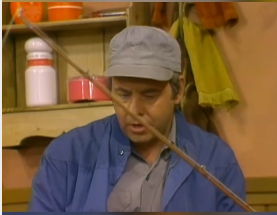
His characters rarely needed complicated plans because everything usually went wrong anyway. That was part of the charm of Tim Conway’s comedy. His characters often seemed to enter a situation with a perfectly reasonable idea, only to discover that even the simplest task could become an unexpected disaster. A plan that should have taken a few seconds could suddenly turn into a long chain of confusion, hesitation, mistakes, and ridiculous reactions.
Conway understood that audiences often enjoy watching a character struggle with something that should be easy. The humor comes from the growing gap between what the character expects to happen and what actually happens. His characters might believe they had everything under control, but the audience could already sense that trouble was waiting around the corner. That dramatic irony made even ordinary situations entertaining.
One of his greatest strengths was making failure look completely natural. His characters did not usually fail because they were intentionally foolish. They often failed because they misunderstood something, reacted too slowly, or made one small decision that created an even bigger problem. Each mistake seemed to lead naturally to another mistake, creating a comic chain reaction that Conway could stretch for as long as necessary.
This chain reaction became one of the most effective structures in his physical comedy. One tiny problem could lead to another, and another, until the original problem was almost forgotten. A character might start by trying to accomplish a simple task, but five minutes later, the entire situation could have become completely absurd. Conway had a special talent for making that escalation feel believable.
His characters often appeared confident at the beginning of a scene. They might walk in with a clear purpose or behave as though they knew exactly what they were doing. That confidence made the eventual chaos even funnier. The audience could watch the character slowly lose control while still pretending that everything was fine.
The funniest part was often the character’s refusal to admit defeat. Instead of recognizing that the plan had failed, Conway’s character might try again with even greater determination. The second attempt would create another problem, followed by a third attempt that somehow made everything worse. Each new effort became another opportunity for physical comedy.
This persistence was a major part of Conway’s comic personality. His characters could be confused, awkward, or completely overwhelmed, but they rarely gave up immediately. They kept trying. That determination allowed the joke to continue and gave Conway more opportunities to explore different reactions.
He could turn one failed attempt into a complete performance. First came the initial mistake. Then came the realization that something had gone wrong. After that came confusion, followed by a desperate attempt to correct the situation. Finally, the attempted solution would often create an even larger problem. Conway could communicate every stage through facial expressions and body language.
His face was particularly important during these moments. He could look confident one second and deeply concerned the next. A small change in his expression could show that his character had suddenly realized something was not going according to plan. Sometimes the audience could see the realization before the character acted on it, which made the moment even funnier.
Conway was also skilled at delaying the obvious solution. If a simple answer existed, his character might take the longest possible route to discover it. This did not make the character completely unintelligent. Instead, it made him wonderfully human. People often make simple situations more complicated when they become nervous or confused, and Conway exaggerated that behavior for comedic effect.
His comedy frequently showed how quickly confidence can disappear. A character might begin with a calm expression, but after several small problems, the body language would become increasingly uncertain. Movements became slower, glances became more frequent, and gestures became more exaggerated. Without needing a long explanation, Conway could show the character’s growing frustration.
Yet his characters often remained strangely optimistic. Even after several failures, they seemed convinced that the next attempt would work. This optimism created another layer of comedy because the audience already knew what was coming. Conway’s character would confidently begin again, and viewers would wait for the next disaster.
That anticipation was one of the reasons his scenes could remain funny for so long. The audience was not simply waiting for one punchline. They were watching a series of small developments. Each moment created a new expectation, and each unexpected mistake disrupted that expectation.
Conway’s physical movements made these failures especially memorable. He could stumble without making the stumble look like a simple accident. He could pause before correcting himself, look around as though searching for an explanation, and then continue as if nothing had happened. His body language gave the failure a personality of its own.
Sometimes the most hilarious reaction came after the problem was already over. Conway could finish an awkward action and then stand completely still, looking at the situation with a serious expression. That delayed reaction gave the audience another reason to laugh. It suggested that his character was finally beginning to understand the disaster.
This ability to create humor after the main action demonstrated his remarkable sense of timing. Many comedians would end a joke immediately after the central event. Conway often knew that there was still another laugh hidden in the aftermath. A glance, a pause, or a small adjustment could extend the joke for another few seconds.
His characters also had a special relationship with objects. Everyday items could become obstacles that made their plans increasingly difficult. A chair, table, door, piece of clothing, or household object could suddenly become involved in the disaster. Conway did not need complicated props because ordinary objects were enough to create new problems.
The environment therefore became part of the comedy. His characters did not exist in an empty stage. They interacted with the world around them, and every interaction had the potential to go wrong. This gave his physical comedy a sense of realism even when the circumstances became exaggerated.
Another important feature was the way Conway avoided making his characters seem cruel or arrogant. Even when they caused chaos, they often appeared innocent or genuinely confused. This made audiences more willing to laugh with them rather than simply laugh at them. There was usually something sympathetic about their struggles.
His characters could make mistakes that audiences recognized from everyday life. Everyone has experienced a moment when a simple task suddenly became complicated. Everyone has misunderstood instructions, dropped something at the wrong moment, or tried to fix a small problem only to create another one. Conway transformed those familiar experiences into comedy.
This relatability helped make his physical humor feel timeless. The situations could be exaggerated, but the emotions were recognizable. Confusion, embarrassment, frustration, determination, and surprise are universal experiences. Conway knew how to exaggerate those emotions without losing their human quality.
His timing also allowed him to build comedy gradually. He did not always need an immediate punchline. He could begin with a normal situation, introduce a tiny problem, and slowly increase the difficulty. By the time the scene reached its most ridiculous point, the audience had already been drawn into the character’s struggle.
The gradual escalation was often more effective than a sudden gag because viewers became invested in what would happen next. They wanted to know whether the character would finally succeed. The longer the character struggled, the more satisfying the eventual outcome became.
And sometimes the outcome was not success at all. The character might finally realize that the original plan was impossible. Instead of solving the problem, he might simply accept the chaos with a blank expression. That final moment could be even funnier than the entire sequence because it showed the character silently admitting defeat.
Conway’s ability to turn failure into entertainment demonstrated his deep understanding of character comedy. He knew that a mistake becomes funny when the audience understands why the character made it. The action itself is only part of the joke. The personality behind the action is what gives it meaning.
His characters therefore did not need complicated plans because their personalities provided enough material. A simple goal could create an entire comedy routine. All Conway needed was a character who believed he could accomplish something, a small obstacle, and enough time for everything to fall apart.
That formula allowed him to create scenes that felt spontaneous even when they were carefully performed. The audience could imagine the character thinking through the problem, choosing a solution, and immediately regretting that choice. Every decision became another opportunity for humor.
Tim Conway’s comedy showed that the funniest disasters often begin with the simplest plans. His characters did not need elaborate schemes, dramatic missions, or complicated explanations. They only needed to attempt something ordinary. Once Conway entered the situation, the ordinary task could quickly become a hilarious struggle.
His genius was not simply in making things go wrong. It was in making every mistake feel like a natural extension of the character’s personality. The audience could see the disaster approaching, yet they still wanted to watch the character continue trying. That combination of anticipation, failure, persistence, and perfectly timed reaction became a defining part of his comic style.
In the world of Tim Conway’s comedy, a simple plan was often more dangerous than a complicated one. The fewer things his characters had to accomplish, the more opportunities they seemed to find for disaster. Yet somehow, every mistake became another reason to laugh. His characters could enter a scene with one small goal and leave behind an entire trail of comic chaos.
That is what made his performances so memorable. Conway could take an ordinary plan, add one tiny complication, and patiently allow the situation to collapse into complete nonsense. His characters rarely needed elaborate strategies because their greatest talent was accidentally turning simple problems into unforgettable comedy.