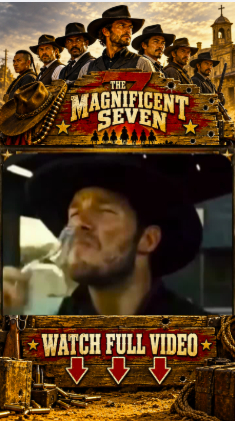
The Magnificent Seven: A Western Where Every Man Has His Own Reason to Fight
Released in 1960 and directed by John Sturges, The Magnificent Seven remains one of the most influential Western films ever made.
Inspired by Akira Kurosawa’s Seven Samurai, the movie follows seven professional gunfighters who agree to protect a Mexican farming village from the ruthless bandit Calvera.
The villagers have suffered repeated raids.
Their food has been stolen.
Their families live in fear.
And their future appears increasingly hopeless.
They need protection, but they have almost nothing to offer in return.
That’s what makes the mission so unusual.
Seven highly skilled gunfighters are being asked to risk their lives for people who cannot afford to pay them properly.
Some of the men accept because they believe in the cause.
Others are drawn by adventure.
And one man suspects there must be a secret fortune involved.
That man is Harry Luck.
Harry Luck: The Gunfighter Who Believed There Was More to the Story
Harry Luck, portrayed by Brad Dexter, is one of the most intriguing members of the seven.
He isn’t the group’s leader.
He isn’t the youngest fighter.
And he doesn’t possess the quiet, almost mysterious personality of Britt.
Instead, Harry brings a practical, suspicious, and money-minded attitude to the mission.
He knows Chris Adams.
He understands that Chris is an experienced professional.
And he finds it difficult to believe that someone like Chris would accept such a dangerous assignment for almost no money.
To Harry, the explanation seems obvious.
There must be a hidden reward.
Perhaps the villagers possess something valuable.
Perhaps Chris knows about a secret treasure.
Or perhaps the mission involves a much larger opportunity than anyone is willing to reveal.
Harry joins the expedition with those suspicions in mind.
But his expectations are about to collide with reality.
Why Harry Couldn’t Believe Chris Would Fight for Almost Nothing
Chris Adams, played by Yul Brynner, is a calm and capable leader.
He understands the risks of confronting Calvera’s gang.
He knows the villagers are poor.
And he recognizes that the mission may cost more than it can ever pay.
Yet Chris agrees to help.
For Harry, that decision is difficult to understand.
Professional gunfighters usually take dangerous assignments because they expect compensation.
The greater the risk, the greater the reward should be.
That’s the logic Harry understands.
But Chris is operating according to a different principle.
He sees people who need help.
He recognizes that their suffering is real.
And he believes their situation deserves a response.
Harry interprets Chris’s decision through his own expectations.
He assumes there must be money involved because he cannot imagine another reason for taking the job.
This misunderstanding becomes an important part of his character.
Seven Gunfighters, Seven Different Motivations
One of the strengths of The Magnificent Seven is that its heroes don’t all share the same motivations.
Chris Adams leads the group with discipline and a growing sense of responsibility.
Vin Tanner, portrayed by Steve McQueen, brings confidence, loyalty, and humor.
Bernardo O’Reilly, played by Charles Bronson, reveals compassion beneath his hardened exterior.
Britt, portrayed by James Coburn, is a quiet professional whose skill speaks louder than words.
Lee, played by Robert Vaughn, struggles with fear and the psychological consequences of his profession.
Chico, portrayed by Horst Buchholz, is an ambitious young man determined to prove himself.
And Harry Luck believes there is money to be made.
At first, their differences seem significant.
But the mission gradually reveals something they share.
When the villagers need them most, each man must decide what matters more than personal gain.
For Harry, that decision becomes especially meaningful.
Calvera’s Gang Turned a Poor Village Into a Place of Fear
Calvera, portrayed by Eli Wallach, commands a large band of armed raiders.
His men repeatedly exploit the farming community.
They take supplies.
Threaten the villagers.
And rely on intimidation to maintain control.
The farmers have little experience defending themselves.
They are not professional fighters.
They have families to protect.
And they know that resistance could bring terrible consequences.
For years, Calvera has used that fear to his advantage.
But the villagers eventually decide they cannot continue living this way.
They seek help from men who know how to fight.
Their search leads them to Chris Adams and the six gunfighters who join him.
Harry may believe the mission hides a fortune.
But the villagers are fighting for something far more basic.
The right to live without being terrorized.
Harry Was Looking for Gold in a Village That Barely Had Food
There is an irony at the heart of Harry’s motivation.
The village he agrees to defend is desperately poor.
Its people struggle to provide for their families.
Their resources are limited.
And the threat of Calvera’s gang makes survival even harder.
Yet Harry suspects that somewhere beneath this poverty lies a hidden fortune.
His expectations reveal how differently he sees the mission.
The villagers see a fight for survival.
Chris sees a community in need of protection.
Harry imagines a financial opportunity.
But as the men spend time in the village, the reality becomes increasingly difficult to ignore.
These people aren’t wealthy employers hiding treasure.
They are ordinary families who have endured years of suffering.
And the seven may be their only chance of escaping Calvera’s control.
Brad Dexter Gave Harry Luck a Distinctive Personality
Brad Dexter’s portrayal of Harry Luck adds an important dimension to the film.
Harry isn’t presented as a flawless hero.
He is skeptical.
Practical.
And often motivated by the possibility of financial reward.
But those qualities make his eventual choices more meaningful.
A character who begins the story already committed to selfless heroism has less room to change.
Harry begins with a different perspective.
He expects money.
He suspects Chris knows more than he admits.
And he views the mission through the lens of personal opportunity.
Yet he continues working alongside the other gunfighters.
He experiences the danger.
Witnesses the villagers’ desperation.
And develops a connection to the mission.
By the final battle, his actions reveal a deeper side of his character.
The Seven Didn’t Arrive as Heroes — They Became Heroes Through Their Choices
At the beginning of the film, the seven are professional gunfighters.
Their abilities make them dangerous.
But skill alone doesn’t make someone heroic.
A man can be an excellent shot and still care only about himself.
He can be fearless without being compassionate.
And he can win battles without fighting for anything meaningful.
What transforms the seven is the purpose of their mission.
They aren’t simply hired to defeat another group of armed men.
They are protecting farmers who cannot protect themselves.
They are helping families reclaim their future.
And they are confronting an enemy who has relied on fear for years.
Harry’s transformation is especially powerful because his original motivation is so different.
He joins hoping to find treasure.
But his final actions suggest that the mission has come to mean more to him than money.
The Village Began Changing the Men Who Came to Protect It
The gunfighters initially arrive as outsiders.
They don’t belong to the village.
They don’t share the farmers’ daily struggles.
And they have no permanent connection to the land.
But as they prepare for Calvera’s return, they begin understanding the people they are defending.
They see families trying to survive.
Children growing up under the threat of violence.
And farmers who work tirelessly despite their fear.
The mission becomes personal.
Bernardo develops a meaningful relationship with the village children.
Chico begins discovering a different future through his connection with Petra.
Chris recognizes the importance of the villagers’ courage.
And Harry’s expectations of hidden wealth become increasingly disconnected from the reality around him.
The longer the gunfighters remain, the harder it becomes to treat the assignment as an ordinary job.
Chris Adams Was Fighting for Something Harry Didn’t Understand
Chris and Harry represent two different approaches to life.
Harry believes that dangerous work should produce a valuable reward.
Chris understands that some decisions cannot be measured entirely in money.
Their disagreement isn’t simply about finances.
It’s about what makes a battle worth fighting.
Harry sees danger and asks what he might gain.
Chris sees suffering and asks what he can do.
Both men understand the risks.
Both are experienced gunfighters.
But their priorities are different.
As the story unfolds, Harry is forced to confront a question he initially avoids.
What if Chris is telling the truth?
What if there is no hidden fortune?
What if the only reward is knowing that innocent people have been protected?
The answer becomes clear only when Harry must decide whether to return to the village.
When the Mission Became More Dangerous Than Anyone Expected
Defending the village is never going to be easy.
Calvera commands a much larger force.
His men are armed and experienced.
And the villagers have limited resources.
The seven must prepare carefully.
They train the farmers.
Organize defenses.
And develop ways to resist the bandits.
Harry participates in these preparations alongside the others.
But the danger continues growing.
Every confrontation carries the possibility of death.
Every decision affects the survival of the village.
And every setback threatens the entire mission.
For a man who joined expecting financial gain, the situation becomes increasingly difficult to justify.
The potential reward remains uncertain.
But the risk becomes painfully real.
Calvera Thought Fear Would Make the Seven Walk Away
Calvera believes that power comes from intimidation.
He has used fear to control the villagers for years.
And he assumes that even professional gunfighters will eventually prioritize their own survival.
From his perspective, the seven are making an irrational decision.
They are risking their lives for farmers who can offer very little.
Why would they continue?
Why would they accept such danger?
And why would they fight when leaving would be safer?
Calvera’s worldview isn’t entirely different from Harry’s original thinking.
Both initially interpret human behavior through self-interest.
But the seven gradually demonstrate that people can be motivated by something greater.
They can fight for loyalty.
For dignity.
And for a community that needs their help.
The Betrayal That Nearly Ended Everything
Despite their preparations, the seven experience a devastating setback.
Calvera regains control of the village.
The gunfighters are disarmed and forced to leave.
The farmers are frightened.
And the mission appears to have failed.
This is the moment when the seven face their most important decision.
They have already risked their lives.
They have received little compensation.
And the villagers have not been able to stand firmly behind them.
Walking away would be understandable.
They could return to their wandering lives.
Find other work.
And leave the village behind.
For Harry, the situation is especially revealing.
If he truly believes the mission is only about money, there is little reason to continue.
The danger has become overwhelming.
And the fortune he imagined remains nowhere to be found.
Harry Had Every Reason to Leave — But He Came Back
The decision to return to the village reveals the true character of the seven.
Chris refuses to abandon the farmers.
Vin remains loyal to him.
And the surviving members of the group must decide whether the cause is worth another confrontation.
Harry has an opportunity to leave the danger behind.
He can abandon the mission.
Forget about the supposed treasure.
And protect his own life.
But he ultimately returns to fight.
That decision is the turning point in his story.
Harry is no longer acting only like a man searching for hidden wealth.
He is acting like someone who has formed a bond with his companions and their mission.
He may still express himself through the language of money.
But his actions reveal something more important.
He is willing to stand beside the others when the cost could be his life.
The Real Treasure Was Never Buried Beneath the Village
Harry’s story carries a powerful irony.
He spends much of the film imagining a reward that may not exist.
He believes there must be a secret fortune.
Something valuable enough to explain why Chris accepted the assignment.
But the real value of the mission cannot be counted in coins.
It exists in the lives of the villagers.
The friendships formed between the gunfighters.
And the courage required to defend people who have almost nothing.
Harry begins by searching for material wealth.
But he ends up participating in something far more meaningful.
He helps challenge a ruthless enemy.
He stands beside men he respects.
And he contributes to a struggle that gives the villagers a chance at freedom.
The treasure he discovers is not something he can carry away.
It is the meaning of the sacrifice itself.
Harry Luck’s Final Battle Revealed the Man Beneath the Greed
The final battle is one of the most dramatic sequences in The Magnificent Seven.
Chris and his companions return to confront Calvera’s gang.
Gunfire erupts throughout the village.
The farmers join the struggle.
And the seven face the full danger of the mission.
Harry fights alongside his companions.
But the battle comes at a terrible cost.
He is mortally wounded.
As he lies dying, his concern with the supposed hidden treasure remains part of his final exchange with Chris.
The moment is heartbreaking because it preserves something recognizable about Harry’s personality even as his life ends.
He had spent the mission expecting a fortune.
But his actions have already revealed the truth.
He returned to fight when he could have escaped.
He risked his life for the villagers.
And he stood beside his companions when the danger was greatest.
His final sacrifice says more about him than his original motivation ever could.
A Man Who Wanted Money Gave Away Something Priceless
Harry’s death is especially tragic because of the contrast between what he wanted and what he ultimately sacrificed.
He joined the mission hoping to gain wealth.
But he ended up giving his life.
There is no treasure chest waiting for him.
No fortune to carry away.
And no financial reward capable of compensating for his loss.
Yet his sacrifice is not meaningless.
The villagers gain their freedom.
Calvera’s reign of intimidation ends.
And Harry becomes one of the men who helped make that victory possible.
His story demonstrates that people are not always defined by their first intentions.
A man can begin with selfish motives.
Experience something that changes him.
And ultimately make a selfless decision.
Harry Luck may have come searching for gold.
But his final actions reveal a courage worth far more.
Four Gunfighters Paid the Ultimate Price
Harry isn’t the only member of the seven who dies during the final confrontation.
Bernardo O’Reilly also falls.
So does Britt.
And Lee.
Each man’s death carries a different emotional meaning.
Bernardo’s sacrifice is especially moving because of his connection with the village children.
Britt’s death ends the journey of a quiet, exceptionally skilled professional.
Lee’s final actions reveal his ability to confront fear.
And Harry’s death completes the story of a man whose search for wealth led him to a cause greater than himself.
Together, their sacrifices transform the film’s ending.
The seven defeat Calvera.
But victory comes at a devastating price.
Four men will never ride away.
Their graves become reminders that freedom was not won without loss.
Why Harry Luck Deserves More Recognition
When fans discuss The Magnificent Seven, certain characters often receive the most attention.
Chris Adams is remembered as the leader.
Vin Tanner stands out through Steve McQueen’s charisma.
Britt is celebrated for his extraordinary skill.
And Bernardo is admired for his compassion.
Harry Luck can sometimes be overlooked.
His interest in money makes him appear less noble than some of his companions.
But that is precisely what makes his character compelling.
He doesn’t begin as an ideal hero.
He is skeptical and financially motivated.
Yet when the mission reaches its most dangerous point, he chooses to fight.
His courage isn’t diminished by the fact that his original intentions were imperfect.
Instead, his sacrifice becomes more meaningful.
Harry proves that heroism can emerge from unexpected people.
Brad Dexter’s Performance Gave the Film an Important Emotional Contrast
Brad Dexter brings a grounded, practical energy to Harry Luck.
His character doesn’t approach the mission with the same idealism as Chris.
He questions the situation.
Looks for hidden opportunities.
And interprets the assignment through his own expectations.
This creates an important contrast within the group.
Without Harry, the seven might seem too uniformly noble.
His skepticism makes the mission feel more realistic.
Not everyone who takes a dangerous job begins with heroic intentions.
Some people are motivated by money.
Others by adventure.
And some by personal pride.
But the final battle reveals what each man is ultimately willing to do.
Harry’s decision to return gives his character emotional depth.
And Dexter’s portrayal helps make that transformation memorable.
The Difference Between Wealth and Worth
Harry’s story raises a question that extends beyond the Western genre.
What makes something valuable?
Money can provide comfort.
Security.
And opportunity.
But it cannot measure every important part of life.
Friendship has value.
Loyalty has value.
And protecting others can give a person’s actions meaning.
Harry begins the film focused on financial reward.
He assumes that the mission must conceal some kind of treasure.
But by the end, he has participated in something that cannot be purchased.
He has helped free a village from oppression.
He has stood beside men willing to risk everything.
And he has demonstrated courage when it mattered most.
His story suggests that the greatest rewards are not always the ones people originally seek.
Chris and Vin Rode Away Carrying the Memory of Their Friends
After the final battle, Chris Adams and Vin Tanner survive.
Chico also lives and chooses to remain in the village with Petra.
The bandits have been defeated.
The farmers are free.
And the community can begin rebuilding.
But the victory is bittersweet.
Four of the seven are dead.
Chris and Vin must leave behind the graves of men who fought beside them.
Harry Luck is among those fallen companions.
He may have joined the mission with dreams of hidden wealth.
But he died as one of the men who helped secure the village’s future.
Chris understands that the farmers are the true winners.
They have their homes.
Their families.
And their land.
The gunfighters, meanwhile, remain wanderers.
Their victory has meaning.
But it doesn’t erase the cost.
The Magnificent Seven Reminds Us That Heroes Are Made Through Choices
The enduring appeal of The Magnificent Seven comes from more than its gunfights and legendary cast.
The film explores what motivates people to act.
It asks why someone would risk their life for strangers.
And it examines the difference between personal gain and moral responsibility.
Harry Luck embodies these questions.
He doesn’t begin the mission with the purest intentions.
He expects a reward.
He believes Chris must be hiding something.
And he struggles to understand why anyone would accept such danger for so little money.
But when the moment of decision arrives, Harry returns to fight.
His actions reveal that his loyalty has become stronger than his desire for wealth.
That is what makes his story unforgettable.
He doesn’t need to be perfect to become heroic.
He only needs to make the right choice when it matters most.
HARRY CAME SEARCHING FOR TREASURE — BUT FOUND A BATTLE WORTH MORE THAN GOLD!
Harry Luck believed there was a fortune waiting somewhere in the village.
He thought Chris Adams knew about a hidden reward.
And he joined the seven expecting that the danger would eventually lead to wealth.
But Calvera’s gang was real.
The villagers’ suffering was real.
And the possibility of death was far greater than Harry had imagined.
When the mission collapsed, Harry could have walked away.
He could have abandoned the village.
Forgotten the treasure.
And chosen survival.
Instead, he returned.
He fought beside Chris, Vin, and the other gunfighters.
And when the final battle reached its tragic conclusion, Harry gave his life helping secure the village’s freedom.
He never discovered the fortune he imagined.
But he found something far more meaningful.
A cause worth defending.
Companions worth standing beside.
And a chance to become more than the man who first arrived searching for money.
HARRY CAME SEARCHING FOR TREASURE — BUT FOUND A BATTLE WORTH MORE THAN GOLD! In one of the most moving character arcs of The Magnificent Seven, Harry Luck proved that a man who begins with dreams of riches can still end his journey with an act of extraordinary courage and sacrifice.
ONE GUNFIGHTER CHASING A HIDDEN FORTUNE. ONE VILLAGE FIGHTING FOR FREEDOM. ONE FINAL BATTLE. AND A MAN WHO DISCOVERED THAT THE GREATEST TREASURE WAS NEVER GOLD — IT WAS THE COURAGE TO STAND WITH HIS FRIENDS WHEN EVERYTHING WAS ON THE LINE!
Do you think Harry Luck truly changed during the mission, or was he always a loyal man hiding behind his obsession with money? And which sacrifice in The Magnificent Seven affected you the most? Share your thoughts in the comments!
#TheMagnificentSeven #HarryLuck #BradDexter #ChrisAdams #YulBrynner #SteveMcQueen #VinTanner #Calvera #ClassicWestern #WesternMovies #MagnificentSeven1960 #WesternLegends #CowboyMovies #WesternHeroes #SavageTheory