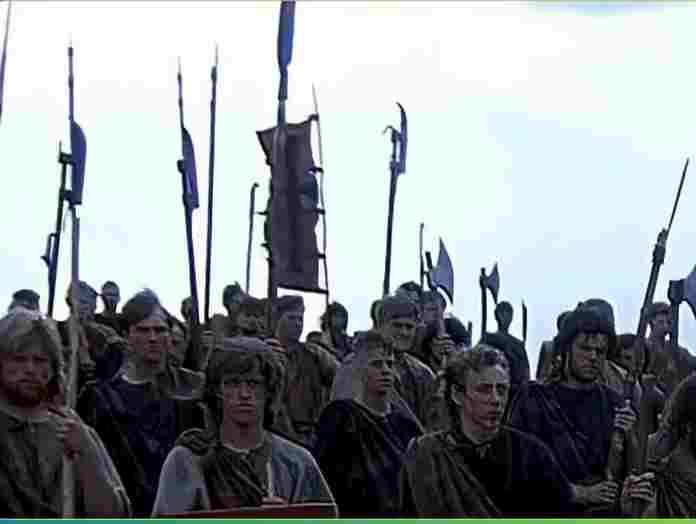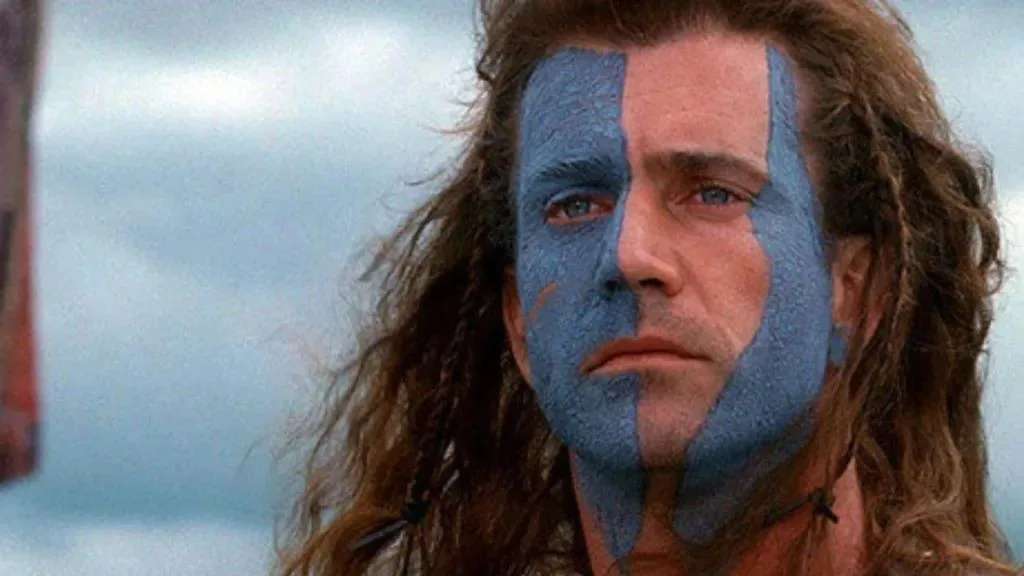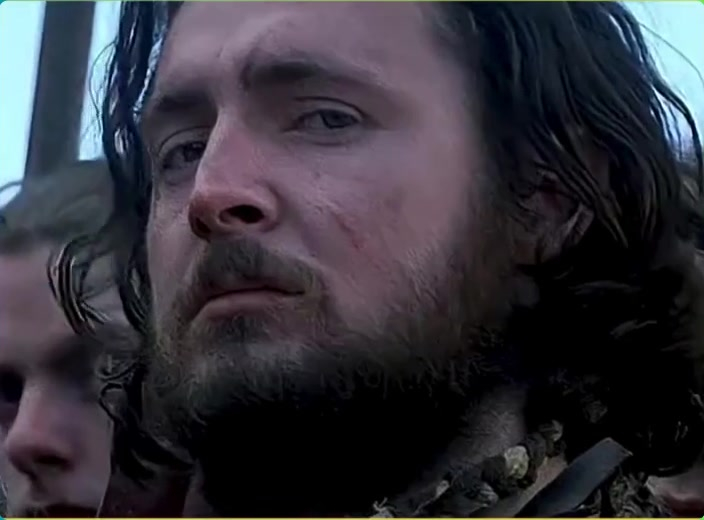
There are moments in cinema when a single character becomes much larger than the story surrounding him. In Braveheart (1995), William Wallace is not simply a Scottish warrior fighting against an invading army. He becomes the embodiment of a people’s determination to live without fear, oppression, or foreign control.
Directed by and starring Mel Gibson, this historical epic tells a powerful story of love, loss, revenge, betrayal, and resistance. Through enormous battlefield sequences and deeply emotional performances, the film transforms the struggle of medieval Scotland into an unforgettable cinematic experience.
At its heart, however, Braveheart is not really about winning a war. It is about discovering what freedom means when everything else has been taken away.
A Childhood Shaped by War and Loss
The journey of William Wallace begins in a Scotland torn apart by political conflict. English King Edward I has established his authority over Scottish territories, leaving ordinary people struggling under foreign occupation.
For young William, the violence of the period becomes personal when English soldiers kill his father and brother. Their deaths leave him without the family that once protected him.
His uncle takes responsibility for raising him and introduces him to a world beyond the boundaries of his homeland. William learns about warfare, survival, and the importance of understanding the people who control political power.
Years pass before Wallace eventually returns to Scotland.
He is no longer the frightened child who witnessed his family’s destruction. He has become an experienced man who understands the dangers of the world, but he has not forgotten the peaceful life he once wanted.
Rather than immediately seeking revenge, he hopes to settle down and build a future away from violence.
That dream leads him back to Murron MacClannough, the woman he has loved since childhood.
Murron: The Love That Changed Everything
One of the most important emotional elements of Braveheart is the relationship between William Wallace and Murron.
Their romance offers a brief escape from the cruelty surrounding them. While soldiers occupy the countryside and political authorities impose their will, the two imagine a future built around love rather than conflict.
They marry secretly, hoping to avoid interference from English authorities.
But their happiness is short-lived.
When English soldiers attempt to assault Murron, she refuses to submit. Her resistance leads to her capture and brutal execution.
Wallace arrives too late to save her.
The loss destroys the peaceful future he had imagined. The man who once wanted nothing more than a quiet life suddenly finds himself facing an injustice he cannot ignore.
His response is immediate and violent.
He leads an attack against the English garrison, killing those responsible and inspiring other villagers to join him.
What begins as revenge for the woman he loves quickly develops into a much larger rebellion.
Murron’s death becomes the emotional turning point that transforms Wallace from an ordinary man into a symbol of resistance.
The Birth of a Scottish Rebellion
Wallace’s uprising attracts people who have suffered under English domination for years.
Farmers, villagers, and local warriors begin gathering around him. Many have lost family members, property, or their sense of security.
They are not professional soldiers equipped with the finest weapons. Most are ordinary men who have reached the point where remaining silent feels more dangerous than fighting back.
Wallace understands that courage alone will not defeat a powerful military force.
He must give his followers something worth fighting for.
His greatest ability is not simply his strength with a sword. It is his capacity to inspire people who previously believed they had no power.
As his reputation grows, the rebellion becomes a serious threat to Edward I’s authority.
The English king begins to recognize that Wallace represents something far more dangerous than a military opponent: the possibility that other Scots might follow his example.
The Battle of Stirling: An Unexpected Victory
One of the film’s most spectacular sequences is the confrontation between Scottish rebels and English forces at Stirling.
The English army possesses superior equipment, greater numbers, and heavily armored cavalry. From a conventional military perspective, the Scots appear to have little chance of winning.
Wallace, however, refuses to fight on the enemy’s terms.
He studies the battlefield and recognizes that intelligent positioning and timing can overcome numerical disadvantages.
The Scottish fighters use long spears and coordinated tactics to disrupt the English cavalry. Their strategy turns the battlefield into a dangerous environment for the advancing horses and soldiers.
The result is a remarkable victory.
For the first time, many Scots begin to believe that English military dominance can be challenged.
The battle also establishes Wallace as a respected commander rather than simply a passionate rebel.
Mel Gibson’s direction makes the sequence especially memorable through its combination of sweeping battlefield imagery and close-up depictions of individual combat.
The mud, blood, shouting, and confusion create a brutal atmosphere that emphasizes the human cost of medieval warfare.
Yet beneath the spectacle is a powerful idea: an army fighting for its homeland can achieve things that once seemed impossible.
The Enemy Within: Scotland’s Political Divisions
Although Wallace wins important victories against England, he faces another serious challenge.
Scotland itself is politically divided.
The country’s nobles are concerned with their own positions, family interests, and claims to power. Some admire Wallace’s courage but hesitate to support him because doing so could threaten their personal ambitions.
This creates a frustrating contradiction.
The ordinary people are increasingly willing to fight for independence, but the individuals with the greatest political influence are not always prepared to make the same sacrifices.
Robert the Bruce becomes particularly important within this complicated situation.
He recognizes Wallace’s leadership and understands the importance of Scottish independence, but he is also influenced by his father’s political calculations and the expectations surrounding his family.
His internal conflict reflects one of the film’s central questions: what does it mean to lead a nation when personal ambition competes with national responsibility?
Wallace may understand the battlefield, but convincing Scotland’s powerful families to stand together proves considerably more difficult.
Edward Longshanks: A King Determined to Crush Resistance
Patrick McGoohan delivers a memorable performance as King Edward I, known as Longshanks.
Unlike Wallace, who draws strength from the support of ordinary people, Edward commands power through military authority, political manipulation, and intimidation.
He understands that allowing the Scottish rebellion to continue could encourage resistance throughout his territories.
His response is ruthless.
Rather than treating Wallace as an ordinary enemy, Edward recognizes the symbolic importance of the Scottish leader.
Destroying Wallace would send a warning to anyone considering rebellion.
The contrast between the two men creates the central conflict of the film.
One possesses the resources of a powerful kingdom. The other possesses the loyalty of people who believe they have nothing left to lose.
Their struggle becomes a confrontation between authority and resistance, political control and personal conviction.
Falkirk: When Betrayal Becomes More Dangerous Than the Enemy
Wallace’s military success eventually encounters a devastating setback at the Battle of Falkirk.
The Scottish army faces a powerful English force, and the political divisions that have weakened the rebellion begin to produce serious consequences.
The support Wallace expects from certain Scottish nobles does not materialize as he hopes.
Betrayal and competing interests undermine the unity necessary for victory.
The resulting defeat forces Wallace to confront a painful reality.
An enemy can be defeated through strategy and determination, but a movement cannot survive if its own supporters refuse to stand together.
The Battle of Falkirk is therefore more than a military disaster. It represents the collapse of Wallace’s belief that Scotland’s leadership might finally unite behind the cause of independence.
Nevertheless, he refuses to abandon the principles that brought him into the struggle.
His personal future may be uncertain, but the idea of freedom has already spread beyond his control.
The Final Sacrifice: A Man Who Would Not Kneel
The final act of Braveheart delivers its most emotionally powerful moments.
After years of resistance, Wallace is captured and transported to London, where English authorities prepare to punish him publicly.
His captors offer him a chance to avoid the full consequences of his rebellion.
All he needs to do is submit, acknowledge the authority of the king, and abandon the cause he has defended.
But Wallace refuses.
Even when facing an execution designed to destroy his spirit and discourage future rebellion, he remains committed to his beliefs.
His final moments are among the most unforgettable in historical cinema.
The word “Freedom” becomes the emotional center of the film, expressing everything Wallace has fought for throughout his journey.
His death is presented not as the end of the Scottish struggle but as the moment when his personal sacrifice becomes a lasting symbol.
The authorities can destroy his body, but they cannot force the people to forget what he represented.
The Performances and Music Behind the Legend
Mel Gibson’s portrayal of William Wallace is central to the film’s emotional impact.
He presents Wallace as a complicated character driven by love, grief, anger, and an increasingly powerful sense of responsibility.
His transformation feels personal rather than simply heroic.
Patrick McGoohan provides a chilling contrast as Edward Longshanks, while Sophie Marceau brings emotional depth to Princess Isabelle.
Catherine McCormack’s performance as Murron gives the story its initial emotional foundation, ensuring that Wallace’s rebellion begins with a deeply human tragedy.
James Horner’s musical score is another essential part of the experience.
Its sweeping melodies capture the beauty of Scotland’s landscapes while adding emotional weight to the film’s quieter moments and enormous battles.
The music helps transform the story into something almost mythical, connecting individual suffering with the larger history of a nation.
The film received ten Academy Award nominations and won five Oscars, including Best Picture and Best Director.
Although historians have identified numerous inaccuracies and dramatic liberties in its portrayal of medieval Scottish history, its cultural impact and cinematic influence remain significant.
Why Braveheart Continues to Inspire Audiences
What makes Braveheart so memorable is its ability to connect a historical conflict with emotions that audiences can understand regardless of time or place.
Its central themes remain powerful:
-
The courage to challenge injustice.
-
The importance of loyalty and unity.
-
The devastating consequences of betrayal.
-
The relationship between personal sacrifice and national identity.
-
The struggle between political authority and individual freedom.
-
The strength of ordinary people standing together against oppression.
The film also reminds viewers that great movements are rarely created by perfect leaders or uncomplicated circumstances.
Wallace makes difficult decisions, experiences personal failures, and struggles with the consequences of violence. His significance comes from his refusal to abandon the principles he believes are worth defending.
That is what separates him from an ordinary battlefield commander.
Conclusion: One Man’s Courage Became a Nation’s Inspiration
Braveheart (1995) remains one of cinema’s most powerful historical epics because it tells a story that reaches far beyond medieval Scotland.
William Wallace begins as a man searching for love and a peaceful future. After losing Murron, he becomes a warrior fighting against an oppressive system. Eventually, his struggle grows into a movement that inspires people to imagine a different future for their homeland.
He cannot prevent betrayal. He cannot escape suffering. And he cannot personally witness the freedom he dreams of achieving.
But his determination gives others a reason to continue.
The castles may belong to kings, the armies may follow powerful rulers, and the battlefield may decide who survives another day. Yet the desire for freedom cannot be permanently controlled by force.
That is the enduring message of Braveheart.
A man may lose his home, his love, and ultimately his life, but the courage to stand against injustice can survive long after he is gone.
And sometimes, the greatest victory is not living to see freedom — it is giving an entire generation the courage to keep fighting for it. 🏴⚔️🔥