JOHN LENNON AND THE BEATLES: THE EXPLOSIVE ENERGY OF “MONEY (THAT’S WHAT I WANT)” IN THE EARLY 1960s
When John Lennon Turned a Rhythm and Blues Classic Into Pure Rock and Roll
Few voices in rock and roll history are as instantly recognizable as John Lennon’s. With his powerful delivery, rebellious attitude, and unmistakable stage presence, Lennon helped transform The Beatles from a young Liverpool band into one of the most influential musical groups of all time.
During the early 1960s, The Beatles were famous for performing energetic versions of American rock and roll and rhythm and blues songs.
Among those recordings, “Money (That’s What I Want)” stands out as one of the most exciting examples of Lennon’s raw vocal power.
Originally recorded by Barrett Strong in 1959, the song became an important part of the Beatles’ early repertoire.
Their version combined driving rhythms, passionate vocals, and the unmistakable musical chemistry of John Lennon, Paul McCartney, George Harrison, and Ringo Starr.
For fans watching vintage black-and-white footage of Lennon performing onstage, these songs capture a remarkable period when The Beatles were young, ambitious, and ready to change music forever.
John Lennon: The Voice That Defined Early Beatles Rock
Born on October 9, 1940, in Liverpool, England, John Lennon developed a fascination with rock and roll during his teenage years.
Influenced by American performers such as Elvis Presley, Chuck Berry, and Little Richard, he began developing a musical style characterized by intensity and emotional expression.
In 1957, Lennon met Paul McCartney, beginning one of the most celebrated songwriting partnerships in popular music history.
George Harrison later joined their developing group, and Ringo Starr completed the famous Beatles lineup in 1962.
Although all four musicians contributed to the band’s distinctive sound, Lennon brought a particularly powerful edge to their early performances.
His voice could shift from melodic tenderness to explosive rock and roll energy.
That versatility became especially apparent when he performed songs such as “Twist and Shout” and “Money (That’s What I Want).”
Both recordings showcased a singer who could communicate excitement through sheer vocal intensity.
The Origins of “Money (That’s What I Want)”
Before The Beatles recorded the song, “Money (That’s What I Want)” had already established itself as an important rhythm and blues hit.
The original recording was released by Barrett Strong in 1959 on the Tamla label, an early part of the Motown story.
Written by Berry Gordy and Janie Bradford, the song featured a memorable piano-driven arrangement and direct, catchy lyrics about the desire for money.
Its energetic rhythm and powerful vocal delivery made it a natural choice for rock and roll performers.
The Beatles discovered many American rhythm and blues recordings during their formative years.
They admired the emotional intensity and musical freedom of artists whose records were helping shape the future of popular music.
“Money (That’s What I Want)” became one of the songs they incorporated into their live repertoire.
For Lennon, it offered an opportunity to deliver a forceful lead vocal that perfectly suited the band’s energetic stage style.
The Beatles Record Their Own Version in 1963
The Beatles recorded “Money (That’s What I Want)” for their second British studio album, With the Beatles, released on November 22, 1963.
The recording featured John Lennon on lead vocals, supported by the band’s powerful instrumental arrangement and backing harmonies.
George Martin’s piano contribution added another important element to the recording.
The Beatles’ version sounded urgent and energetic, emphasizing the driving rhythm and Lennon’s commanding voice.
Unlike some of their softer romantic songs, “Money” demonstrated the band’s ability to perform aggressive, rhythm-and-blues-influenced rock music.
The performance reflected their years of experience playing in Liverpool clubs and Hamburg venues.
Those demanding live performances helped the musicians develop the confidence and endurance that later became essential to their success.
The Legendary Energy of John Lennon on Stage
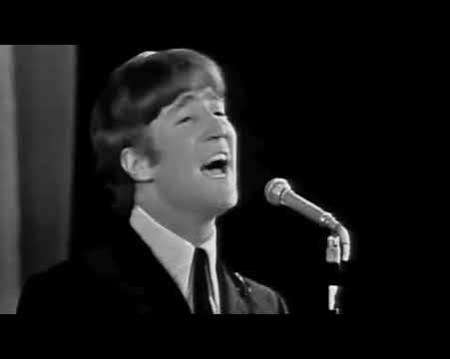
Vintage footage of The Beatles performing during the early 1960s captures a distinctive moment in musical history.
Lennon frequently appeared wearing a tailored suit and sporting the famous mop-top hairstyle associated with the group.
Standing at the microphone with his guitar, he delivered songs with confidence and intensity.
His performances were not built around elaborate choreography or theatrical effects.
Instead, the excitement came directly from the music.
The interaction between Lennon and McCartney, Harrison’s guitar playing, and Starr’s steady drumming created a powerful sound.
Even when the band performed familiar cover songs, their distinctive personalities transformed the material into something recognizably Beatles.
Lennon’s energetic delivery was especially effective on rhythm and blues numbers.
His singing could sound rough, urgent, and emotional, creating an exciting contrast with the band’s carefully arranged harmonies.
“Twist and Shout” and the Power of Lennon’s Voice
Another song closely associated with Lennon’s early performances is “Twist and Shout.”
Originally recorded by the Top Notes and later made famous by the Isley Brothers, the song became one of the Beatles’ most recognizable early recordings.
Their version appeared on the debut album Please Please Me in 1963.
Lennon’s famously intense vocal performance helped make the recording unforgettable.
The song also became a highlight of the group’s live shows.
At the Royal Variety Performance in November 1963, The Beatles performed “Twist and Shout” in front of a prestigious audience.
Before the final song, Lennon famously joked that people in the cheaper seats should clap while those in the expensive seats could rattle their jewelry.
The remark demonstrated his humor and willingness to challenge traditional expectations.
It also reflected the confidence that helped make The Beatles so appealing to younger audiences.
From Liverpool Clubs to International Stardom
The Beatles’ early musical identity developed through years of performances in small venues.
Liverpool’s Cavern Club became particularly important to their growing reputation.
Their time performing in Hamburg, Germany, also helped sharpen their musical abilities.
During these years, they performed long sets that included American rock and roll, rhythm and blues, and popular standards.
This experience allowed them to develop an unusually broad repertoire.
By 1963, the band had achieved major success in Britain.
Songs such as “Please Please Me,” “She Loves You,” and “I Want to Hold Your Hand” introduced their music to increasingly enthusiastic audiences.
Their international breakthrough followed in 1964, when their appearances on American television helped launch Beatlemania across the United States.
The raw energy heard in songs such as “Money” remained an important part of their musical identity.
Why “Money” Remains an Essential Beatles Recording
Although The Beatles eventually became celebrated for their original songwriting, their early cover recordings reveal the musical influences that shaped their development.
“Money (That’s What I Want)” demonstrates their deep appreciation for American rhythm and blues.
It also highlights John Lennon’s ability to deliver a powerful lead vocal.
The arrangement combines several elements that defined the band’s early sound: strong rhythm, expressive singing, energetic instrumentation, and tight musical coordination.
The recording offers listeners a glimpse into the period before The Beatles became increasingly experimental in the studio.
It captures the excitement of a young band that had spent years learning how to command an audience.
For longtime fans, the song remains a reminder of the group’s rock and roll roots.
For newer listeners, it provides an introduction to the intensity of Lennon’s early singing.
The Lasting Legacy of John Lennon and The Beatles
Throughout the 1960s, The Beatles continued developing their musical style.
Their later recordings explored folk, classical influences, psychedelic music, and innovative studio techniques.
Albums such as Rubber Soul, Revolver, Sgt. Pepper’s Lonely Hearts Club Band, and Abbey Road demonstrated their extraordinary creative range.
However, the band’s early rock and roll recordings remain essential to understanding their success.
John Lennon’s voice, Paul McCartney’s melodic instincts, George Harrison’s guitar work, and Ringo Starr’s rhythmic precision created a combination that influenced generations of musicians.
Their performances continue to attract audiences decades after the band’s breakup in 1970.
And songs such as “Money (That’s What I Want)” remain reminders of the musical excitement that started it all.
Conclusion: The Raw Rock and Roll Spirit That Made the Beatles Legendary
John Lennon’s performances during the early 1960s captured the excitement of a generation discovering a new musical identity.
With his powerful voice, confident attitude, and unmistakable stage presence, Lennon brought extraordinary energy to The Beatles’ early recordings.
“Money (That’s What I Want)” remains a memorable example of the band’s rhythm and blues influences, while performances of songs such as “Twist and Shout” demonstrate their ability to electrify an audience.
The vintage black-and-white images, matching suits, guitars, microphones, and classic amplifiers preserve the atmosphere of an unforgettable era.
Before The Beatles changed the world with groundbreaking albums, they were four young musicians playing rock and roll with everything they had. And John Lennon’s voice was one of the forces that made their music impossible to ignore.
#JohnLennon #TheBeatles #MoneyThatsWhatIWant #TwistAndShout #PaulMcCartney #GeorgeHarrison #RingoStarr #Beatlemania #ClassicRock #1960sMusic #MusicLegends