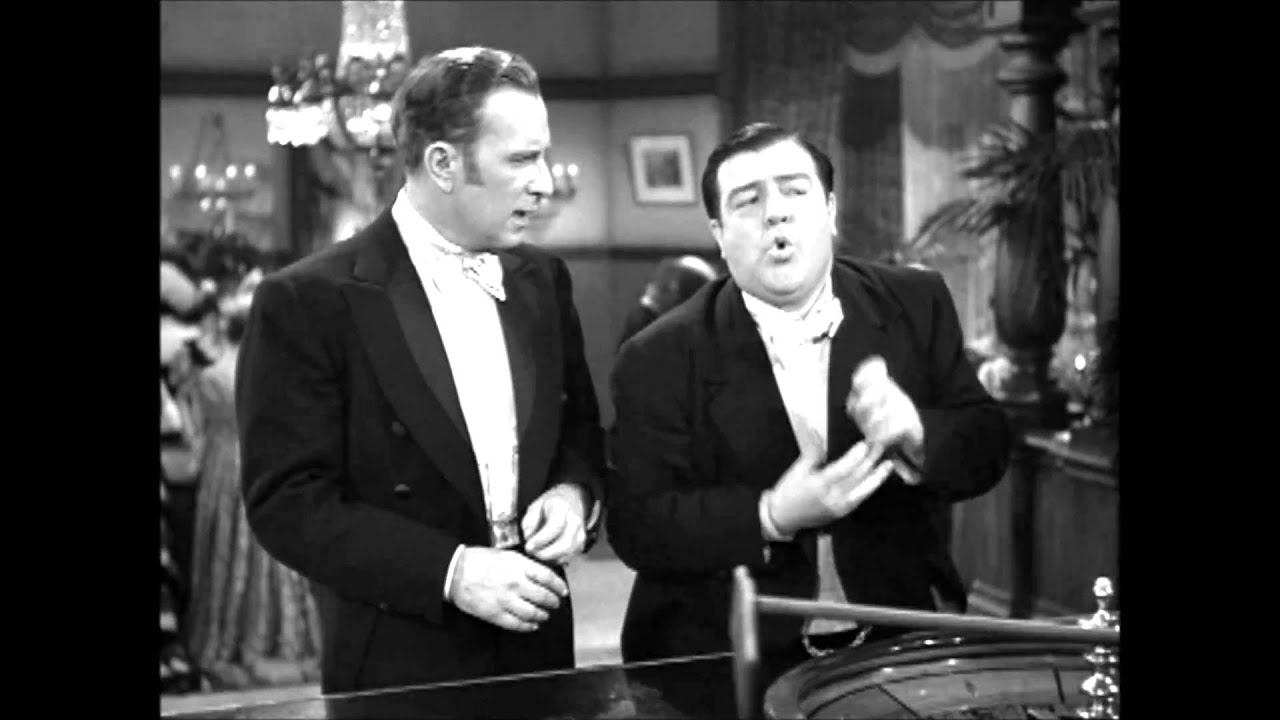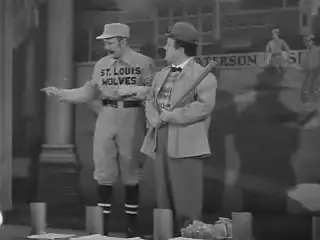
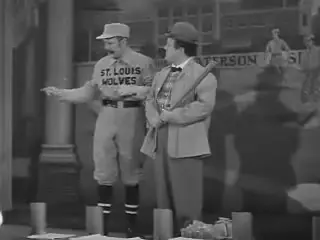
A baseball team with players named Who, What, I Don’t Know, and Tomorrow sounds like something that could only exist in a comedy writer’s imagination. But when two performers turn those unusual names into an increasingly confusing conversation, the result becomes one of the greatest examples of verbal comedy ever performed.
Few comedy routines have demonstrated the power of language quite like Abbott and Costello’s legendary baseball sketch, “Who’s on First?” What begins as an innocent attempt to understand a team’s lineup quickly becomes an extraordinary battle of words, misunderstandings, and mounting frustration.
The beauty of the performance lies in its simplicity. There are no elaborate costumes, spectacular stunts, or complicated visual effects. Instead, two performers use nothing more than a baseball roster and an incredible sense of timing to create an unforgettable comedy experience.
A Simple Question Creates an Impossible Situation
The conversation begins with an ordinary request. Costello wants to learn the names of the players on a baseball team so he can understand the lineup.
It sounds like a perfectly reasonable question.
Abbott takes on the role of the knowledgeable baseball enthusiast, confidently explaining the different positions and identifying the players responsible for each one.
But there is a problem.
The first baseman is named Who.
The second baseman is named What.
The third baseman is called I Don’t Know.
Suddenly, the most basic questions about the team become almost impossible to answer without creating another misunderstanding.
When Costello asks who is playing first base, Abbott simply responds that Who is on first.
Costello interprets this as a question rather than an answer, and the confusion begins.
The First Baseman Named Who Changes Everything
The genius of the routine is immediately apparent when the two characters begin discussing the first baseman.
Costello wants to know the identity of the player standing at first base.
Abbott tells him that the man’s name is Who.
Costello naturally assumes Abbott is asking him who plays that position.
He repeats the question, expecting a more straightforward answer. Instead, Abbott repeats the same information with complete confidence.
The exchange becomes a linguistic loop.
Every attempt to clarify the situation makes it more complicated, and every answer seems to create another question.
What makes this particularly entertaining is that Abbott is technically correct.
The problem is not that he is giving inaccurate information. The problem is that Costello cannot separate the player’s name from the ordinary meaning of the word.
This simple idea becomes the foundation for an extraordinary sequence of comedy.
What and I Don’t Know Make the Confusion Even Worse
Just when Costello believes he might understand the first baseman’s identity, Abbott introduces the second and third players.
The second baseman is named What.
The third baseman is called I Don’t Know.
These names create even more opportunities for misunderstandings.
When Costello asks what happens at second base, Abbott can respond with the player’s actual name without changing his explanation.
The same thing happens whenever the conversation reaches third base.
Costello’s growing frustration becomes increasingly entertaining because he is asking perfectly sensible questions.
Unfortunately, the answers sound like riddles.
The audience understands the unusual naming system, which makes watching Costello struggle to understand it even funnier.
The more seriously he approaches the problem, the more absurd the conversation becomes.
The Straight Man Versus the Frustrated Comedian
One of the most important ingredients in the routine is the contrast between the two performers.
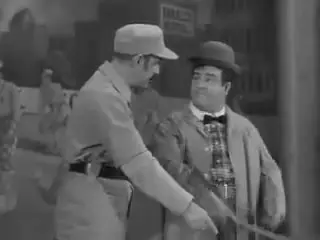
Abbott plays the confident straight man. He delivers his explanations calmly and rarely shows any indication that the conversation is becoming ridiculous.
Costello, meanwhile, becomes increasingly impatient.
His expressions, gestures, and vocal reactions communicate the frustration of someone who desperately wants a simple answer but cannot get one.
This relationship was the foundation of their remarkable partnership.
Abbott understood that the funniest thing he could do was remain completely serious.
Costello understood that his character’s growing frustration could become the central source of entertainment.
Neither performer needed to dominate the scene. Their contrasting approaches created a rhythm that allowed every line to become another opportunity for laughter.
When the Outfield Becomes Another Linguistic Trap
The confusion does not stop with the infield.
As the conversation moves toward the outfield, the unusual names continue creating unexpected problems.
The left fielder is called Why.
For Costello, this creates another frustrating exchange because the name sounds exactly like a question.
Whenever he asks why something happens, Abbott can interpret the word as the player’s actual identity.
This is the brilliance of the routine.
The same word can function as an ordinary question in one sentence and a proper name in another.
The audience is constantly aware of both meanings, while Costello struggles to determine which interpretation Abbott intends.
The result is a continuous chain of verbal misunderstandings that feels increasingly impossible to escape.
Tomorrow and Today Bring a New Dimension to the Joke
The baseball roster becomes even more ridiculous when the conversation reaches the pitching staff.
The pitcher is named Tomorrow, while the catcher is named Today.
These names introduce an entirely different kind of confusion.
Costello attempts to understand when the pitcher will play, but Abbott’s answer refers to the player’s actual name.
The same problem occurs when the catcher enters the conversation.
Today catches for Tomorrow.
What sounds like an ordinary discussion about scheduling becomes another elaborate language puzzle.
This section demonstrates how the writers could continually introduce new variations without abandoning the central idea.
The names change, but the basic comedic mechanism remains the same.
Costello asks a question. Abbott gives a technically correct answer. Costello misunderstands it. The audience laughs.
Why the Routine Is More Than a Baseball Joke
Although the sketch uses baseball as its setting, its appeal extends far beyond the sport.
The real subject is communication.
Words do not always mean exactly what listeners expect them to mean. Their interpretation depends on context, tone, and the assumptions people bring into a conversation.
Abbott and Costello take this familiar problem and exaggerate it to extraordinary proportions.
The audience can recognize the logic behind both characters.
Abbott is identifying actual players, while Costello is interpreting the same words according to their everyday meanings.
Neither perspective is entirely unreasonable.
That is why the routine works so effectively.
It is not simply a collection of random jokes. It is a carefully structured demonstration of how easily language can become confusing when the same words serve different purposes.
The Extraordinary Timing Behind Every Punchline
A routine like “Who’s on First?” requires exceptional performance skills.
The dialogue must move quickly enough to maintain momentum, but each line must also be delivered clearly so the audience can understand the misunderstanding.
Abbott and Costello were masters of this balance.
Abbott’s calm delivery gives the audience time to recognize the double meanings.
Costello’s reactions provide the emotional release that makes each exchange entertaining.
The pauses, interruptions, repeated questions, and sudden changes in tone all contribute to the rhythm.
It is almost like a musical performance in which every word has its own place.
If the timing were slightly different, many of the jokes would lose their impact.
That level of coordination helps explain why the routine remains such an impressive example of classic comedy.
Why Modern Audiences Still Love This Performance
Entertainment has changed dramatically since Abbott and Costello became household names.
Today’s comedy often relies on fast editing, elaborate visual effects, and rapidly changing scenes.
https://youtu.be/sShMA85pv8M?si=4tBi3X_eUw-B6m-y
Yet this classic routine demonstrates that an intelligent conversation can still hold an audience’s attention.
The humor is based on universal experiences: confusion, impatience, misunderstandings, and the frustration of trying to explain something that should be simple.
Viewers do not need to be baseball experts to appreciate the joke.
They only need to understand that Who, What, and I Don’t Know are names rather than answers to ordinary questions.
Once that becomes clear, the performance becomes an entertaining test of patience and logic.
Its enduring popularity proves that great comedy does not necessarily depend on modern technology.
A Comedy Legacy That Continues Across Generations
Abbott and Costello created a style of comedy that influenced generations of performers.
Their partnership demonstrated how two contrasting personalities could turn a simple premise into a remarkably sophisticated performance.
The straight-man-and-funny-man relationship became an important part of television and sketch comedy.
Their routines continue to be celebrated because they combine intelligent writing with accessible humor.
“Who’s on First?” is particularly memorable because its central idea is so easy to understand, yet its execution is extraordinarily difficult to reproduce.
It takes tremendous discipline to make a complicated verbal routine feel spontaneous.
That is what separates a clever joke from a truly legendary performance.
The Game May Be Baseball, but the Real Victory Is Comedy
The brilliance of Abbott and Costello’s baseball routine comes from their ability to transform ordinary words into an unforgettable comedy experience.
A question about the first baseman becomes a linguistic puzzle. A discussion about the outfield turns into another series of misunderstandings. Even the pitcher and catcher seem to challenge the basic rules of conversation.
Through it all, Abbott remains calm while Costello becomes increasingly desperate.
Their chemistry, timing, and understanding of verbal humor create a performance that continues to entertain audiences decades later.
It is a reminder that some of the greatest comedy moments are built from the simplest ideas.
And after all these years, one question remains just as entertaining as ever:
Who’s on first?
The answer is obvious. Explaining it, however, is another story entirely.