Some musical scenes in cinema are entertaining. Others become so powerful that they completely take over the film. In The Blues Brothers (1980), that moment arrives when Aretha Franklin steps forward inside the Soul Food Cafe and begins singing “Think.”
It is an extraordinary scene, not because of elaborate choreography or spectacular visual effects, but because of the sheer authority of one legendary voice.
For a few minutes, everything else seems to disappear. Jake and Elwood Blues, played by John Belushi and Dan Aykroyd, suddenly find themselves standing in the presence of a musical force that cannot be ignored. What begins as a conversation about the future of the band quickly transforms into one of the most memorable musical performances in the film.
Aretha does not simply join the scene.
She takes control of it.
The Blues Brothers Walk Into the Soul Food Cafe
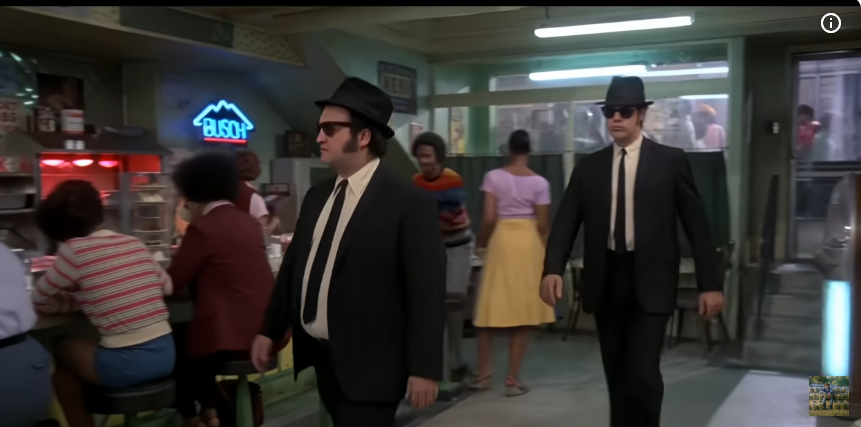
By the time Jake and Elwood arrive at the Soul Food Cafe, their journey has already become an unusual combination of comedy, music, and chaos.
The brothers are trying to reunite their old band and raise enough money to save the Catholic orphanage where they grew up. Their mission takes them across Chicago, bringing them into contact with musicians, former band members, police officers, and a growing number of people who would rather see them fail.
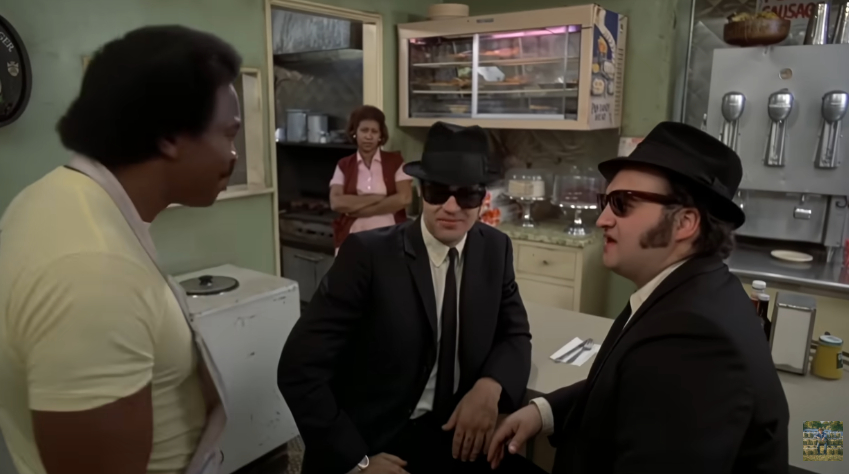
At the cafe, they encounter Matt “Guitar” Murphy, one of the musicians they hope to bring back into the group.
However, there is one significant obstacle.
Matt’s wife, played by Aretha Franklin, is not particularly enthusiastic about the idea of her husband returning to the road with the Blues Brothers. She knows exactly what kind of trouble can follow these two men, and she has little interest in watching her husband become involved in their unpredictable adventure again.
Jake and Elwood attempt to convince Matt to return.
But they are about to discover that the most powerful person in the room is not either of them.
The First Notes of “Think” Change Everything
The scene builds around a familiar domestic disagreement. Matt is caught between his loyalty to his wife and his desire to perform music again.
Then Aretha Franklin steps forward.
The opening of “Think” immediately changes the atmosphere. Her voice is commanding, confident, and unmistakably powerful. There is no hesitation in her delivery, no need for a lengthy introduction, and no attempt to gradually establish her presence.
She simply begins singing, and the entire room responds.
Originally released in 1968, “Think” is one of Aretha Franklin’s most recognizable recordings. Its message of independence, respect, and personal freedom makes it an especially appropriate choice for this confrontation.
In the film, the song becomes much more than a musical performance. It is a direct response to Matt’s desire to leave, and every lyric reinforces the strength of a woman who refuses to be ignored.
Aretha delivers the song with remarkable control. Her voice moves effortlessly between powerful declarations and expressive phrases, creating a performance that feels both entertaining and emotionally convincing.
The result is an unforgettable musical interruption that completely changes the direction of the scene.
John Belushi and Dan Aykroyd Become Part of the Spectacle
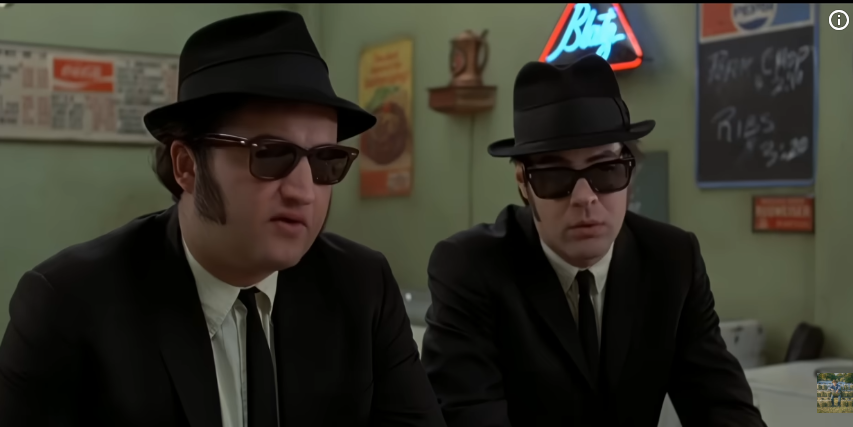
Although Aretha Franklin dominates the performance, John Belushi and Dan Aykroyd provide much of its comedy and personality.
As Jake and Elwood Blues, the two comedians have spent the film navigating increasingly ridiculous situations with almost unbelievable confidence.
Their black suits, dark sunglasses, and deadpan expressions have become the defining visual identity of the Blues Brothers.
But inside the Soul Food Cafe, they are no longer entirely in control.
Belushi’s Jake is particularly entertaining because of his reactions to the growing intensity of the situation. His character may be accustomed to dealing with difficult people, but confronting Aretha Franklin’s powerful musical presence is an entirely different challenge.
Aykroyd’s Elwood maintains his familiar calmness, creating a contrast that has always been central to the duo’s chemistry.
Their reactions help make the scene work as comedy without taking anything away from the music.
The two performers understand that the best response is to let Aretha have the spotlight.
And she makes every second count.
A Performance That Turns a Personal Argument Into a Musical Celebration
One of the most impressive aspects of the sequence is how naturally the cafe transforms into a musical stage.
What begins as a disagreement between a husband and wife gradually becomes a collective performance. The women around Aretha join in, adding movement and energy to the scene.
The atmosphere changes from an ordinary restaurant conversation into something resembling a full-scale soul revue.
Yet the choreography never feels disconnected from the story.
Every movement contributes to the emotional message of the song. Aretha is not performing simply to entertain the people inside the cafe. She is making a point, and the music gives her argument a level of authority that ordinary dialogue could never achieve.
This is where the scene becomes particularly effective.
The comedy, the music, and the character relationships all work together. Rather than interrupting the story, the musical number develops it.
By the end, Matt’s decision to return to the band feels like the natural conclusion of a confrontation that only Aretha Franklin could have delivered with such overwhelming personality.
A Film Filled With Musical Legends
The Soul Food Cafe sequence is also part of what makes The Blues Brothers such a remarkable musical film.
Released in 1980 and directed by John Landis, the movie brought together an extraordinary collection of performers from different generations and musical traditions.
James Brown appears as Reverend Cleophus James, delivering an energetic gospel performance inside a church.
Cab Calloway brings the classic showmanship of an earlier musical era to the screen.
Ray Charles appears as Ray, demonstrating his unmistakable musical personality in a memorable sequence involving the purchase of an electric instrument.
Aretha Franklin adds another dimension through her combination of soul, emotional intensity, and commanding stage presence.
These appearances give the film an authenticity that extends far beyond its comedy premise.
Belushi and Aykroyd may be the central characters, but the musical legends surrounding them are never treated as secondary attractions. Each receives an opportunity to demonstrate the qualities that made them famous.
The film becomes a celebration of American blues, soul, gospel, and rhythm and blues.
Why Aretha Franklin’s “Think” Still Feels So Powerful
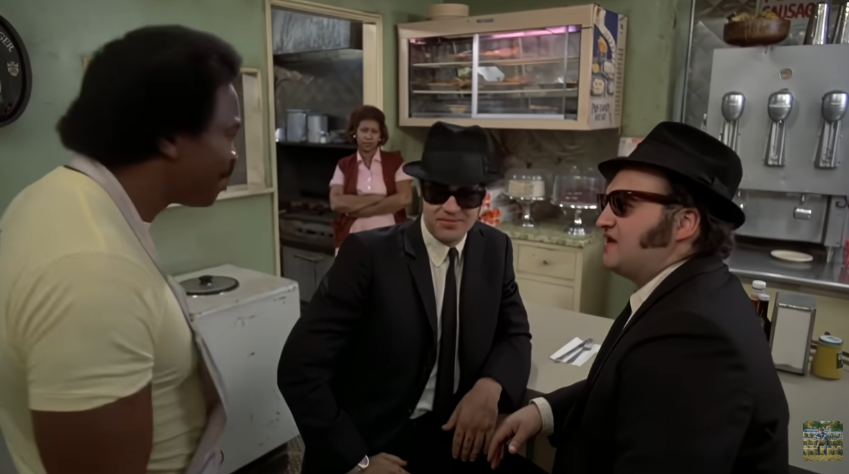
More than four decades after the film’s release, the Soul Food Cafe sequence remains one of its most memorable moments.
Part of that lasting appeal comes from the timeless quality of the song itself. “Think” carries a message that remains relevant across generations, and Aretha’s performance gives that message extraordinary emotional force.
But the scene also benefits from its simplicity.
There are no complicated visual tricks needed to make the performance memorable. The camera focuses on the performers, the musicians provide the energy, and Aretha’s voice does the rest.
Her delivery is full of confidence without becoming uncontrolled. She can sound playful, commanding, and emotionally serious within the same performance.
That balance is what separates a great singer from someone who simply possesses a powerful voice.
Aretha understands the song completely, and the audience can feel it.
The Moment That Belongs to a Legend
The Blues Brothers is remembered for its outrageous comedy, spectacular musical performances, and the unforgettable partnership between John Belushi and Dan Aykroyd.
Yet the Soul Food Cafe scene demonstrates why the film’s musical guests were so important to its success.
Aretha Franklin does not need to compete with the comedy or the larger story. She simply steps forward and delivers a performance that stands confidently on its own.
Jake and Elwood may have started the conversation, but Aretha gets the final word through music.
The black suits remain iconic. The Blues Brothers’ mission continues, and the film’s combination of humor and music still attracts new audiences.
But when the opening notes of “Think” begin, everything changes.
For a few unforgettable minutes, the Soul Food Cafe belongs entirely to Aretha Franklin.
And that is precisely why the performance remains legendary.