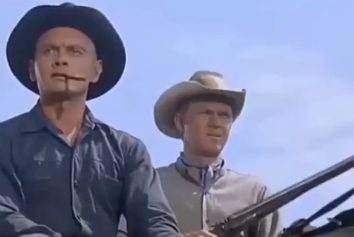
Some melodies do more than accompany a film. They create an entire world, capture the spirit of unforgettable characters, and become inseparable from the stories audiences love. The main theme of The Magnificent Seven (1960), composed by the legendary Elmer Bernstein, is one of those rare musical achievements. Bold, energetic, and instantly recognizable, it captures the courage, adventure, and restless spirit of the American frontier in a way that continues to inspire listeners decades after the film’s release.
From its opening notes, Bernstein’s composition evokes images of cowboys riding across vast landscapes, dusty frontier towns, and courageous gunfighters preparing to face overwhelming odds. The music carries a sense of movement and anticipation, suggesting that something extraordinary is about to happen. It is a theme built around confidence and determination, perfectly matching a story about seven men who risk their lives to protect a vulnerable Mexican village from ruthless bandits.
Yet the greatness of the music extends far beyond its connection to the film’s plot. Bernstein created a composition that stands on its own, combining memorable melodies, powerful orchestration, and a driving rhythm that communicates the emotional heart of the Western genre. The result is a soundtrack that has become one of the most celebrated musical signatures in cinematic history.
ELMER BERNSTEIN AND THE POWER OF WESTERN MUSIC
Elmer Bernstein was one of Hollywood’s most respected film composers, known for his ability to create distinctive musical identities for very different kinds of stories. His career included dramatic films, comedies, adventures, and some of the most memorable Westerns ever made.
His score for The Magnificent Seven demonstrates his remarkable understanding of how music can shape a film’s atmosphere. Rather than simply accompanying the action, the score helps establish the characters’ personalities and the emotional stakes of their journey.
The main theme is especially effective because it combines grandeur with a sense of human determination. The melody feels expansive, as though it belongs to the open landscapes of the frontier, while its rhythmic drive suggests that the characters are constantly moving toward a challenge they cannot avoid.
Bernstein understood that a Western needed more than music that sounded adventurous. It needed a musical language capable of expressing freedom, danger, courage, and the possibility of sacrifice. His composition brings these qualities together in a way that feels natural rather than forced.
The result is a theme that immediately establishes the film’s identity. Even without seeing a single scene, listeners can imagine the world of The Magnificent Seven: a rugged landscape, a town under threat, and a group of men preparing to stand against injustice.
A MELODY THAT RIDES WITH THE HEROES
One of the defining characteristics of the main theme is its remarkable sense of forward motion. The music does not remain still for long. Its energetic rhythm creates the impression of horses moving across open ground, carrying the characters toward a destination that promises both danger and adventure.
This sense of movement is essential to the Western genre. The frontier is a world of journeys, confrontations, and decisions that cannot easily be reversed. Characters travel through unfamiliar territory, encounter people whose motives are uncertain, and discover that every new destination may bring another test of their courage.
Bernstein’s theme captures that spirit through its lively orchestration and memorable melodic phrases. The music feels optimistic without becoming carefree. Beneath its excitement is an awareness that the journey will not be easy.
That balance makes the composition particularly effective. It celebrates the excitement of adventure while leaving room for the danger that awaits the heroes. The melody encourages listeners to imagine a world where bravery is necessary, but success is never guaranteed.
As the music develops, its bold character creates a sense of confidence and anticipation. It suggests that the seven gunfighters possess the determination to confront their enemies, even when the odds are stacked against them.
This is not simply music about winning a battle. It is music about having the courage to enter the battle in the first place.
THE MUSICAL IDENTITY OF THE MAGNIFICENT SEVEN
The main theme is closely connected to the film’s central idea: seven very different men come together to defend people who cannot easily defend themselves.
Chris Adams, played by Yul Brynner, serves as the group’s composed and authoritative leader. Vin Tanner, portrayed by Steve McQueen, brings confidence and resourcefulness. Bernardo O’Reilly, played by Charles Bronson, reveals a protective and compassionate side beneath his tough exterior.
The other gunfighters contribute their own personalities, skills, and motivations. Some are driven by money, others by pride, and some gradually discover a deeper sense of purpose through their experiences in the village.
Bernstein’s music provides a unifying emotional language for these characters. The theme is larger than any individual gunfighter, reflecting the strength that emerges when separate personalities begin working toward a common goal.
This musical unity mirrors the film’s central message. No single man can guarantee the village’s safety, but together the seven defenders become a formidable force. Their differences remain important, yet their shared purpose gives them something stronger than individual ambition.
The theme captures this transformation through its bold, confident sound. It feels like the musical expression of a group that has decided to stand together, even when doing so requires personal sacrifice.
WHY THE ORCHESTRATION STILL SOUNDS POWERFUL
A major reason the main theme remains memorable is Bernstein’s skillful use of orchestration. The music has a broad, confident sound that gives the melody a sense of scale. Its brass writing contributes to the feeling of strength and determination, while the rhythmic foundation keeps the composition energetic and direct.
The arrangement does not depend on excessive complexity to make an impression. Instead, Bernstein builds the theme around a clear melodic identity that listeners can recognize and remember.
That clarity is one of the most important qualities in successful film music. A theme must be distinctive enough to stand apart from the dialogue and sound effects, yet flexible enough to support the film’s emotional development.
Bernstein achieves this balance by combining memorable musical phrases with an arrangement that feels both cinematic and accessible. The result can accompany an adventurous sequence, introduce the film’s world, or stand alone as a concert piece.
The theme also benefits from its emotional consistency. It does not lose its sense of purpose as the arrangement develops. Instead, the music maintains its forward momentum, reinforcing the impression of a journey that demands courage and commitment.
This is why the composition continues to appeal to audiences who may not have watched the original film. Its musical language is direct enough to communicate excitement and determination without requiring viewers to understand the entire story.
THE MAIN THEME AND THE SPIRIT OF THE OLD WEST
The Western genre has always relied on the relationship between landscape and character. Wide horizons suggest freedom, while isolated settlements reveal the vulnerability of people living far from powerful institutions. The frontier can be beautiful and dangerous at the same time.
Bernstein’s theme captures this contradiction through its mixture of grandeur and urgency. The music suggests open spaces and endless possibilities, but its driving rhythm also implies that the characters cannot remain spectators to the dangers around them.
The melody evokes the romance of the Old West without completely separating that romance from the responsibilities of survival. The heroes may appear larger than life, but their mission is grounded in a practical and deeply human purpose: protecting a community from those who would exploit it.
This connection between adventure and responsibility gives the music its lasting emotional appeal. It celebrates the courage of the individual while recognizing the importance of collective action.
The theme also reflects the enduring mythology of the Western hero. These characters are often portrayed as independent figures who travel alone and answer to few people. Yet The Magnificent Seven complicates that image by showing how individual courage becomes more meaningful when directed toward helping others.
Bernstein’s music captures that idea with remarkable efficiency. Its confident melody suggests individual strength, while its expansive sound evokes the larger purpose that unites the seven gunfighters.
A SOUNDTRACK THAT BECAME CINEMA HISTORY
The main theme of The Magnificent Seven has endured because it possesses qualities that extend beyond its original setting. It is memorable, emotionally direct, and closely associated with a film whose characters and themes remain recognizable across generations.
Its influence can be felt in the way later Westerns use music to establish scale, create anticipation, and give heroic characters a distinctive musical identity. Bernstein’s composition demonstrates how a recurring theme can become part of a film’s cultural memory, allowing a few notes to evoke an entire cinematic world.
The music also illustrates the importance of collaboration between composer and filmmaker. John Sturges’s direction provides the story and visual atmosphere, while Bernstein’s score adds another dimension to the experience. Together, they create a Western whose identity extends beyond its dialogue and action.
The theme is particularly effective because it does not require the audience to know every detail of the plot. Its energy and melodic clarity communicate the promise of adventure almost immediately. Listeners can recognize the spirit of the film through the music alone.
That quality has helped the composition remain popular among film-score enthusiasts, Western fans, orchestras, and audiences who appreciate classic Hollywood music.
WHY THE MAGNIFICENT SEVEN THEME STILL INSPIRES
Decades after its release, Elmer Bernstein’s main theme continues to evoke the excitement and grandeur of classic Western cinema. Its power lies not only in its memorable melody but also in the values it represents: courage, loyalty, determination, and the willingness to defend people who cannot stand alone.
The music reminds listeners of the seven gunfighters who accept a dangerous mission and discover that their actions mean more than personal reward. It captures the excitement of riding into the unknown, the tension of preparing for a confrontation, and the determination required to face an enemy who appears stronger.
At the same time, the theme stands as a tribute to Bernstein’s extraordinary craftsmanship. Through carefully shaped melodies, confident orchestration, and an unmistakable rhythmic drive, he created a composition that became one of the defining sounds of the Western genre.
The main theme of The Magnificent Seven is therefore much more than background music. It is an invitation into a world of adventure, danger, and heroic determination. It brings the frontier to life through sound, turning the image of seven gunfighters riding toward an uncertain future into an enduring musical experience.
Ultimately, Elmer Bernstein’s legendary composition captures the heart of The Magnificent Seven in a way few film themes can match. It celebrates the courage to stand against overwhelming odds, the strength found in working together, and the belief that even a small group of determined people can make a difference.
That is why the melody continues to ride through cinematic history. Long after the final scene has ended, its energy remains—a powerful musical reminder of the seven men who stood together, the village they fought to protect, and the timeless spirit of the American Western.